3.6(16)

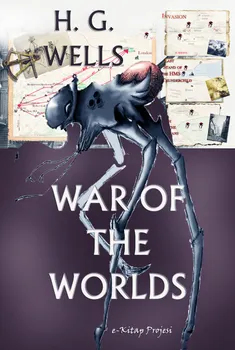
War of the Worlds

The War of the Worlds is a military science fiction novel by H. G. Wells. It first appeared in serialized form in 1897, published simultaneously in Pearson's Magazine in the UK and Cosmopolitan magazine in the US. The first appearance in book form was published by William Heinemann of London in 1898. It is the first-person narrative of the adventures of an unnamed protagonist and his brother in Surrey and London as Earth is invaded by Martians. Written between 1895 and 1897, it is one of the earliest stories that detail a conflict between mankind and an extraterrestrial race. The novel is one of the most commented-on works in the science fiction canon.

The War of the Worlds has two parts, Book One: The Coming of the Martians and Book Two: The Earth under the Martians. The narrator, a philosophically-inclined author, struggles to return to his wife while seeing the Martians lay waste to southern England. Book One also imparts the experience of his brother, also unnamed, who describes events in the capital and escapes the Martians by boarding a ship near Tillingham, on the Essex coast.

The plot has been related to invasion literature of the time. The novel has been variously interpreted as a commentary on evolutionary theory, British Imperialism, and generally Victorian superstitions, fears and prejudices. At the time of publication it was classified as a scientific romance, like his earlier novel The Time Machine. The War of the Worlds has been both popular (having never gone out of print) and influential, spawning half a dozen feature films, radio dramas, a record album, various comic book adaptations, a television series, and sequels or parallel stories by other authors. It has even influenced the work of scientists, notably Robert Hutchings Goddard.

Plot Summary

Yet across the gulf of space, minds that are to our minds as ours are to those of the beasts that perish, intellects vast and cool and unsympathetic, regarded this earth with envious eyes, and slowly and surely drew their plans against us.

— H. G. Wells (1898), The War of the Worlds

The Coming of the Martians

The narrative opens in an astronomical observatory at Ottershaw where explosions are seen on the surface of the planet Mars, creating much interest in the scientific community. Later a "meteor" lands on Horsell Common, near the narrator's home in Woking, Surrey. He is among the first to discover that the object is an artificial cylinder that opens, disgorging Martians who are "big" and "greyish" with "oily brown skin," "the size, perhaps, of a bear," with "two large dark-coloured eyes," and a lipless "V-shaped mouth" surrounded by "Gorgon groups of tentacles." The narrator finds them "at once vital, intense, inhuman, crippled and monstrous." They briefly emerge, have difficulty in coping with the Earth's atmosphere, and rapidly retreat into the cylinder. A human deputation (which includes the astronomer Ogilvy) approaches the cylinder with a white flag, but the Martians incinerate them and others nearby with a heat-ray before beginning to assemble their machinery. Military forces arrive that night to surround the common, including Maxim guns. The population of Woking and the surrounding villages are reassured by the presence of the military. A tense day begins, with much anticipation of military action by the narrator.

Über dieses Buch

The War of the Worlds is a military science fiction novel by H. G. Wells. It first appeared in serialized form in 1897, published simultaneously in Pearson's Magazine in the UK and Cosmopolitan magazine in the US. The first appearance in book form was published by William Heinemann of London in 1898. It is the first-person narrative of the adventures of an unnamed protagonist and his brother in Surrey and London as Earth is invaded by Martians. Written between 1895 and 1897, it is one of the earliest stories that detail a conflict between mankind and an extraterrestrial race. The novel is one of the most commented-on works in the science fiction canon.

The War of the Worlds has two parts, Book One: The Coming of the Martians and Book Two: The Earth under the Martians. The narrator, a philosophically-inclined author, struggles to return to his wife while seeing the Martians lay waste to southern England. Book One also imparts the experience of his brother, also unnamed, who describes events in the capital and escapes the Martians by boarding a ship near Tillingham, on the Essex coast.

The plot has been related to invasion literature of the time. The novel has been variously interpreted as a commentary on evolutionary theory, British Imperialism, and generally Victorian superstitions, fears and prejudices. At the time of publication it was classified as a scientific romance, like his earlier novel The Time Machine. The War of the Worlds has been both popular (having never gone out of print) and influential, spawning half a dozen feature films, radio dramas, a record album, various comic book adaptations, a television series, and sequels or parallel stories by other authors. It has even influenced the work of scientists, notably Robert Hutchings Goddard.

Plot Summary

Yet across the gulf of space, minds that are to our minds as ours are to those of the beasts that perish, intellects vast and cool and unsympathetic, regarded this earth with envious eyes, and slowly and surely drew their plans against us.

— H. G. Wells (1898), The War of the Worlds

The Coming of the Martians

The narrative opens in an astronomical observatory at Ottershaw where explosions are seen on the surface of the planet Mars, creating much interest in the scientific community. Later a "meteor" lands on Horsell Common, near the narrator's home in Woking, Surrey. He is among the first to discover that the object is an artificial cylinder that opens, disgorging Martians who are "big" and "greyish" with "oily brown skin," "the size, perhaps, of a bear," with "two large dark-coloured eyes," and a lipless "V-shaped mouth" surrounded by "Gorgon groups of tentacles." The narrator finds them "at once vital, intense, inhuman, crippled and monstrous." They briefly emerge, have difficulty in coping with the Earth's atmosphere, and rapidly retreat into the cylinder. A human deputation (which includes the astronomer Ogilvy) approaches the cylinder with a white flag, but the Martians incinerate them and others nearby with a heat-ray before beginning to assemble their machinery. Military forces arrive that night to surround the common, including Maxim guns. The population of Woking and the surrounding villages are reassured by the presence of the military. A tense day begins, with much anticipation of military action by the narrator.
Starte noch heute mit diesem Buch für € 0

  • Hole dir während der Testphase vollen Zugriff auf alle Bücher in der App
  • Keine Verpflichtungen, jederzeit kündbar
Jetzt kostenlos testen
Mehr als 52 000 Menschen haben Nextory im App Store und auf Google Play 5 Sterne gegeben.

  1. Die ersten Menschen auf dem Mond: Science Fiction

    H.G. Wells

  2. 100 Meisterwerke der englischen Literatur - Klassiker, die man kennen muss

    George Orwell, Charles Dickens, Jane Austen, Katherine Mansfield, H.P. Lovecraft, William Wordsworth, John Keats, Percy Bysshe Shelley, Robert Burns, John Milton, William Shakespeare, Christopher Marlowe, Geoffrey Chaucer, Laurence Sterne, Henry Fielding, Mary Shelley, Emily Brontë, Charlotte Brontë, Anne Brontë, William Makepeace Thackeray, George Eliot, D. H. Lawrence, Herman Melville, Thomas Wolfe, Virginia Woolf, Joseph Conrad, Sinclair Lewis, Walt Whitman, Edgar Allan Poe, Oscar Wilde, Jerome K Jerome, Washington Irving, Bram Stoker, H.G. Wells, Daniel Defoe, Lew Wallace, James Fenimore Cooper, Jonathan Swift, Robert Louis Stevenson, Mark Twain, Lewis Carrol, Edward Bulwer-Lytton, F. Scott Fitzgerald, Arthur Conan Doyle, Jack London, Henry David Thoreau, G.K. Chesterton, Edith Wharton, Henry James, Thomas Hardy, Margaret Mitchell, Kate Chopin, Willa Cather, Charlotte Perkins Gilman, James Joyce, John Galsworthy, Francis Hodgson Burnett, Lucy Maud Montgomery, Louisa May Alcott, Rudyard Kipling

  3. 12. Nov.

    The Empire of the Ants and Other Stories

    H.G. Wells

  4. 1. Sep.

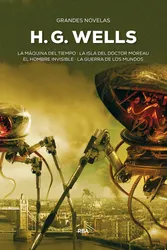
    Grandes Novelas : La máquina del tiempo - La isla del doctor Moreau - El hombre invisible - La guerra de los mundos

    H.G. Wells

  5. 31. Juli
    2.9

    The Time Machine

    H.G. Wells

  6. Neu

    Die Insel des Dr. Moreau. Ein Klassiker der Science-Fiction. : Hörbuchzeit: Klassiker der Weltliteratur

    Hörbuchzeit, H.G. Wells

  7. Neu

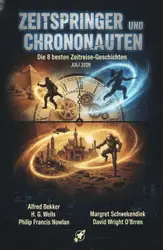
    Zeitspringer und Chrononauten: Die 8 besten Zeitreise-Geschichten Juli 2026

    Alfred Bekker, Philip Francis Nowlan, H.G. Wells, Margret Schwekendiek, David Wright O’Brien

  8. Neu

    Die chronischen Argonauten: Science Fiction

    H.G. Wells

  9. Neu

    Geschichten aus der Steinzeit: 1. Ugh-Lomi und Uya

    H.G. Wells

  10. Neu

    The Star

    H.G. Wells

  11. Neu

    Die Insel des Doktor Moreau: Science Fiction

    H.G. Wells

  12. Neu

    Der unsichtbare Mann: Science Fiction

    H.G. Wells