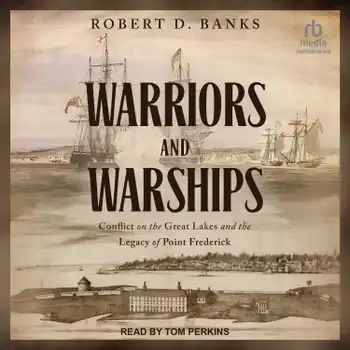
Warriors and Warships : Conflict on the Great Lakes and the Legacy of Point Frederick

The untold story of Point Frederick, where early nineteenth-century Canadians built warships that stopped invasion, brought peace, and the world's longest undefended border.

Opposite Kingston, Point Frederick became the 1789 dockyard home of the navy on Lake Ontario. Armed vessels were built to transport settlers and the military.

War in 1812 prompted the need for larger warships. Shipwrights were critical to winning the war. French Canadians from Quebec shipyards worked with the British to build warships with massive firepower.

In 1814, two invading armies advanced on outnumbered British and Canadians holding Niagara. Meanwhile, powerful Royal Navy warships sailed toward the action, unchallenged. When advised he was without naval support, the American commander halted his advance and withdrew from Canada.

With peace, the need for warships vanished. But threats of rebellion and insurgence demanded gunboats, and continued naval presence until 1853, when the dockyard finally closed. Glimpses of dockyard legacy are found today in Kingston waters, and on the grounds of the Royal Military College of Canada.

Über dieses Buch

The untold story of Point Frederick, where early nineteenth-century Canadians built warships that stopped invasion, brought peace, and the world's longest undefended border.

Opposite Kingston, Point Frederick became the 1789 dockyard home of the navy on Lake Ontario. Armed vessels were built to transport settlers and the military.

War in 1812 prompted the need for larger warships. Shipwrights were critical to winning the war. French Canadians from Quebec shipyards worked with the British to build warships with massive firepower.

In 1814, two invading armies advanced on outnumbered British and Canadians holding Niagara. Meanwhile, powerful Royal Navy warships sailed toward the action, unchallenged. When advised he was without naval support, the American commander halted his advance and withdrew from Canada.

With peace, the need for warships vanished. But threats of rebellion and insurgence demanded gunboats, and continued naval presence until 1853, when the dockyard finally closed. Glimpses of dockyard legacy are found today in Kingston waters, and on the grounds of the Royal Military College of Canada.

Starte noch heute mit diesem Buch für € 0

  • Hole dir während der Testphase vollen Zugriff auf alle Bücher in der App
  • Keine Verpflichtungen, jederzeit kündbar
Jetzt kostenlos testen
Mehr als 52 000 Menschen haben Nextory im App Store und auf Google Play 5 Sterne gegeben.