Über dieses Buch

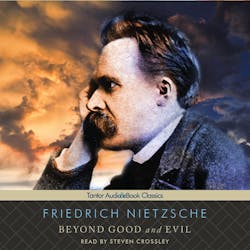
Friedrich Nietzsche's "Beyond Good and Evil" offers a provocative examination of morality, truth, and the limitations of philosophical thought. Written in 1886, the work is characterized by its aphoristic style, employing sharp wit and incisive arguments that challenge conventional ethical frameworks. Nietzsche critiques the dogmatic nature of traditional philosophy, proposing a re-evaluation of values that transcends binary notions of good and evil. In the context of Enlightenment thought, Nietzsche sets the stage for existentialism and postmodernism, urging readers to embrace a more nuanced understanding of morality that recognizes the complexity of human motives and societal constructs. Nietzsche, a 19th-century German philosopher known for his radical ideas, was steeped in the currents of Romanticism and German Idealism. His personal struggles with health and his deep interest in art, culture, and individualism profoundly influenced his philosophical inquiries. "Beyond Good and Evil" can be seen as a culmination of these interests, reflecting Nietzsche's desire to provoke his contemporaries to think critically about their values in an increasingly nihilistic society. For readers seeking a transformative intellectual experience, "Beyond Good and Evil" is an essential read. It challenges us to confront our own moral assumptions and encourages a courageous rethinking of life's foundational tenets, making it a vital piece of literature for anyone interested in philosophy, ethics, and the complexities of the human experience.

Starte noch heute mit diesem Buch für 0 €

  • Hole dir während der Testphase vollen Zugriff auf alle Bücher in der App
  • Keine Verpflichtungen, jederzeit kündbar
Jetzt kostenlos testen
Mehr als 52 000 Menschen haben Nextory im App Store und auf Google Play 5 Sterne gegeben.

  1. Also sprach Zarathustra

    Friedrich Nietzsche

  2. 3.0

    200 Meisterwerke der Literaturgeschichte (Kommentiert) : Erweiterte Ausgabe. Die größten Klassiker der Weltliteratur

    Franz Kafka, Victor Hugo, Fjodor Michailowitsch Dostojewski, Lord Byron, Giacomo Leopardi, Marcel Proust, Henrik Ibsen, Percy Bysshe Shelley, Charles Dickens, Jane Austen, Mary Shelley, Emily Brontë, Charlotte Brontë, Anne Brontë, William Makepeace Thackeray, Bram Stoker, Henry Fielding, George Eliot, William Shakespeare, D. H. Lawrence, Walt Whitman, Herman Melville, Thomas Wolfe, Virginia Woolf, Joseph Conrad, Sinclair Lewis, Lewis Carrol, Edgar Allan Poe, Edward Bulwer-Lytton, Oscar Wilde, H.G. Wells, Daniel Defoe, James Fenimore Cooper, Lew Wallace, Jonathan Swift, Mark Twain, Walter Scott, Nathaniel Hawthorne, Harriet Beecher Stowe, Laurence Sterne, Frances Hodgson Burnett, Arthur Conan Doyle, Wilkie Collins, Edgar Wallace, Robert Louis Stevenson, Jack London, Henry David Thoreau, John Galsworthy, F. Scott Fitzgerald, Rudyard Kipling, G.K. Chesterton, Washington Irvin, O.Henry, Ambrose Bierce, Alexander Sergejewitsch Puschkin, Michail Lermontow, Iwan Sergejewitsch Turgenew, Leo Tolstoi, Nikolai Gogol, Iwan Gontscharow, Nikolai Leskow, Anton Pawlowitsch Tschechow, Maxim Gorki, François Rabelais, Jean De Fontaine, Blaise Pascal, Pierre Corneille, Moliere, Jean Baptiste Racine, Charles Perrault, Voltaire, Denis Diderot, Jean-Jacques Rousseau, Pierre Ambroise Laclos, Antoine-François Prévost, Marquis De Sade, François René Chateaubriand, Stendhal, Honoré de Balzac, Alexandre Dumas, Alphonse de Lamartine, George Sand, Gustave Flaubert, Emile Zola, Guy De Maupassant, Alphonse Daudet, Jules Verne, Joris-Karl Huysmans, Prosper Mérimée, Charles Baudelaire, Stéphane Mallarmé, Arthur Rimbaud, André Gide, Arthur Schopenhauer, Heinrich Heine, Friedrich Schiller, Johann Wolfgang Goethe, Jacob Grimm, Gottfried von Straßburg, Wolfram von Eschenbach, E. T. Hoffmann, Annette von Droste-Hülshoff, Heinrich von Kleist, Friedrich Hölderlin, Theodor Fontane, Gustav Freytag, Gottfried Keller, Theodor Storm, Stefan Zweig, Joseph von Eichendorff, Klaus Mann, Rainer Maria Rilke, Johanna Spyri, Joseph Roth, Karl May, Robert Musil, Heinrich Mann, Sigmund Freud, Friedrich Nietzsche, Dante Alighieri, Giovanni Boccaccio, Giacomo Casanova, Luigi Pirandello, Giosuè Carducci, Gabriele D’Annunzio, Niccolo Machiavelli, Miguel Cervantes Saavedra, Pedro Calderón Barca, Vicente Blasco Ibañez, Knut Hamsun, Homer, Äsop, Herodot, Thukydides, Xenophon, Platon, - Aristoteles, - Sophokles, Euripides, - Aristophanes, Lao Tse, - Konfuzius, Siddhartha Gautama Buddha, Titus Livius, Tacitus, Marcus Tullius Cicero, Vergil, Ovid, Lukian, Petronius, Apuleius, Longos von Lesbos, Mark Aurel, Aurelius Augustinus

  3. 1.0

    100 Meisterwerke der Weltliteratur - Klassiker die man kennen muss : Bereicherte Ausgabe. Ein literarisches Panorama: Meisterwerke, Klassiker und Autoren der Weltliteratur

    Johann Wolfgang Goethe, Jules Verne, Gustave Flaubert, Franz Kafka, Lewis Carroll, Selma Lagerlöf, Sigmund Freud, Johanna Spyri, Theodor Storm, Rainer Maria Rilke, Charles Dickens, Stefan Zweig, Heinrich Heine, Honoré de Balzac, Theodor Fontane, Karl May, Gottfried Keller, Mark Twain, Heinrich Mann, Else Lasker-Schüler, Robert Musil, Walt Whitman, Oscar Wilde, Annette von Droste-Hülshoff, Arthur Schopenhauer, Robert Louis Stevenson, Gustav Freytag, James Fenimore Cooper, Edgar Allan Poe, Heinrich von Kleist, William Shakespeare, Dante Alighieri, Charlotte Brontë, Emily Brontë, Jack London, Arthur Conan Doyle, Joseph Conrad, Jane Austen, Herman Melville, Guy De Maupassant, Walter Scott, Jonathan Swift, Jacob Grimm, Wilhelm Grimm, Alexandre Dumas, Rudyard Kipling, Nathaniel Hawthorne, Homer, O.Henry, Voltaire, Lew Wallace, John Galsworthy, E. T. Hoffmann, Marcus Aurelius, Hans Christian Andersen, Anton Pawlowitsch Tschechow, Platon, Friedrich Nietzsche, Iwan Sergejewitsch Turgenew, Tacitus, Nikolai Gogol, Miguel de Cervantes, Mary Shelley, Thomas Wolfe, Emile Zola, Fjodor Michailowitsch Dostojewski, Leo Tolstoi, Joseph Roth, Joseph von Eichendorff, Kurt Tucholsky, Iwan Alexandrowitsch Gontscharow, Oswald Spengler, Moliere, Alfred Adler, Sophie von Roche, Klaus Mann, Rumi

  4. 50 Meisterwerke der Philosophie : Metaphysik, Das Gastmahl, Bhagavadgita, Tractatus logico-philosophicus, Kritik der reinen Vernunft, Also sprach Zarathustra, Selbstbetrachtungen von Marcus Aurelius

    Ludwig Wittgenstein, Edmund Husserl, Karl Marx, Søren Kierkegaard, Friedrich Nietzsche, Ralph Waldo Emerson, John Stuart Mill, Georg Wilhelm Hegel, Friedrich Schelling, Johann Gottlieb Fichte, Immanuel Kant, John Locke, Montesquieu, Jean-Jacques Rousseau, David Hume, Gottfried Wilhelm Leibniz, Baruch Spinoza, - Konfuzius, Lao Tse, Platon, Xenophon, - Aristoteles, Marcus Tullius Cicero, Seneca, Epiktet, Marc Aurel, Plotin, Thomas von Aquin, Nicolaus von Cues, - Erasmus von Rotterdam, Niccolò Machiavelli, Tommaso Campanella, Martin Luther, Giordano Bruno, Samuel von Pufendorf, Abbé Castel Saint-Pierre, Michel de Montaigne, René Descartes, Francis Bacon, Blaise Pascal

  5. 3.5

    Beyond Good and Evil

    Friedrich Nietzsche

  6. Schopenhauer als Erzieher : Unzeitgemäße Betrachtungen, Drittes Stück

    Friedrich Nietzsche

  7. Vom Nutzen und Nachteil der Historie für das Leben : Unzeitgemäße Betrachtungen, Zweites Stück

    Friedrich Nietzsche

  8. Lyrikalische Bibliothek

    Heinrich Heine, Annette von Droste-Hülshoff, Charles Baudelaire, John Keats, Rainer Maria Rilke, Georg Heym, Wilhelm Busch, Arno Holz, Johann Wolfgang von Goethe, Christian Morgenstern, Joachim Ringelnatz, Georg Trakl, Ludwig Tieck, Stefan Zweig, Hugo von Hoffmannsthal, Edgar Allan Poe, Frank Wedekind, Franz Werfel, Wolfgang Borchert, Karl Kraus, Kurt Tucholsky, Friedrich Nietzsche, Else Lasker-Schüler, Ludwig Kalisch, Jakob van Hoddis, Joseph von Eichendorff, Gotthold Ephraim Lessing

  9. Thus Spoke Zarathustra : A Book for Everyone and No One

    Friedrich Nietzsche

  10. Zur Geschichte der moralischen Empfindungen. Aphorismen aus: Menschliches, Allzumenschliches. : Hörbuchzeit: Klassiker der Weltliteratur

    Hörbuchzeit, Friedrich Nietzsche

  11. Von den ersten und letzten Dingen. Aphorismen aus: Menschliches, Allzumenschliches. : Hörbuchzeit: Klassiker der Weltliteratur

    Hörbuchzeit, Friedrich Nietzsche

  12. Friedrich Nietzsche: Denken und Werk - Die große Hörbuch Box : Zarathustra, Antichrist, Götzendämmerung, Ecce Homo

    Friedrich Nietzsche