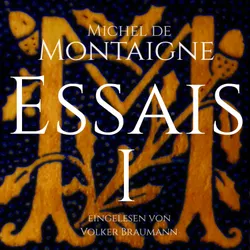
Complete Essays

Michel de Montaigne was one of the most influential figures of the Renaissance, singlehandedly responsible for popularising the essay as a literary form.

In 1572, Montaigne retired to his estates in order to devote himself to leisure, reading and reflection. There he wrote his constantly expanding 'essays', inspired by the ideas he found in books from his library and his own experience.

He discusses subjects as diverse as war-horses and cannibals, poetry and politics, sex and religion, love and friendship, ecstasy and experience. Above all, Montaigne studied himself to find his own inner nature and that of humanity. The Essays are among the most idiosyncratic and personal works in all literature. An insight into a wise Renaissance mind, they continue to engage, enlighten and entertain modern readers.

Born in 1533, Michel de Montaigne studied law and spent a number of years working as a counsellor before devoting his life to reading, writing and reflection. He died in 1586.

Über dieses Buch

Michel de Montaigne was one of the most influential figures of the Renaissance, singlehandedly responsible for popularising the essay as a literary form.

In 1572, Montaigne retired to his estates in order to devote himself to leisure, reading and reflection. There he wrote his constantly expanding 'essays', inspired by the ideas he found in books from his library and his own experience.

He discusses subjects as diverse as war-horses and cannibals, poetry and politics, sex and religion, love and friendship, ecstasy and experience. Above all, Montaigne studied himself to find his own inner nature and that of humanity. The Essays are among the most idiosyncratic and personal works in all literature. An insight into a wise Renaissance mind, they continue to engage, enlighten and entertain modern readers.

Born in 1533, Michel de Montaigne studied law and spent a number of years working as a counsellor before devoting his life to reading, writing and reflection. He died in 1586.
Starte noch heute mit diesem Buch für 0 €

  • Hole dir während der Testphase vollen Zugriff auf alle Bücher in der App
  • Keine Verpflichtungen, jederzeit kündbar
Jetzt kostenlos testen
Mehr als 52 000 Menschen haben Nextory im App Store und auf Google Play 5 Sterne gegeben.

  1. The Gift of Friendship : What the Wisest Minds Said About Our Deepest Bonds Across Two Thousand Years

    Alfred H. Hyatt, Henry David Thoreau, Thomas Carlyle, Henry Mackenzie, Oliver Goldsmith, Samuel Johnson, George Berkeley, Richard Steele, Joseph Addison, Francis Bacon, Michel de Montaigne, Anthusa, Aristotle

  2. Essais. Eine Auswahl. Ein philosophisches Meisterwerk. : Hörbuchzeit: Klassiker der Weltliteratur

    Hörbuchzeit, Michel de Montaigne

  3. #1

    Essais : Versuche

    Michel de Montaigne

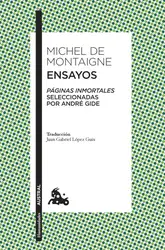
  4. Ensayos : "Páginas inmortales" seleccionadas por André Gide

    Michel de Montaigne

  5. Om børneopdragelse

    Michel de Montaigne

  6. 5.0

    50 citations de Michel De Montaigne

    Michel de Montaigne

  7. Comprendre Michel De Montaigne

    Michel de Montaigne

  8. 1800 Citations de philosophes

    Aristote, Épicure, Platon, Thalès de Milet, – Socrate, Protagoras, Anaximandre, Épictète, Héraclite, Marc Aurèle, René Descartes, Michel de Montaigne, Alexis de Tocqueville, Voltaire, Charles De Montesquieu, Jean-Jacques Rousseau, Emmanuel Kant, Hannah Arendt, Gottfried Wilhelm Leibniz, Georg Wilhelm Friedrich Hegel, Friedrich Nietzsche, Arthur Schopenhauer, David Hume, John Locke, Francis Bacon, Thomas Hobbes, Thomas More, Confucius, Érasme, Lao Tseu, Baruch Spinoza, Søren Kierkegaard, Nicolas Machiavel, Thomas d'Aquin, Henry David Thoreau

  9. 350 citations de philosophes français

    René Descartes, Michel de Montaigne, Blaise Pascal, Alexis de Tocqueville, Voltaire, Charles De Montesquieu, Jean-Jacques Rousseau

  10. 50 Meisterwerke der Philosophie : Metaphysik, Das Gastmahl, Bhagavadgita, Tractatus logico-philosophicus, Kritik der reinen Vernunft, Also sprach Zarathustra, Selbstbetrachtungen von Marcus Aurelius

    Ludwig Wittgenstein, Edmund Husserl, Karl Marx, Søren Kierkegaard, Friedrich Nietzsche, Ralph Waldo Emerson, John Stuart Mill, Georg Wilhelm Hegel, Friedrich Schelling, Johann Gottlieb Fichte, Immanuel Kant, John Locke, Montesquieu, Jean-Jacques Rousseau, David Hume, Gottfried Wilhelm Leibniz, Baruch Spinoza, - Konfuzius, Lao Tse, Platon, Xenophon, - Aristoteles, Marcus Tullius Cicero, Seneca, Epiktet, Marc Aurel, Plotin, Thomas von Aquin, Nicolaus von Cues, - Erasmus von Rotterdam, Niccolò Machiavelli, Tommaso Campanella, Martin Luther, Giordano Bruno, Samuel von Pufendorf, Abbé Castel Saint-Pierre, Michel de Montaigne, René Descartes, Francis Bacon, Blaise Pascal

  11. Philosophie der Renaissance : Die wichtigsten Werke von Michel de Montaigne, Niccolò Machiavelli, Thomas Morus, Erasmus, Francis Bacon

    Niccolò Machiavelli, Michel de Montaigne, - Erasmus von Rotterdam, Thomas Morus, Francis Bacon, Tommaso Campanella, Martin Luther, Ludwig Kuhlenbeck

  12. Die größten Philosophen der Renaissance : Die Discorsi, Man muß seinen Willen beschränken, Der Fürst, Utopia, Das Lob der Torheit

    - Erasmus von Rotterdam, Niccolò Machiavelli, Thomas Morus, Francis Bacon, Tommaso Campanella, Michel de Montaigne, Nicolaus von Cues, Martin Luther, Ludwig Kuhlenbeck