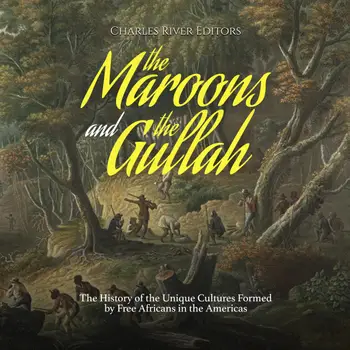
The Maroons and the Gullah: The History of the Unique Cultures Formed by Free Africans in the Americas

Although the slave systems required the continual use of force and coercion, as well as the harsh punishment of any rebellion, slaves were not a helpless labor force terrorized into obedience and docility. Slaves resisted and sometimes rebelled, and over the centuries there were thousands of slave rebellions of varying sizes. Slaves commonly resisted in many ways, such as sabotaging their tools and the crops they were tending, but much more rarely slaves violently rebelled, which were for the most part put down with extreme violence.

Of course, a fairly common form of resistance was running away and seeking hiding places in environments where slave catchers experienced difficulty. Slaves who ran and hid out, or who made their own settlements, were called maroons, from the Spanish word cimarron, which means “wild” or “untamed.” The term that historians commonly use to describe this is marronage, adapted from the French word maron, meaning the same as maroon. Marronage took two forms, grand and petty. Grand marronage was permanent, with escapees joining together to establish lasting settlements in inaccessible areas in mountains and swamps, sometimes preferring death rather than being caught and enslaved again.

The Gullah Geechee, or the “Gullah” for short, are the descendants and rightful heirs of the once-shackled slaves who resided in these parts. As the guardians and torch holders of the incredible legacy left behind by their persevering ancestors, the modern Gullah spare no effort in preserving the inherently unique customs and traditions, complete with their own creole tongue, that have been passed down from one generation to the next.

Starte noch heute mit diesem Buch für 0 €

  • Hole dir während der Testphase vollen Zugriff auf alle Bücher in der App
  • Keine Verpflichtungen, jederzeit kündbar
Jetzt kostenlos testen
Mehr als 52 000 Menschen haben Nextory im App Store und auf Google Play 5 Sterne gegeben.

  1. 1.0

    Die Panzer: Die Geschichte und das Vermächtnis von Nazideutschlands berühmtesten Panzern des Zweiten Weltkriegs

    Charles River Editors

  2. 4.0

    The Empires of India: The History of the Dynasties that Ruled India Before the British

    Charles River Editors

  3. World War II in the Arctic: The History of the Aleutian Islands Campaign and Nazi Germany’s Arctic Invasion of the Soviet Union

    Charles River Editors

  4. 3.8

    Hans-Ulrich Rudel: The Life and Legacy of the Luftwaffe’s Deadliest Stuka Pilot

    Charles River Editors

  5. The Assassinated Presidents: The Lives and Deaths of Abraham Lincoln, James Garfield, William McKinley, and John F. Kennedy

    Charles River Editors

  6. Das mittelalterliche Russland: Die Geschichte und das Erbe der Gruppen, die den russischen Staat im Mittelalter entwickelten

    Charles River Editors

  7. The Underworld in Ancient Mesoamerica: The History and Legacy of Mesoamerican Concepts of Death

    Charles River Editors

  8. Imperial Germany’s Colonization in Africa: The History of the German Efforts and Conflicts to Colonize Parts of Africa

    Charles River Editors

  9. 3.5

    Sigmund Freud and Carl Jung: The Pioneering Lives and Works of History’s Most Influential Psychologists

    Charles River Editors

  10. The Disappearance of the USS Thresher: The History of the American Nuclear Submarine that Sank at the Height of the Cold War

    Charles River Editors

  11. Winston Churchill’s Great Escapes: The Story of the British Bulldog’s Death-Defying Life Before He Became Prime Minister

    Charles River Editors

  12. The Myths of India: The History and Legacy of Mythology across the Indian Subcontinent

    Charles River Editors