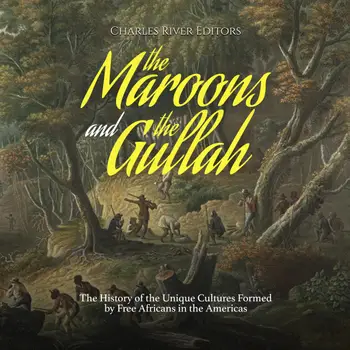
The Maroons and the Gullah: The History of the Unique Cultures Formed by Free Africans in the Americas

Although the slave systems required the continual use of force and coercion, as well as the harsh punishment of any rebellion, slaves were not a helpless labor force terrorized into obedience and docility. Slaves resisted and sometimes rebelled, and over the centuries there were thousands of slave rebellions of varying sizes. Slaves commonly resisted in many ways, such as sabotaging their tools and the crops they were tending, but much more rarely slaves violently rebelled, which were for the most part put down with extreme violence.

Of course, a fairly common form of resistance was running away and seeking hiding places in environments where slave catchers experienced difficulty. Slaves who ran and hid out, or who made their own settlements, were called maroons, from the Spanish word cimarron, which means “wild” or “untamed.” The term that historians commonly use to describe this is marronage, adapted from the French word maron, meaning the same as maroon. Marronage took two forms, grand and petty. Grand marronage was permanent, with escapees joining together to establish lasting settlements in inaccessible areas in mountains and swamps, sometimes preferring death rather than being caught and enslaved again.

The Gullah Geechee, or the “Gullah” for short, are the descendants and rightful heirs of the once-shackled slaves who resided in these parts. As the guardians and torch holders of the incredible legacy left behind by their persevering ancestors, the modern Gullah spare no effort in preserving the inherently unique customs and traditions, complete with their own creole tongue, that have been passed down from one generation to the next.
Kom i gang med denne boken i dag for 0 kr

  • Få full tilgang til alle bøkene i appen i prøveperioden
  • Ingen forpliktelser, si opp når du vil
Prøv gratis nå
Mer enn 52 000 personer har gitt Nextory 5 stjerner på App Store og Google Play.

  1. The Soviet Union: The History and Legacy of the USSR from World War I to the End of the Cold War

    Charles River Editors

  2. Colonial Vietnam: The History of the Division Between North and South Vietnam

    Charles River Editors

  3. Arnold Rothstein and Meyer Lansky: The Lives and Legacies of the Gangsters Who Reformed Organized Crime in America

    Charles River Editors

  4. 3.5

    Sigmund Freud and Carl Jung: The Pioneering Lives and Works of History’s Most Influential Psychologists

    Charles River Editors

  5. Black Wall Street: The History of the Greenwood District Before the Tulsa Race Riot

    Charles River Editors

  6. The Holy Roman Empire’s Conflicts with the Vatican: The History of the Medieval Wars that Fractured Germany and Italy

    Charles River Editors

  7. 5.0

    Food and Drink in the Greco-Roman World: The History of Eating and Drinking in Ancient Greece and Rome

    Charles River Editors

  8. The Dutch East India Company and British East India Company: The History and Legacy of the World’s Most Famous Colonial Trade Companies

    Charles River Editors

  9. The Biggest Battles of the Pacific Theater: The History of the Decisive Campaigns that Led to Victory Over Japan in World War II

    Charles River Editors

  10. The Osage Indian Murders: The History of the Notorious Killing Spree and the Federal Investigations in the Early 20th Century

    Charles River Editors

  11. The Modern Discovery of Australia and New Zealand: The History of the Indigenous Natives and the Initial European Expeditions and Settlements

    Charles River Editors

  12. Recent UFO Sightings: The History and Mysteries of UFO Encounters in the Last 70 Years

    Charles River Editors