oder

Finde dein nächstes Lieblingsbuch

  1. 3.0

    200 Meisterwerke der Literaturgeschichte (Kommentiert) : Erweiterte Ausgabe. Die größten Klassiker der Weltliteratur

    Franz Kafka, Victor Hugo, Fjodor Michailowitsch Dostojewski, Lord Byron, Giacomo Leopardi, Marcel Proust, Henrik Ibsen, Percy Bysshe Shelley, Charles Dickens, Jane Austen, Mary Shelley, Emily Brontë, Charlotte Brontë, Anne Brontë, William Makepeace Thackeray, Bram Stoker, Henry Fielding, George Eliot, William Shakespeare, D. H. Lawrence, Walt Whitman, Herman Melville, Thomas Wolfe, Virginia Woolf, Joseph Conrad, Sinclair Lewis, Lewis Carrol, Edgar Allan Poe, Edward Bulwer-Lytton, Oscar Wilde, H.G. Wells, Daniel Defoe, James Fenimore Cooper, Lew Wallace, Jonathan Swift, Mark Twain, Walter Scott, Nathaniel Hawthorne, Harriet Beecher Stowe, Laurence Sterne, Frances Hodgson Burnett, Arthur Conan Doyle, Wilkie Collins, Edgar Wallace, Robert Louis Stevenson, Jack London, Henry David Thoreau, John Galsworthy, F. Scott Fitzgerald, Rudyard Kipling, G.K. Chesterton, Washington Irvin, O.Henry, Ambrose Bierce, Alexander Sergejewitsch Puschkin, Michail Lermontow, Iwan Sergejewitsch Turgenew, Leo Tolstoi, Nikolai Gogol, Iwan Gontscharow, Nikolai Leskow, Anton Pawlowitsch Tschechow, Maxim Gorki, François Rabelais, Jean De Fontaine, Blaise Pascal, Pierre Corneille, Moliere, Jean Baptiste Racine, Charles Perrault, Voltaire, Denis Diderot, Jean-Jacques Rousseau, Pierre Ambroise Laclos, Antoine-François Prévost, Marquis De Sade, François René Chateaubriand, Stendhal, Honoré de Balzac, Alexandre Dumas, Alphonse de Lamartine, George Sand, Gustave Flaubert, Emile Zola, Guy De Maupassant, Alphonse Daudet, Jules Verne, Joris-Karl Huysmans, Prosper Mérimée, Charles Baudelaire, Stéphane Mallarmé, Arthur Rimbaud, André Gide, Arthur Schopenhauer, Heinrich Heine, Friedrich Schiller, Johann Wolfgang Goethe, Jacob Grimm, Gottfried von Straßburg, Wolfram von Eschenbach, E. T. Hoffmann, Annette von Droste-Hülshoff, Heinrich von Kleist, Friedrich Hölderlin, Theodor Fontane, Gustav Freytag, Gottfried Keller, Theodor Storm, Stefan Zweig, Joseph von Eichendorff, Klaus Mann, Rainer Maria Rilke, Johanna Spyri, Joseph Roth, Karl May, Robert Musil, Heinrich Mann, Sigmund Freud, Friedrich Nietzsche, Dante Alighieri, Giovanni Boccaccio, Giacomo Casanova, Luigi Pirandello, Giosuè Carducci, Gabriele D’Annunzio, Niccolo Machiavelli, Miguel Cervantes Saavedra, Pedro Calderón Barca, Vicente Blasco Ibañez, Knut Hamsun, Homer, Äsop, Herodot, Thukydides, Xenophon, Platon, - Aristoteles, - Sophokles, Euripides, - Aristophanes, Lao Tse, - Konfuzius, Siddhartha Gautama Buddha, Titus Livius, Tacitus, Marcus Tullius Cicero, Vergil, Ovid, Lukian, Petronius, Apuleius, Longos von Lesbos, Mark Aurel, Aurelius Augustinus

  2. 1.0

    100 Meisterwerke der Weltliteratur - Klassiker die man kennen muss : Bereicherte Ausgabe. Ein literarisches Panorama: Meisterwerke, Klassiker und Autoren der Weltliteratur

    Johann Wolfgang Goethe, Jules Verne, Gustave Flaubert, Franz Kafka, Lewis Carroll, Selma Lagerlöf, Sigmund Freud, Johanna Spyri, Theodor Storm, Rainer Maria Rilke, Charles Dickens, Stefan Zweig, Heinrich Heine, Honoré de Balzac, Theodor Fontane, Karl May, Gottfried Keller, Mark Twain, Heinrich Mann, Else Lasker-Schüler, Robert Musil, Walt Whitman, Oscar Wilde, Annette von Droste-Hülshoff, Arthur Schopenhauer, Robert Louis Stevenson, Gustav Freytag, James Fenimore Cooper, Edgar Allan Poe, Heinrich von Kleist, William Shakespeare, Dante Alighieri, Charlotte Brontë, Emily Brontë, Jack London, Arthur Conan Doyle, Joseph Conrad, Jane Austen, Herman Melville, Guy De Maupassant, Walter Scott, Jonathan Swift, Jacob Grimm, Wilhelm Grimm, Alexandre Dumas, Rudyard Kipling, Nathaniel Hawthorne, Homer, O.Henry, Voltaire, Lew Wallace, John Galsworthy, E. T. Hoffmann, Marcus Aurelius, Hans Christian Andersen, Anton Pawlowitsch Tschechow, Platon, Friedrich Nietzsche, Iwan Sergejewitsch Turgenew, Tacitus, Nikolai Gogol, Miguel de Cervantes, Mary Shelley, Thomas Wolfe, Emile Zola, Fjodor Michailowitsch Dostojewski, Leo Tolstoi, Joseph Roth, Joseph von Eichendorff, Kurt Tucholsky, Iwan Alexandrowitsch Gontscharow, Oswald Spengler, Moliere, Alfred Adler, Sophie von Roche, Klaus Mann, Rumi

  3. 3.8

    Reise zum Mittelpunkt der Erde

    Jules Verne

  4. 5.0

    In 80 Tagen um die Welt

    Jules Verne

  5. 4.4

    In 80 Tagen um die Welt

    Jules Verne

  6. Die Reise zum Mittelpunkt der Erde

    Jules Verne

  7. 20.000 Meilen unter dem Meer

    Jules Verne

  8. Neu
    4.5
    #12

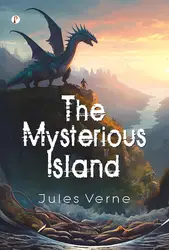
    The Mysterious Island

    Jules Verne

  9. Der Leuchtturm am Ende der Welt

    Jules Verne

  10. The Complete Collection of Jules Verne

    Jules Verne

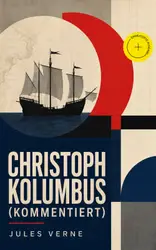
  11. Christoph Kolumbus (Kommentiert) : Erweiterte Ausgabe. Die Biografie

    Jules Verne

  12. Die größten Abenteuerromane aller Zeiten : Klassiker-Sammlung mit Seefahrten, Schatzsuche, Detektivfällen und Fantastik der Weltliteratur

    Jules Verne, Jack London, Karl May, Mark Twain, Alexandre Dumas, James Fenimore Cooper, Herman Melville, Jonathan Swift, Homer, Daniel Defoe, Robert Louis Stevenson, Walter Scott, Max Brand, Emilio Salgari, Victor Hugo, Edgar Allan Poe, Rudyard Kipling, Lewis Carroll, Charles Dickens, Carlo Collodi, Friedrich Gerstäcker, Sophie Wörishöffer, Amalie Schoppe, Joseph Conrad, Bram Stoker, Pierre Loti, Friedrich Wilhelm Mader, G.K. Chesterton, Arthur Conan Doyle, H.G. Wells, Gerhart Hauptmann, Robert Kraft, Lew Wallace, Maurice Leblanc, Zane Grey, Walther Kabel, Georg Engel, John Retcliffe, Bret Harte, Johannes Kaltenboeck, Kurt Floericke, Ann Stephens, Franz Treller, Charles Sealsfield, Friedrich Armand Strubberg, Jakob Wassermann, Miguel de Cervantes, Heinrich Zschokke, James Morier, Frederick Marryat

Über dieses Buch

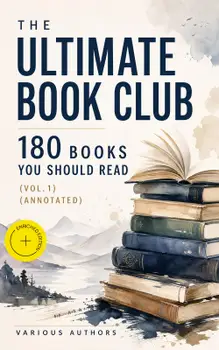
The Ultimate Book Club: 180 Books You Should Read (Vol.1) gathers an extraordinary cross-section of world literature, philosophy, adventure, social critique, psychological inquiry, and speculative imagination. Its range extends from ancient dialogues and classical drama to Victorian realism, Gothic terror, modernist experimentation, children's fantasy, detective fiction, and political reflection. The volume's significance lies in its capacious vision of reading as a conversation across genres, nations, and centuries. The contributors represent many of the defining currents of literary and intellectual history: Enlightenment satire, Romantic introspection, nineteenth-century realism, fin-de-siècle aestheticism, imperial adventure, early science fiction, modernist fragmentation, and moral philosophy. European, American, Russian, Japanese, and other traditions meet here, bringing together voices shaped by revolution, industrialization, empire, reform, spiritual searching, and artistic innovation. Collectively, they illuminate how literature has addressed freedom, identity, desire, justice, faith, imagination, and the human condition. This volume is highly recommended for readers seeking a rich, structured entry into the global canon. It offers the rare opportunity to encounter many essential perspectives and styles within a single collection, encouraging comparison as much as appreciation. For students, book clubs, and lifelong readers, it provides both education and pleasure, fostering a lively dialogue among works that continue to define literary culture.

This enriched edition has been carefully crafted to add value to your reading experience.

- An Introduction draws the threads together, discussing why these diverse authors and texts belong in one collection.

- Historical Context explores the cultural and intellectual currents that shaped these works, offering insight into the shared (or contrasting) eras that influenced each writer.

- A combined Synopsis (Selection) briefly outlines the key plots or arguments of the included pieces, helping readers grasp the anthology's overall scope without giving away essential twists.

- A collective Analysis highlights common themes, stylistic variations, and significant crossovers in tone and technique, tying together writers from different backgrounds.

- Reflection questions encourage readers to compare the different voices and perspectives within the collection, fostering a richer understanding of the overarching conversation.