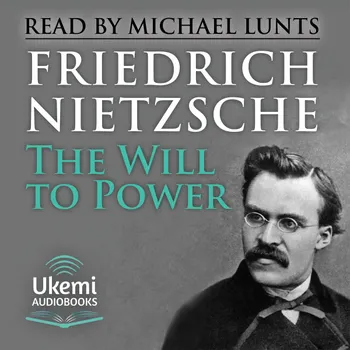
The Will to Power : An Attempted Transvaluation of All Values

Nietzsche never recovered from his mental breakdown in 1889 and therefore was unable to further any plans he had for the ‘magnum opus’ he had once intended, bringing together in a coherent whole his mature philosophy.

It was left to his close friend Heinrich Köselitz and his sister Elizabeth Förster-Nietzsche to go through the remaining notebooks and unpublished writings, choosing sections of particular interest to produce The Will to Power, giving it the subtitle An Attempted Transvaluation of All Values. It was published in 1901, was expanded in subsequent years and was translated into English in its expanded form in 1910 by Anthony M Ludovici, who had done so much to bring Nietzsche’s work to the English-speaking public.

Ludovici explains that for Nietzsche, the Will to Power was the fundamental principle of all life, a view that could be found in many of his earlier texts, including Thus Spoke Zarathustra: ‘Where there is life, there is also will: not, however, Will to Life, but - so teach I thee - Will to Power!’ (In this, Nietzsche was concerned to overtake Schopenhauer’s concept of the ‘Will to Live’.)

This posthumous compilation is arranged in four books (divided into 1,067 sections):

European Nihilism

A Criticism of the Highest Values That Have Prevailed Hitherto

The Principles of a New Valuation

Discipline and Breeding

Among the themes given prominence by this compilation - and it is, it must be remembered, basically an anthology - are nihilism, metaphysics and the future of Europe.

Nietzsche identified Christianity (and its claim to be ‘higher and better’) and its ‘meek/weak’ attitude as one cause of the nihilism that so concerned him. Another side of the coin was the ineluctable basic human nature of ’the will to power’. Deny that, and nihilism results. But passive nihilism (following the breakdown of social conventions, including conventional religion) can be counteracted by active nihilism and the role of the ‘ubermensch’, the self-reliant.

In aphorism after aphorism he argued for the creation of new values based on acceptance that there is nothing beyond ourselves. It remains his conviction that it is the men who are the masters of themselves - a dominating elite - who must lead. But a deeply human initiative, not the creation of a master race!

Aphorism 22 posits, ‘Nihilism. It may be two things: A. Nihilism as a sign of enhanced spiritual strength: active Nihilism. B. Nihilism as a sign of the collapse and decline of spiritual strength: passive Nihilism.’ Nietzsche’s powerful, uncompromising language continues right to the closing moments, where he concludes, ‘And even you yourselves are this will to power - and nothing besides!’

Translation by Anthony M Ludovici.

Über dieses Buch

Nietzsche never recovered from his mental breakdown in 1889 and therefore was unable to further any plans he had for the ‘magnum opus’ he had once intended, bringing together in a coherent whole his mature philosophy.

It was left to his close friend Heinrich Köselitz and his sister Elizabeth Förster-Nietzsche to go through the remaining notebooks and unpublished writings, choosing sections of particular interest to produce The Will to Power, giving it the subtitle An Attempted Transvaluation of All Values. It was published in 1901, was expanded in subsequent years and was translated into English in its expanded form in 1910 by Anthony M Ludovici, who had done so much to bring Nietzsche’s work to the English-speaking public.

Ludovici explains that for Nietzsche, the Will to Power was the fundamental principle of all life, a view that could be found in many of his earlier texts, including Thus Spoke Zarathustra: ‘Where there is life, there is also will: not, however, Will to Life, but - so teach I thee - Will to Power!’ (In this, Nietzsche was concerned to overtake Schopenhauer’s concept of the ‘Will to Live’.)

This posthumous compilation is arranged in four books (divided into 1,067 sections):

European Nihilism

A Criticism of the Highest Values That Have Prevailed Hitherto

The Principles of a New Valuation

Discipline and Breeding

Among the themes given prominence by this compilation - and it is, it must be remembered, basically an anthology - are nihilism, metaphysics and the future of Europe.

Nietzsche identified Christianity (and its claim to be ‘higher and better’) and its ‘meek/weak’ attitude as one cause of the nihilism that so concerned him. Another side of the coin was the ineluctable basic human nature of ’the will to power’. Deny that, and nihilism results. But passive nihilism (following the breakdown of social conventions, including conventional religion) can be counteracted by active nihilism and the role of the ‘ubermensch’, the self-reliant.

In aphorism after aphorism he argued for the creation of new values based on acceptance that there is nothing beyond ourselves. It remains his conviction that it is the men who are the masters of themselves - a dominating elite - who must lead. But a deeply human initiative, not the creation of a master race!

Aphorism 22 posits, ‘Nihilism. It may be two things: A. Nihilism as a sign of enhanced spiritual strength: active Nihilism. B. Nihilism as a sign of the collapse and decline of spiritual strength: passive Nihilism.’ Nietzsche’s powerful, uncompromising language continues right to the closing moments, where he concludes, ‘And even you yourselves are this will to power - and nothing besides!’

Translation by Anthony M Ludovici.
Starte noch heute mit diesem Buch für 0 €

  • Hole dir während der Testphase vollen Zugriff auf alle Bücher in der App
  • Keine Verpflichtungen, jederzeit kündbar
Jetzt kostenlos testen
Mehr als 52 000 Menschen haben Nextory im App Store und auf Google Play 5 Sterne gegeben.

  1. 2.0

    Liebe Liebe, ... : Eine Auseinandersetzung mit der Liebe

    Khalil Gibran, Erich Kästner, Eva Illouz, Virginia Woolf, Adele Schopenhauer, Clara Wieck, Else Lasker-Schüler, Erich Fromm, Franz Grillparzer, Franz Kafka, Friedrich Nietzsche, Friedrich Schiller, G. W. F. Hegel, Gabriele Reuter, Helene Stöcker, Hermann Jaitner, James Krüss, Kathinka Zitz, Mascha Kaléko, Nikolai Gogol, Novalis, Paula Becker, Platon, Rainer Maria Rilke, Ricarda Huch, Sigmund Freud, Ute Richter, Elke Heinrich, Martin Luther, G. Science

  2. 1.0

    100 Meisterwerke der Weltliteratur - Klassiker die man kennen muss : Bereicherte Ausgabe. Ein literarisches Panorama: Meisterwerke, Klassiker und Autoren der Weltliteratur

    Johann Wolfgang Goethe, Jules Verne, Gustave Flaubert, Franz Kafka, Lewis Carroll, Selma Lagerlöf, Sigmund Freud, Johanna Spyri, Theodor Storm, Rainer Maria Rilke, Charles Dickens, Stefan Zweig, Heinrich Heine, Honoré de Balzac, Theodor Fontane, Karl May, Gottfried Keller, Mark Twain, Heinrich Mann, Else Lasker-Schüler, Robert Musil, Walt Whitman, Oscar Wilde, Annette von Droste-Hülshoff, Arthur Schopenhauer, Robert Louis Stevenson, Gustav Freytag, James Fenimore Cooper, Edgar Allan Poe, Heinrich von Kleist, William Shakespeare, Dante Alighieri, Charlotte Brontë, Emily Brontë, Jack London, Arthur Conan Doyle, Joseph Conrad, Jane Austen, Herman Melville, Guy De Maupassant, Walter Scott, Jonathan Swift, Jacob Grimm, Wilhelm Grimm, Alexandre Dumas, Rudyard Kipling, Nathaniel Hawthorne, Homer, O.Henry, Voltaire, Lew Wallace, John Galsworthy, E. T. Hoffmann, Marcus Aurelius, Hans Christian Andersen, Anton Pawlowitsch Tschechow, Platon, Friedrich Nietzsche, Iwan Sergejewitsch Turgenew, Tacitus, Nikolai Gogol, Miguel de Cervantes, Mary Shelley, Thomas Wolfe, Emile Zola, Fjodor Michailowitsch Dostojewski, Leo Tolstoi, Joseph Roth, Joseph von Eichendorff, Kurt Tucholsky, Iwan Alexandrowitsch Gontscharow, Oswald Spengler, Moliere, Alfred Adler, Sophie von Roche, Klaus Mann, Rumi

  3. 3.0

    200 Meisterwerke der Literaturgeschichte : Die größten Klassiker der Weltliteratur

    Franz Kafka, Victor Hugo, Fjodor Michailowitsch Dostojewski, Lord Byron, Giacomo Leopardi, Marcel Proust, Henrik Ibsen, Percy Bysshe Shelley, Charles Dickens, Jane Austen, Mary Shelley, Emily Brontë, Charlotte Brontë, Anne Brontë, William Makepeace Thackeray, Bram Stoker, Henry Fielding, George Eliot, William Shakespeare, D. H. Lawrence, Walt Whitman, Herman Melville, Thomas Wolfe, Virginia Woolf, Joseph Conrad, Sinclair Lewis, Lewis Carrol, Edgar Allan Poe, Edward Bulwer-Lytton, Oscar Wilde, H.G. Wells, Daniel Defoe, James Fenimore Cooper, Lew Wallace, Jonathan Swift, Robert Louis Stevenson, Mark Twain, Walter Scott, Nathaniel Hawthorne, Harriet Beecher Stowe, Laurence Sterne, Frances Hodgson Burnett, Arthur Conan Doyle, Wilkie Collins, Edgar Wallace, Jack London, Henry David Thoreau, John Galsworthy, F. Scott Fitzgerald, Rudyard Kipling, G.K. Chesterton, Washington Irvin, O.Henry, Ambrose Bierce, Alexander Sergejewitsch Puschkin, Michail Lermontow, Iwan Sergejewitsch Turgenew, Leo Tolstoi, Nikolai Gogol, Iwan Gontscharow, Nikolai Leskow, Anton Pawlowitsch Tschechow, Maxim Gorki, François Rabelais, Jean De Fontaine, Blaise Pascal, Pierre Corneille, Moliere, Jean Baptiste Racine, Charles Perrault, Voltaire, Denis Diderot, Jean-Jacques Rousseau, Pierre Ambroise Laclos, Antoine-François Prévost, Marquis De Sade, François René Chateaubriand, Stendhal, Honoré de Balzac, Alexandre Dumas, Alphonse de Lamartine, George Sand, Gustave Flaubert, Emile Zola, Guy De Maupassant, Alphonse Daudet, Jules Verne, Joris-Karl Huysmans, Prosper Mérimée, Charles Baudelaire, Stéphane Mallarmé, Arthur Rimbaud, André Gide, Arthur Schopenhauer, Heinrich Heine, Friedrich Schiller, Johann Wolfgang Goethe, Jacob Grimm, Gottfried von Straßburg, Wolfram von Eschenbach, E. T. Hoffmann, Annette von Droste-Hülshoff, Heinrich von Kleist, Friedrich Hölderlin, Theodor Fontane, Gustav Freytag, Gottfried Keller, Theodor Storm, Stefan Zweig, Joseph von Eichendorff, Klaus Mann, Rainer Maria Rilke, Johanna Spyri, Joseph Roth, Karl May, Robert Musil, Heinrich Mann, Sigmund Freud, Friedrich Nietzsche, Dante Alighieri, Giovanni Boccaccio, Giacomo Casanova, Luigi Pirandello, Giosuè Carducci, Gabriele D’Annunzio, Niccolo Machiavelli, Miguel Cervantes Saavedra, Pedro Calderón Barca, Vicente Blasco Ibañez, Knut Hamsun, Homer, Äsop, Herodot, Thukydides, Xenophon, Platon, - Aristoteles, - Sophokles, Euripides, - Aristophanes, Lao Tse, - Konfuzius, Siddhartha Gautama Buddha, Titus Livius, Tacitus, Marcus Tullius Cicero, Vergil, Ovid, Lukian, Petronius, Apuleius, Longos von Lesbos, Mark Aurel, Aurelius Augustinus

  4. Neu

    Vom Nutzen und Nachteil der Historie für das Leben : Unzeitgemäße Betrachtungen, Zweites Stück

    Friedrich Nietzsche

  5. 2.5

    Friedrich Nietzsche: Der Antichrist : Ein Grundlagenwerk der Philosophie

    Friedrich Nietzsche

  6. 4.0

    Ainsi Parlait Zarathoustra - Livre Audio

    Friedrich Nietzsche, Livres audio en français

  7. 5.0

    Jenseits von Gut und Böse - Hörbuch

    Friedrich Nietzsche

  8. Also sprach Zarathustra - Hörbuch

    Friedrich Nietzsche

  9. Jenseits von Gut und Böse - Nietzsche alle Werke: Vorspiel einer Philosophie der Zukunft

    Friedrich Nietzsche, Nietzsche alle Werke, Philosophie Bücher

  10. Die schönste Zeit - Weihnachten mit Meisterwerken der Weltliteratur : Bereicherte Ausgabe. Eine literarische Reise durch die Weihnachtszeit

    Franz Kafka, Sigmund Freud, Charles Dickens, Stefan Zweig, Karl May, Walt Whitman, Arthur Schopenhauer, Robert Louis Stevenson, James Fenimore Cooper, Edgar Allan Poe, Arthur Conan Doyle, Joseph Conrad, Jacob Grimm, Wilhelm Grimm, Alexandre Dumas, Homer, O.Henry, Marcus Aurelius, Hans Christian Andersen, Platon, Friedrich Nietzsche, Tacitus, Mary Shelley, Fjodor Michailowitsch Dostojewski, Oswald Spengler, Alfred Adler, Rumi

  11. Die Meisterwerke der Weltliterature : Bereicherte Ausgabe. 100 Klassiker die man kennen muss

    Johann Wolfgang Goethe, Jules Verne, Gustave Flaubert, Franz Kafka, Lewis Carroll, Selma Lagerlöf, Sigmund Freud, Johanna Spyri, Theodor Storm, Rainer Maria Rilke, Charles Dickens, Stefan Zweig, Heinrich Heine, Honoré de Balzac, Theodor Fontane, Karl May, Gottfried Keller, Mark Twain, Heinrich Mann, Else Lasker-Schüler, Robert Musil, Walt Whitman, Oscar Wilde, Annette von Droste-Hülshoff, Arthur Schopenhauer, Robert Louis Stevenson, Gustav Freytag, James Fenimore Cooper, Edgar Allan Poe, Heinrich von Kleist, William Shakespeare, Dante Alighieri, Charlotte Brontë, Emily Brontë, Jack London, Arthur Conan Doyle, Joseph Conrad, Jane Austen, Herman Melville, Guy De Maupassant, Walter Scott, Jonathan Swift, Jacob Grimm, Wilhelm Grimm, Alexandre Dumas, Rudyard Kipling, Nathaniel Hawthorne, Homer, O.Henry, Voltaire, Lew Wallace, John Galsworthy, E. T. Hoffmann, Marcus Aurelius, Hans Christian Andersen, Anton Pawlowitsch Tschechow, Platon, Friedrich Nietzsche, Iwan Sergejewitsch Turgenew, Tacitus, Nikolai Gogol, Miguel de Cervantes, Mary Shelley, Thomas Wolfe, Emile Zola, Fjodor Michailowitsch Dostojewski, Leo Tolstoi, Joseph Roth, Joseph von Eichendorff, Kurt Tucholsky, Iwan Alexandrowitsch Gontscharow, Oswald Spengler, Moliere, Alfred Adler, Sophie von Roche, Klaus Mann, Rumi

  12. Klassiker des philosophischen Denkens: Die große Hörbuch Box : Ein Grundlagenwerk der Philosophie

    Francesco Petrarca, Rudolf Steiner, - Konfuzius, Marc Aurel, Lao Tse, - Aristoteles, Platon, Lucius Annaeus Seneca, Voltaire, Max Stirner, Henry David Thoreau, Friedrich Nietzsche, Étienne de La Boétie, Epiktet, Blaise Pascal