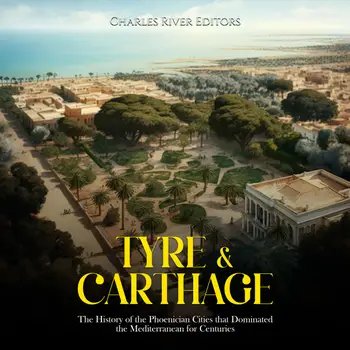
Tyre & Carthage: The History of the Phoenician Cities that Dominated the Mediterranean for Centuries

Across the eastern Mediterranean there has been discovered a great number of objects whose appearance or materials are extraneous to local cultures, whether it was an Egyptian amulet in Greece, a Greek vase in Africa, or thousands of strange amulets in Gibraltar. The remains are evidence that a huge amount of goods was once moved from one land to another, systematically transported and traded across the Mediterranean by the ancient commercial network of the Phoenicians. Beginning in the 13th century BCE, and lasting for more than a millennium, this civilization dominated the most important body of water known to the ancients. With their formidable ships and skills in trading, they made a name for themselves by trading between Egypt, Greece, Rome, Carthage, Sardinia, Spain, and eventually all the way to the Atlantic Ocean, establishing themselves as the undisputed lords of the sea.

One of the most crucial cities in the system was hidden beneath the Greek, Roman, and Crusader ruins of Lebanon: the ancient city of Tyre. "Seated at entrance to the sea," according to the prophet Ezekiel, Tyre was constructed on a purportedly impenetrable island. Tyre was considered to be one of the oldest and wealthiest metropolises of the world, and indeed, the city can be directly associated with some of the most important stages in the history of mankind.

Although Carthage by far preferred to exert economic pressure and influence before resorting to direct military power (and even went so far as to rely primarily on mercenary armies paid with its vast wealth for much of its history, it nonetheless produced a number of outstanding generals, from the likes of Hanno Magnus to, of course, the great bogeyman of Roman nightmares himself: Hannibal. Carthage was able to go from a minor Phoenician settlement to one of the most powerful trading empires of antiquity.
Über dieses Buch

Across the eastern Mediterranean there has been discovered a great number of objects whose appearance or materials are extraneous to local cultures, whether it was an Egyptian amulet in Greece, a Greek vase in Africa, or thousands of strange amulets in Gibraltar. The remains are evidence that a huge amount of goods was once moved from one land to another, systematically transported and traded across the Mediterranean by the ancient commercial network of the Phoenicians. Beginning in the 13th century BCE, and lasting for more than a millennium, this civilization dominated the most important body of water known to the ancients. With their formidable ships and skills in trading, they made a name for themselves by trading between Egypt, Greece, Rome, Carthage, Sardinia, Spain, and eventually all the way to the Atlantic Ocean, establishing themselves as the undisputed lords of the sea.

One of the most crucial cities in the system was hidden beneath the Greek, Roman, and Crusader ruins of Lebanon: the ancient city of Tyre. "Seated at entrance to the sea," according to the prophet Ezekiel, Tyre was constructed on a purportedly impenetrable island. Tyre was considered to be one of the oldest and wealthiest metropolises of the world, and indeed, the city can be directly associated with some of the most important stages in the history of mankind.

Although Carthage by far preferred to exert economic pressure and influence before resorting to direct military power (and even went so far as to rely primarily on mercenary armies paid with its vast wealth for much of its history, it nonetheless produced a number of outstanding generals, from the likes of Hanno Magnus to, of course, the great bogeyman of Roman nightmares himself: Hannibal. Carthage was able to go from a minor Phoenician settlement to one of the most powerful trading empires of antiquity.

Starte noch heute mit diesem Buch für 0 €

  • Hole dir während der Testphase vollen Zugriff auf alle Bücher in der App
  • Keine Verpflichtungen, jederzeit kündbar
Jetzt kostenlos testen
Mehr als 52 000 Menschen haben Nextory im App Store und auf Google Play 5 Sterne gegeben.

  1. 2.0

    Die Panzer: Die Geschichte und das Vermächtnis von Nazideutschlands berühmtesten Panzern des Zweiten Weltkriegs

    Charles River Editors

  2. The Iranian Revolution and Iran Hostage Crisis: The History of the Events that Broke American Relations with Iran

    Charles River Editors

  3. The Texas Revolution and Mexican-American War: The History and Legacy of the Conflicts that Led to Mexico’s Cession of the American Southwest

    Charles River Editors

  4. Das mittelalterliche Russland: Die Geschichte und das Erbe der Gruppen, die den russischen Staat im Mittelalter entwickelten

    Charles River Editors

  5. The Ancient Kingdoms of Africa: The History and Legacy of the African Continent’s Most Prominent Kingdoms in Antiquity

    Charles River Editors

  6. The Spanish Empire in the Americas: The History of Spain’s Colonization across Central America and South America

    Charles River Editors

  7. The Byzantines and Ottomans: The History of the Medieval Middle East’s Most Influential Empires

    Charles River Editors

  8. Imperial Germany’s Colonization in Africa: The History of the German Efforts and Conflicts to Colonize Parts of Africa

    Charles River Editors

  9. The Biggest Tank Battles of the World Wars: Tank Warfare in History’s Deadliest Conflicts

    Charles River Editors

  10. The Carlist Wars and the Spanish Civil War: The History of the Conflicts that Divided Spain in the Last 200 Years

    Charles River Editors

  11. The Colonies of British South Africa: The History and Legacy of British Imperialism in Modern South Africa and Zimbabwe

    Charles River Editors

  12. Eleanor of Aquitaine and Richard the Lionheart: The History of the Mother and Son Who Shaped Medieval Europe

    Charles River Editors