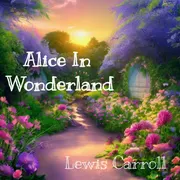
Alice, a young girl, sits bored by a riverbank and spots a White Rabbit with a pocket watch and waistcoat lamenting that he is late. Surprised, Alice follows him down a rabbit hole, which sends her into a lengthy plummet but to a safe landing. Inside a room with a table, she finds a key to a tiny door, beyond which is a garden. While pondering how to fit through the door, she discovers a bottle labelled "Drink me". Alice drinks some of the bottle's contents, and to her astonishment, she shrinks small enough to enter the door. However, she had left the key upon the table and cannot reach it. Alice then discovers and eats a cake labelled "Eat me", which causes her to grow to a tremendous size.
Charles Lutwidge Dodgson, matemático, lógico y escritor británico más conocido por el seudónimo de Lewis Carroll, nació en Daresbury, Cheshire, en 1832, y murió en Guildford en 1898. Durante cerca de cuarenta años fue profesor de matemáticas en Oxford, y junto con el también lógico George Boole procedió a una axiomatización de la lógica. Pero, sin duda, lo que le ha hecho universalmente conocido son sus historias para niños, historias donde desplegó todo su talento para jugar —y hacernos reflexionar— con el absurdo, el sinsentido y la magia de algunas paradojas lógicas. Carroll, que también gustaba de fotografiar niñas, y que ha dejado una galería de ambiguos retratos infantiles, es autor de Alicia en el país de las maravillas (1865), A través del espejo (1872), La caza del Snark (1876) y Silvia y Bruno (1889).