Sobre este libro

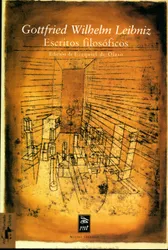
This Leibniz collection contains some of the philosopher’s most important works and ideas, spans three decades and illuminates the fascinating intellectual journey undertaken by him in his quest for truth.

A prodigious polymath, Leibniz was a mathematician, philosopher, physicist and statesman and engaged with a sweeping range of ideas and disciplines, striving throughout his life to be at the cutting edge of scientific thinking. These Principal Essays are arranged in chronological order.

‘Thoughts on Knowledge, Truth and Ideas’ (1684) was Leibniz’s first published paper on philosophical issues. In it he defined his concept of knowledge for the first time. In so doing, he criticised Descartes’ version of ontological truth and was undoubtedly prompted to do so by the appearance of Arnauld’s attack on Malebranche’s theory of knowledge in the ‘des vraies et des fausses idées’. He contrasts a priori and a posteriori reasoning, considers the nature and role of logic in reasoning and offers a clear overview of his epistemology.

The preoccupation with being able to distinguish between truth and falsity was nothing new in the 17th century and yet is something that remains as relevant and essential today as when it was written. The ‘Discourse on Metaphysics’ (1684) is the first explicit exposition of the nature of Leibnizian reasoning with its two principal pillars: sufficient reason and contradiction being shored up by the principle of the best, the principle of continuity, the predicate-in-notion principle and the principle of the identity of indescernibles. From these principles he would derive his notion that a perfect God created ‘the best of all possible worlds.’

‘On the Ultimate Origin of Things’ was written in 1697. In it Leibniz asserts the truth of the cosmological argument for the existence of God. He bases this truth on the principle of sufficient reason, one of the bedrock principles of his philosophy and postulates a process of endless progress to ever greater perfection in existence. ‘On Nature In Itself, or the Force Residing in Created Things’ (1698) explained the internal workings of nature within the framework of Leibniz’s theory of dynamics, identifying nature as the handiwork of God.

This volume also includes a number of Leibniz’s other works including: ‘A New System’ (1695); ‘Reflections on Locke’s Essay on Human Understanding’ (1696); ‘The Monadology’ (1714) and finally, ‘The Principles of Nature and of Grace’ (1714).

Translations by George Martin Duncan, George R. Montgomery and Robert Latta.

Empieza este libro hoy por 0 €

  • Disfruta de acceso completo a todos los libros de la app durante el periodo de prueba
  • Sin compromiso, cancela cuando quieras
Pruébalo gratis ahora
Más de 52 000 clientes han dado a Nextory 5 estrellas en la App Store y Google Play.

Los favoritos de otras personas

  1. The Russian Revolution

    Sheila Fitzpatrick

  2. The Theory of Moral Sentiments

    Adam Smith

  3. 2.0

    The General Theory of Employment, Interest, and Money

    John Maynard Keynes

  4. The Fall of Constantinople : The Brutal End of the Byzantine Empire

    50 minutes

  5. We Agnostics: How William James, Father of American Psychology, Advanced A Spiritual Solution to Addiction: How a Venerated Harvard Doctor Inspired the 12 Step Movement :

    Paul Schulte

  6. 4.0

    Economist on Wall Street : Notes on the Sanctity of Gold, the Value of Money, the Security of Investments, and Other Delusions

    Peter L. Bernstein

  7. Formative Early Writings by Karl Marx : Theses on Feuerbach, The German Ideology, The 18th Brumaire of Louis-Napoleon and Others

    Karl Marx

  8. Mejor valorados
    4.7

    Mama's Last Hug : Animal Emotions and What They Tell Us about Ourselves

    Frans de Waal

  9. The Will to Power : An Attempted Transvaluation of All Values

    Friedrich Nietzsche

  10. Alexander Hamilton, America's Founding Father of Finance : "His Original Reports on Public Credit, a National Bank, Manufactures "

    Mark Spencer, Alexander Hamilton

  11. #1

    99 Classic Thriller Short Stories: : Works by Philip K. Dick, Edgar Allan Poe, Arthur Conan Doyle, H.G. Wells, Wilkie Collins...and many more !

    Edgar Allan Poe, Alexander Pushkin, Algernon Blackwood, Arthur Conan Doyle, Arthur O. Friel, Arthur Quiller-Couch, Arthur Stringer, Arthur Train, Baroness Orczy, Barry Pain, Charles E. Van Loan, Cleveland Moffett, Compton MacKenzie, Cy Warman, E Nesbit, EW Hornung, Edgar Wallace, Edward S. Ellis, Ethel Turner, Eugene Manlove Rhodes, Frank L. Packard, Fred M. White, G.B. Lancaster, George Newnes, Gilbert Parker, Guy Boothby, H. Bedford-Jones, H.A. Lamb, H.C. Bailey, H.G. Wells, Hapsburg Liebe, Harold Bindloss, Harold Titus, Harvey J. O'Higgins, Henry C. Rowland, Jack Holt, James Aquila Kempster, James B. Connolly, Josephine Dodge Daskam, Mary Heaton Vorse, Mary Shipman Andrews, Mrs. Belloc Lowndes, O.Henry, Philip K Dick, Rafael Sabatini, Sax Rohmer, Stewart Edward White, W. W. Jacobs, Wadsworth Camp, Wilbur Daniel Steele, Wilkie Collins, William McLeod Raine, Readym Anthologies

  12. Fractals : A Very Short Introduction

    Kenneth Falconer