Sobre este libro

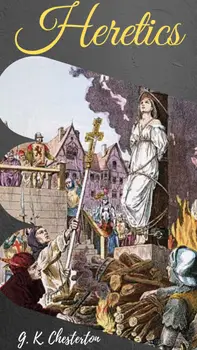
Nothing more strangely indicates an enormous and silent evil of modern society than the extraordinary use which is made nowadays of the word "orthodox." In former days the heretic was proud of not being a heretic. It was the kingdoms of the world and the police and the judges who were heretics. He was orthodox. He had no pride in having rebelled against them; they had rebelled against him. The armies with their cruel security, the kings with their cold faces, the decorous processes of State, the reasonable processes of law—all these like sheep had gone astray. The man was proud of being orthodox, was proud of being right.
Empieza este libro hoy por 0 €

  • Disfruta de acceso completo a todos los libros de la app durante el periodo de prueba
  • Sin compromiso, cancela cuando quieras
Pruébalo gratis ahora
Más de 52 000 clientes han dado a Nextory 5 estrellas en la App Store y Google Play.

  1. 3.5

    La sabiduría del padre Brown

    Gilbert K. Chesterton

  2. El jardín del humo y El cinco de espadas

    Gilbert K. Chesterton

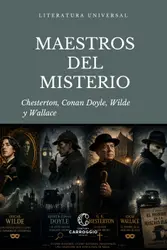
  3. Maestros del misterio : Pack obras selectas con introducciones y notas

    Gilbert K. Chesterton, Oscar Wilde, Arthur Conan Doyle, Edgar Wallace

  4. 3.0

    El secreto y el escándalo del padre Brown

    Gilbert K. Chesterton

  5. 4.0

    El hombre que sabía demasiado

    Gilbert K. Chesterton

  6. 3.0

    La incredulidad del padre Brown

    Gilbert K. Chesterton

  7. 3.0

    Los árboles del orgullo

    Gilbert K. Chesterton

  8. 4.0

    El candor del padre Brown

    Gilbert K. Chesterton

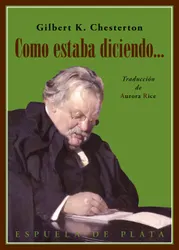
  9. Como estaba diciendo...

    Gilbert K. Chesterton

  10. #4

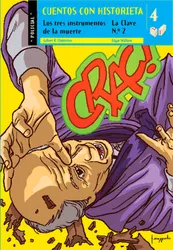
    Cuentos con historieta 4: Los tres instrumentos de la muerte / La Clave N.º 2 : Policial

    Gilbert K. Chesterton, Edgar Wallace

  11. 50 Capolavori Da Leggere Prima Di Morire: Vol. 1 (Golden Deer Classics)

    Carlo Collodi, Golden Deer Classics, Dante Alighieri, Niccolò Machiavelli, Daniel Defoe, Charlotte Brontë, Nathaniel Hawthorne, Jules Verne, Plato, Edmondo de Amicis, Rudyard Kipling, Voltaire, Homer, Sofocle, Lao Tzu, Jonathan Swift, Friedrich Schiller, Johann Wolfgang von Goethe, Honoré de Balzac, Aleksandr Puškin, Charles Dickens, Edgar Allan Poe, Fëdor Dostoevskij, Fyodor Dostoevsky, Herman Melville, Henry David Thoreau, Harriet Beecher Stowe, Lewis Carroll, Iginio Ugo Tarchetti, Arthur Schopenhauer, Friedrich Nietzsche, Emilio De Marchi, Gabriele D’Annunzio, Giovanni Verga, Jerome Klapka Jerome, Anatole France, Émile Zola, Oscar Wilde, J.M. Barrie, Matilde Serao, Grazia Deledda, Gilbert K. Chesterton, Italo Svevo, Luigi Pirandello, Augusto de Angelis, Stendhal, Alessandro Manzoni