Sobre este libro

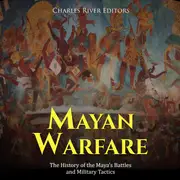
While it has historically been the Aztecs who were viewed as a militaristic civilization, there is considerable debate among scholars on the question of territorial aggression among the Maya. Since many of the Maya cities lack fortifications that are like those that Western archaeologists might have expected, it was once assumed that the Maya created for themselves an ideal, pacifistic society. However, others have theorized the Maya were particularly ferocious in warfare, taking captives for ritual sacrifice and appropriating territories through force. Still others have explained the demise of certain Maya cities by arguing that they were devastated by internecine warfare that doomed both sides of the fighting.

As with many aspects of Maya society, the presence or absence of bellicose behavior is an enigma. There have been some findings of parapets and ramparts, in particular at Tikal and Becán, clear proof that the Mayans saw the need for defensive fortifications for those cities. At the same time, the fact that such ramparts were not a consistent part of Maya city construction is evidence that there was considerable variation in aggression, expansion and cooperation from one city to another.

Today, it is a commonly held belief among scholars that warfare between Maya cities erupted when there was a shortage of food, either because of drought or insufficient production to support an expanding population. Although there is no direct evidence, it is supposed that one city would expand into the territory of another, sparking a competition for land.
Empieza este libro hoy por 0 €

  • Disfruta de acceso completo a todos los libros de la app durante el periodo de prueba
  • Sin compromiso, cancela cuando quieras
Pruébalo gratis ahora
Más de 52 000 clientes han dado a Nextory 5 estrellas en la App Store y Google Play.

  1. 4.0

    Los moros de Andalucía: la historia de los musulmanes en la Península Ibérica durante la Edad Media

    Charles River Editors

  2. 5.0

    The Sabines: The History and Legacy of the People Who Lived in Central Italy Before the Founding of Rome

    Charles River Editors

  3. Epaminondas: The Life and Legacy of Ancient Greece’s Greatest General

    Charles River Editors

  4. Israel’s Most Legendary Operations: The History of the Jewish State’s Famous Intelligence Operations and Special Forces Raids

    Charles River Editors

  5. 3.0

    The Age of Reptiles: The History and Legacy of the Mesozoic Era and the Dinosaurs

    Charles River Editors

  6. La Guerra Civil española: La historia y el legado del controversial conflicto que estableció la dictadura de Francisco Franco en España

    Charles River Editors

  7. 4.0

    Tezcatlipoca: la historia y el legado del dios supremo de la Mesoamérica posclásica

    Charles River Editors

  8. La Alhambra y el Alcázar de Sevilla: la historia de las famosas fortalezas construidas por los moros en España

    Charles River Editors

  9. Los moros del Magreb: la historia de los musulmanes en el norte de África durante la Edad Media

    Charles River Editors

  10. The Cretaceous Period: The History and Legacy of the Geologic Era that Ended with the Extinction of Dinosaurs

    Charles River Editors

  11. 4.0

    The Cumans and Magyars: The History and Legacy of the Steppe Nomads Who Raided Europe Throughout the Late Middle Ages

    Charles River Editors

  12. Ancient and Medieval Conspiracy Theories: The History of the World’s Most Persistent Conspiracy Theories

    Charles River Editors