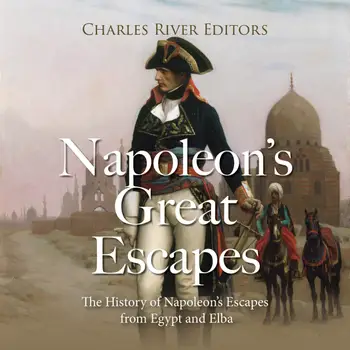
Napoleon’s Great Escapes: The History of Napoleon’s Escapes from Egypt and Elba

Napoleon harbored all kinds of delusions about his time in Egypt that were not based in reality, but he definitely left a lasting legacy in the region, one he would never live to see or appreciate. By shifting the theater of operations to Africa and the Middle East, Napoleon inadvertently ensured the Europeans would fight there in the future, and the French occupation impressed upon the locals the necessity of catching up to the modern world in terms of technology. Ancient tactics could not prevail against a modern army, no matter the numbers, but while that was a lesson Napoleon consistently taught his enemies in Egypt and the Levant to their detriment, the French also sped up the occupied populations’ technological advances as well.

Of all the incredible military feats Napoleon accomplished, none were more impressive than his escape from Elba and his return to France, which was literally a bloodless revolution. On February 26, 1815, Napoleon escaped from Elba, and in a desperate gamble, he landed on the French mainland with less than a thousand men and marched on Paris.

What happened next was truly remarkable. An infantry regiment was sent to intercept Napoleon and his men, but Napoleon rode up to them alone and shouted, "Here I am. Kill your Emperor, if you wish." Upon seeing their once invincible leader before them, the soldiers mutinied and went over to his side en masse. Other corps soon followed, and in no time at all Napoleon found himself at the head of an army marching on Paris. The newly reinstituted Bourbon monarch fled the city, and so, with barely a shot fired, Napoleon found himself enthroned as emperor once more. In an astonishing feat of political chutzpah and military organization, within three months he had seized power anew and rebuilt his veteran forces to a strength of 200,000 men. Of these, 128,000 were assembled into the Armee du Nord, under Napoleon’s personal command.

Sobre este libro

Napoleon harbored all kinds of delusions about his time in Egypt that were not based in reality, but he definitely left a lasting legacy in the region, one he would never live to see or appreciate. By shifting the theater of operations to Africa and the Middle East, Napoleon inadvertently ensured the Europeans would fight there in the future, and the French occupation impressed upon the locals the necessity of catching up to the modern world in terms of technology. Ancient tactics could not prevail against a modern army, no matter the numbers, but while that was a lesson Napoleon consistently taught his enemies in Egypt and the Levant to their detriment, the French also sped up the occupied populations’ technological advances as well.

Of all the incredible military feats Napoleon accomplished, none were more impressive than his escape from Elba and his return to France, which was literally a bloodless revolution. On February 26, 1815, Napoleon escaped from Elba, and in a desperate gamble, he landed on the French mainland with less than a thousand men and marched on Paris.

What happened next was truly remarkable. An infantry regiment was sent to intercept Napoleon and his men, but Napoleon rode up to them alone and shouted, "Here I am. Kill your Emperor, if you wish." Upon seeing their once invincible leader before them, the soldiers mutinied and went over to his side en masse. Other corps soon followed, and in no time at all Napoleon found himself at the head of an army marching on Paris. The newly reinstituted Bourbon monarch fled the city, and so, with barely a shot fired, Napoleon found himself enthroned as emperor once more. In an astonishing feat of political chutzpah and military organization, within three months he had seized power anew and rebuilt his veteran forces to a strength of 200,000 men. Of these, 128,000 were assembled into the Armee du Nord, under Napoleon’s personal command.

Empieza este libro hoy por 0 €

  • Disfruta de acceso completo a todos los libros de la app durante el periodo de prueba
  • Sin compromiso, cancela cuando quieras
Pruébalo gratis ahora
Más de 52 000 clientes han dado a Nextory 5 estrellas en la App Store y Google Play.

  1. The Library of Alexandria and the Library of Pergamon: The History of the Most Important Libraries in Antiquity

    Charles River Editors

  2. Los vándalos: la historia y legado de los bárbaros más famosos de la Antigüedad

    Charles River Editors

  3. The Making of Modern China: The History of the World’s Most Populous Country from the Qing Dynasty to Today

    Charles River Editors

  4. El robo nazi de arte: La historia de la confiscación y destrucción de obras de arte europeas por parte de Alemania durante la Segunda Guerra Mundial

    Charles River Editors

  5. La República de Venecia: La historia del imperio veneciano y su influencia a lo largo del Mediterráneo

    Charles River Editors

  6. Tupac Amaru II: The Life and Legacy of the Peruvian Leader Who Rebelled against the Spanish Empire

    Charles River Editors

  7. 4.0

    The Delhi Sultanate: The History and Legacy of the Medieval Islamic Dynasty in India

    Charles River Editors

  8. Operation Mockingbird: The Controversial History of the CIA’s Efforts to Manipulate American Media Outlets

    Charles River Editors

  9. La Guerra Civil española: La historia y el legado del controversial conflicto que estableció la dictadura de Francisco Franco en España

    Charles River Editors

  10. Las pirámides de Egipto: los orígenes y la historia de los monumentos más famosos del mundo

    Charles River Editors

  11. Hispania romana: La historia de la conquista de España y la península ibérica por la antigua Roma

    Charles River Editors

  12. Eleanor of Aquitaine and Richard the Lionheart: The History of the Mother and Son Who Shaped Medieval Europe

    Charles River Editors