Sobre este libro

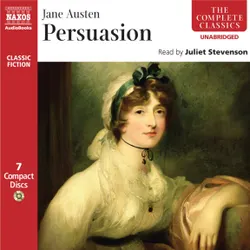
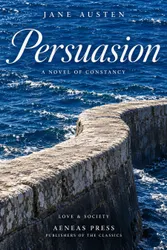
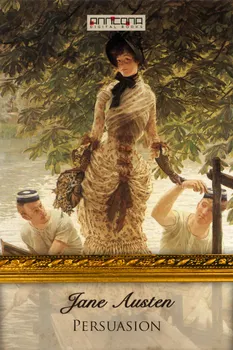
Persuasion is Jane Austen's last completed novel. She began it soon after she had finished Emma and completed it in August 1816. She died, aged 41, in 1817; Persuasion was published in December of that year (but dated 1818).Persuasion is widely appreciated as a moving love story despite what has been called its simple plot, and it exemplifies Austen's signature wit and ironic narrative style. While writing Persuasion, however, Austen became ill with the disease that would kill her less than two years later. As a result, the novel is both shorter and arguably less polished than Mansfield Park and Emma since it was not subject to the author's usual careful retrospective revision. The novel is described in the introduction to the Penguin Classics edition as a great Cinderella story. It features a heroine who is generally unappreciated and to some degree exploited by those around her; a handsome prince who appears on the scene but seems more interested in the "more obvious" charms of others; a moment of realisation; and the final happy ending. It has been said that it is not that Anne is unloved, but rather that those around her no longer see her clearly: she is such a fixed part of their lives that her likes and dislikes, wishes and dreams are no longer considered, even by those who claim to value her, like Lady Russell.Persuasion is linked to Northanger Abbey not only by the fact that the two books were originally bound up in one volume and published together, but also because both stories are set partly in Bath, a fashionable city with which Austen was well acquainted, having lived there from 1801 to 1805.Persuasion has been the subject of several TV and film adaptations.Jane Austen (1775-1817) was an English novelist whose works of romantic fiction, set among the landed gentry, earned her a place as one of the most widely read writers in English literature. Her realism, biting irony and social commentary have gained her historical importance among scholars and critics.From 1811 until 1816, with the release of Sense and Sensibility (1811), Pride and Prejudice (1813), Mansfield Park (1814) and Emma (1816), she achieved success as a published writer. She wrote two additional novels, Northanger Abbey and Persuasion, both published posthumously in 1818, and began a third, which was eventually titled Sanditon, but died before completing it.In 1994, American literary critic Harold Bloom placed Austen among the greatest Western Writers of all time. In a 2002 poll to determine whom the UK public considers the greatest British people in history, Austen was ranked number 70 in the list of the "100 Greatest Britons". In 2003, Austen's Pride and Prejudice came second in the BBC's The Big Read, a national poll to find the "Nation's best-loved book."
Empieza este libro hoy por 0 €

  • Disfruta de acceso completo a todos los libros de la app durante el periodo de prueba
  • Sin compromiso, cancela cuando quieras
Pruébalo gratis ahora
Más de 52 000 clientes han dado a Nextory 5 estrellas en la App Store y Google Play.

Libros similares

Más de Jane Austen

  1. 4.5

    Orgullo y Prejuicio

    Jane Austen

  2. Nuevo
    3.9

    Sentido y sensibilidad

    Jane Austen

  3. 4.5

    Orgullo y prejuicio

    Jane Austen

  4. 100 obras maestras que debes leer antes de morir

    Francis Scott Fitzgerald, Mary Shelley, Lyman Frank Baum, Edith Nesbit, Dante Alighieri, Jane Austen, Ambrose Bierce, Emily Brontë, Edgar Rice Burroughs, Lewis Carroll, Wilkie Collins, René Descartes, Charles Dickens, Emily Dickinson, Alexandre Dumas, Gustave Flaubert, Benito Pérez Galdós, Johann Wolfgang Goethe, Thomas Hardy, E. T. Hoffmann, Washington Irving, Henry James, James Joyce, Franz Kafka, Gaston Leroux, Federico García Lorca, H.P. Lovecraft, Publio Virgilio Marón, Lucy Maud Montgomery, John William Polidori, Marco Polo, Antoine de Saint-Exupéry, Emilio Salgari, Walter Scott, Mark Twain, Jules Verne

  5. 3.9

    Persuasión

    Jane Austen

  6. 4.5

    Pride and Prejudice

    Jane Austen

  7. 4.2

    Persuasión :

    Jane Austen

  8. 4.1

    Sentido y sensibilidad

    Jane Austen

  9. 3.8

    Emma

    Jane Austen

  10. 4.3

    Emma

    Jane Austen

  11. 1.0

    100 Obras Maestras de la Literatura Universal

    Homero, Sófocles, Platón, Aristóteles, Apuleius, Seneca, San Agustín, Sun Tzu, Teresa de Jesús, Ignacio De Loyola, Nicolás Maquiavelo, Dante Alighieri, Giovanni Boccaccio, Miguel Cervantes, Hans Christian Andersen, Hermanos Grimm, William Shakespeare, John Milton, Tomás Moro, Jean-Jacques Rousseau, Immanuel Kant, Jonathan Swift, Daniel Defoe, Charles Dickens, William Makepeace Thackeray, Jane Austen, Charlotte Brontë, Emily Brontë, Robert Louis Stevenson, Oscar Wilde, Mary Shelley, Bram Stoker, Henry James, Arthur Conan Doyle, Wilkie Collins, Joseph Conrad, H. Rider Haggard, Edgar Rice Burroughs, H.G. Wells, Edgar Allan Poe, H.P. Lovecraft, Washington Irving, Harriet Beecher Stowe, Mark Twain, Herman Melville, Jack London, Nathaniel Hawthorne, Louisa May Alcott, J.M. Barrie, Lewis Carroll, L. Frank Baum, Voltaire, Victor Hugo, Honoré de Balzac, Gustave Flaubert, Alejandro Dumas, Alejandro Dumas hijo, Julio Verne, Emilio Salgari, Johann Wolfgang Goethe, Friedrich Schiller, Friedrich Nietzsche, Franz Kafka, Sigmund Freud, Nikolái Gógol, Fiódor Dostoyevski, León Tolstoi, Antón Chéjov, Mijaíl Bakunin, Virginia Woolf, Fernando de Rojas, Lope de Vega, Tirso de Molina, Francisco de Quevedo, Pedro Calderón Barca, Baltasar Gracián, José Zorrilla, Vicente Blasco Ibáñez, Juan Valera, Leopoldo Alas, Benito Pérez Galdós, Miguel De Unamuno, Emilia Pardo Bazán, Duque de Rivas, José Martí, Antonio Machado, Ramón María Valle-Inclán, Jorge Isaacs, Horacio Quiroga, Federico García Lorca, Gustavo Adolfo Bécquer, Rubén Darío, Charles Baudelaire, Henrik Ibsen, Gibrán Jalil Gibrán, José Rizal

  12. 3.9

    Persuasión

    Jane Austen