Valorado con 5.0 de 5, 2 opiniones
Audiolibro

Sobre este libro

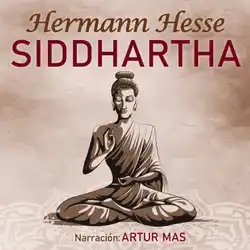
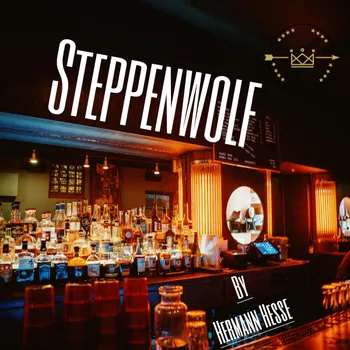
As the story begins, Harry is beset by reflections on his being ill-suited for the world of everyday, regular people, specifically for frivolous bourgeois society. In his aimless wanderings about the city he encounters a person carrying an advertisement for a magic theatre who gives him a small book, Treatise on the Steppenwolf. This treatise, cited in full in the novel's text as Harry reads it, addresses Harry by name and strikes him as describing himself uncannily. It is a discourse on a man who believes himself to be of two natures: one high, man's spiritual nature, the other low and animalistic, a "wolf of the steppes". This man is entangled in an irresolvable struggle, never content with either nature because he cannot see beyond this self-made concept. The pamphlet gives an explanation of the multifaceted and indefinable nature of every man's soul, but Harry is either unable or unwilling to recognize this. It also discusses his suicidal intentions, describing him as one of the "suicides": people who, deep down, knew they would take their own life one day. But to counter that, it hails his potential to be great, to be one of the "Immortals".
Empieza este libro hoy por 0 €

  • Disfruta de acceso completo a todos los libros de la app durante el periodo de prueba
  • Sin compromiso, cancela cuando quieras
Pruébalo gratis ahora
Más de 52 000 clientes han dado a Nextory 5 estrellas en la App Store y Google Play.

Los favoritos de otras personas

  1. 3.7

    Castellano

    Lorenzo Silva

  2. 4.0

    El espíritu del tiempo

    Martí Domínguez

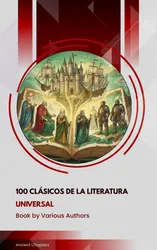
  3. 100 Clásicos de la Literatura Universal

    Francis Scott Fitzgerald, Mary Shelley, Lyman Frank Baum, Louisa May Alcott, Dante Alighieri, Jane Austen, Ambrose Bierce, Emily Brontë, Edgar Rice Burroughs, Lewis Carroll, Wilkie Collins, René Descartes, Charles Dickens, Emily Dickinson, Alexandre Dumas, Gustave Flaubert, Benito Pérez Galdós, Johann Wolfgang von Goethe, Thomas Hardy, E T A Hoffmann, Washington Irving, Henry James, James Joyce, Franz Kafka, Gaston Leroux, Federico García Lorca, H.P. Lovecraft, Publio Virgilio Marón, Lucy Maud Montgomery, John William Polidori, Marco Polo, Antoine de Saint-Exupéry, Emilio Salgari, Walter Scott, Mark Twain, Jules Verne, Julio Verne, H.G. Wells, Edith Wharton, Mary Wollstonecraft, Stefan Zweig, Sun Tzu, Bram Stoker, - Aristoteles, George Bernard Shaw, Henryk Sienkiewicz, Concepción Arenal, Charlotte Brontë, Miguel de Cervantes, G.K. Chesterton, Daniel Defoe, Fyodor Mikhailovich Dostoyevsky, Arthur Conan Doyle, Sigmund Freud, H. Rider Haggard, Homero, Immanuel Kant, Rudyard Kipling, Molière, Friedrich Nietzsche, Fernando de Rojas, Sófocles, William Makepeace Thackeray, León Tolstói, Voltaire, Ramón María del Valle-Inclán, Oscar Wilde, Virginia Woolf

  4. 4.7

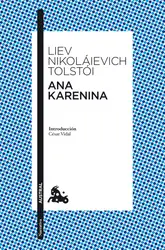
    Ana Karenina

    Liev N. Tolstói

  5. 4.0

    Vivir sin miedo

    Jesús Terrés

  6. 3.5

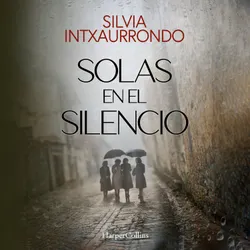
    Solas en el silencio

    Silvia Intxaurrondo

  7. 4.1

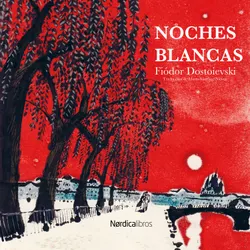
    Noches blancas

    Fiódor Dostoievski

  8. 4.6

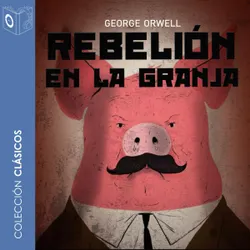
    Rebelión en la granja - Dramatizado

    George Orwell

  9. 4.0

    Piel de cordero

    Ledicia Costas

  10. 4.5

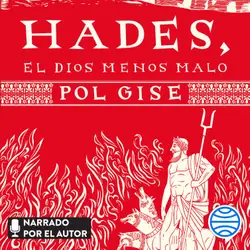
    Hades, el dios menos malo

    Pol Gise

  11. #1

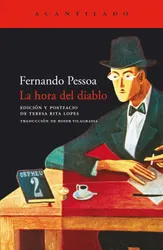
    La hora del diablo

    Fernando Pessoa

  12. 3.5

    Una noche de Reyes

    Noemí Trujillo