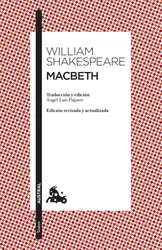
William Shakespeare's "The Complete Tragedies" offers an unparalleled exploration of the darkness that pervades human existence. This anthology collects his most profound and psychologically complex tragedies, including timeless works such as "Hamlet," "Macbeth," and "Othello." Shakespeare employs a rich tapestry of poetic language, intricate character development, and potent themes of ambition, revenge, and love lost to delve deep into the human psyche. Set against the backdrop of the late Elizabethan era, these plays reflect not only the socio-political dynamics of Shakespeare's time but also the universal conflicts that resonate throughout human history. William Shakespeare, regarded as one of the greatest playwrights in the English language, was deeply influenced by the cultural, political, and philosophical currents of the Renaissance. His experiences—ranging from his formative years in Stratford-upon-Avon to his prolific career in London—shaped his understanding of human emotions and societal structures. Shakespeare's own encounters with tragedy and loss undoubtedly informed his ability to articulate the depths of sorrow and moral quandaries portrayed in his works. Readers seeking to understand the tragic dimensions of the human experience will find "The Complete Tragedies" essential. This compilation not only enriches one's literary knowledge but also offers timeless insights into ambition and fate, making it a crucial addition to any literary canon. It invites audiences to grapple with the formidable questions of existence and morality that continue to resonate to this day.
100 Obras Maestras de la Literatura Universal : Edición enriquecida. Explorando la diversidad literaria a lo largo de los siglos
Johann Wolfgang von Goethe, Gustave Flaubert, Franz Kafka, Lewis Carroll, Sigmund Freud, Henrik Ibsen, Charles Dickens, Honoré de Balzac, Mark Twain, Immanuel Kant, Friedrich Schiller, Harriet Beecher Stowe, Oscar Wilde, Robert Louis Stevenson, Edgar Allan Poe, William Shakespeare, Dante Alighieri, Giovanni Boccaccio, Bram Stoker, Charlotte Brontë, Emily Brontë, Jack London, Henry James, Louisa May Alcott, Victor Hugo, Arthur Conan Doyle, Joseph Conrad, Jane Austen, José Rizal, Edgar Rice Burroughs, Herman Melville, Jonathan Swift, Gustavo Adolfo Bécquer, Vicente Blasco Ibáñez, Benito Pérez Galdós, Jean-Jacques Rousseau, Daniel Defoe, Pedro Calderón de la Barca, Virginia Woolf, Washington Irving, Juan Valera, Horacio Quiroga, Nathaniel Hawthorne, Charles Baudelaire, Wilkie Collins, William Makepeace Thackeray, Voltaire, Apuleius, Leopoldo Alas, John Milton, José Martí, Lope de Vega, Emilio Salgari, Francisco de Quevedo, Rubén Darío, Antonio Machado, José Zorrilla, Tirso de Molina, Emilia Pardo Bazán, Fernando de Rojas, L. Frank Baum, H.G. Wells, J.M. Barrie, H. Rider Haggard, H.P. Lovecraft, Seneca, Hans Christian Andersen, Friedrich Nietzsche, Mary Shelley, Baltasar Gracián, Sófocles, Sun Tzu, Fiódor Dostoyevski, Antón Chéjov, León Tolstoi, Tomás Moro, San Agustín, Nikolái Gógol, Julio Verne, Homero, Platón, Alejandro Dumas, Aristóteles, Hermanos Grimm, Jorge Isaacs, Ignacio De Loyola, Nicolás Maquiavelo, Miguel Cervantes, Teresa de Jesús, Alejandro Dumas hijo, Mijaíl Bakunin, Miguel De Unamuno, Duque de Rivas, Ramón María del Valle-Inclán, Federico García Lorca, Gibrán Jalil Gibrán