William Shakespeare's "The Complete Tragedies" offers an unparalleled exploration of the darkness that pervades human existence. This anthology collects his most profound and psychologically complex tragedies, including timeless works such as "Hamlet," "Macbeth," and "Othello." Shakespeare employs a rich tapestry of poetic language, intricate character development, and potent themes of ambition, revenge, and love lost to delve deep into the human psyche. Set against the backdrop of the late Elizabethan era, these plays reflect not only the socio-political dynamics of Shakespeare's time but also the universal conflicts that resonate throughout human history. William Shakespeare, regarded as one of the greatest playwrights in the English language, was deeply influenced by the cultural, political, and philosophical currents of the Renaissance. His experiences—ranging from his formative years in Stratford-upon-Avon to his prolific career in London—shaped his understanding of human emotions and societal structures. Shakespeare's own encounters with tragedy and loss undoubtedly informed his ability to articulate the depths of sorrow and moral quandaries portrayed in his works. Readers seeking to understand the tragic dimensions of the human experience will find "The Complete Tragedies" essential. This compilation not only enriches one's literary knowledge but also offers timeless insights into ambition and fate, making it a crucial addition to any literary canon. It invites audiences to grapple with the formidable questions of existence and morality that continue to resonate to this day.
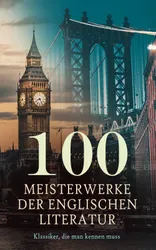
100 Meisterwerke der englischen Literatur - Klassiker, die man kennen muss
George Orwell, Charles Dickens, Jane Austen, Katherine Mansfield, H.P. Lovecraft, William Wordsworth, John Keats, Percy Bysshe Shelley, Robert Burns, John Milton, William Shakespeare, Christopher Marlowe, Geoffrey Chaucer, Laurence Sterne, Henry Fielding, Mary Shelley, Emily Brontë, Charlotte Brontë, Anne Brontë, William Makepeace Thackeray, George Eliot, D. H. Lawrence, Herman Melville, Thomas Wolfe, Virginia Woolf, Joseph Conrad, Sinclair Lewis, Walt Whitman, Edgar Allan Poe, Oscar Wilde, Jerome K Jerome, Washington Irving, Bram Stoker, H.G. Wells, Daniel Defoe, Lew Wallace, James Fenimore Cooper, Jonathan Swift, Robert Louis Stevenson, Mark Twain, Lewis Carrol, Edward Bulwer-Lytton, F. Scott Fitzgerald, Arthur Conan Doyle, Jack London, Henry David Thoreau, G.K. Chesterton, Edith Wharton, Henry James, Thomas Hardy, Margaret Mitchell, Kate Chopin, Willa Cather, Charlotte Perkins Gilman, James Joyce, John Galsworthy, Francis Hodgson Burnett, Lucy Maud Montgomery, Louisa May Alcott, Rudyard Kipling