Sobre este libro

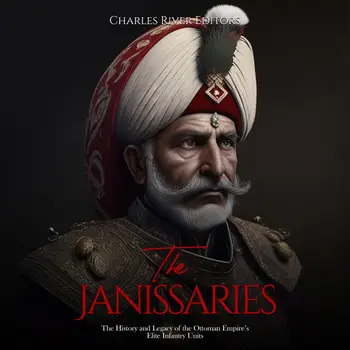
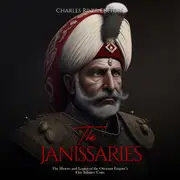
Among those who were responsible for the projection of Ottoman power, few deserve as much credit as the Janissaries. Established by Murad I, the Janissaries became an elite infantry force that was loyal only to the sultan. Their mission was to protect only him and in battles they were always the closest to him, forming a human shield. Originally, they consisted of non-Muslim slaves, mainly Christian boys from Byzantium. Jewish boys were not taken as soldiers and Muslims could not, by law, be enslaved. Murad had instituted a tax of one fifth on all the slaves taken in war, and the idea of only taking boys fit for fighting was called Devshirme, or blood tax. The slaves went through a very strict training, first learning to speak Turkish and practicing Ottoman traditions by living with a family chosen by the sultan. The boys also were forcibly converted to Islam, forbidden from wearing a beard and lived under monastic circumstances in celibacy. They were overseen by eunuchs and trained in special schools, enhancing their personal abilities. The main difference between these and other slaves was that they were being paid for their services. This served as a motivator and kept the soldiers loyal.

The Janissary corps was the first of its kind and a groundbreaking contributor to the success of Ottoman warfare. At the time of Murad’s reign, they were fewer and less respected than what they would become at a later stage, but they were quite significant for Ottoman victories in the Balkans, and as such, they became notorious in Europe. One of the first major battles in which the Janissaries participated occurred when Murad's successor, Bayazid, managed to inflict a decisive defeat on a European army near Nikopol. In general, the Janissaries were positioned at the front lines of the Ottoman army and were armed with various weapons, including bows and arrows, swords, spears, and shields.
Empieza este libro hoy por 0 €

  • Disfruta de acceso completo a todos los libros de la app durante el periodo de prueba
  • Sin compromiso, cancela cuando quieras
Pruébalo gratis ahora
Más de 52 000 clientes han dado a Nextory 5 estrellas en la App Store y Google Play.

  1. 4.0

    Los moros de Andalucía: la historia de los musulmanes en la Península Ibérica durante la Edad Media

    Charles River Editors

  2. 5.0

    The Sabines: The History and Legacy of the People Who Lived in Central Italy Before the Founding of Rome

    Charles River Editors

  3. Epaminondas: The Life and Legacy of Ancient Greece’s Greatest General

    Charles River Editors

  4. Israel’s Most Legendary Operations: The History of the Jewish State’s Famous Intelligence Operations and Special Forces Raids

    Charles River Editors

  5. 3.0

    The Age of Reptiles: The History and Legacy of the Mesozoic Era and the Dinosaurs

    Charles River Editors

  6. La Guerra Civil española: La historia y el legado del controversial conflicto que estableció la dictadura de Francisco Franco en España

    Charles River Editors

  7. 4.0

    Tezcatlipoca: la historia y el legado del dios supremo de la Mesoamérica posclásica

    Charles River Editors

  8. La Alhambra y el Alcázar de Sevilla: la historia de las famosas fortalezas construidas por los moros en España

    Charles River Editors

  9. Los moros del Magreb: la historia de los musulmanes en el norte de África durante la Edad Media

    Charles River Editors

  10. The Cretaceous Period: The History and Legacy of the Geologic Era that Ended with the Extinction of Dinosaurs

    Charles River Editors

  11. 4.0

    The Cumans and Magyars: The History and Legacy of the Steppe Nomads Who Raided Europe Throughout the Late Middle Ages

    Charles River Editors

  12. Ancient and Medieval Conspiracy Theories: The History of the World’s Most Persistent Conspiracy Theories

    Charles River Editors