3.7(3)

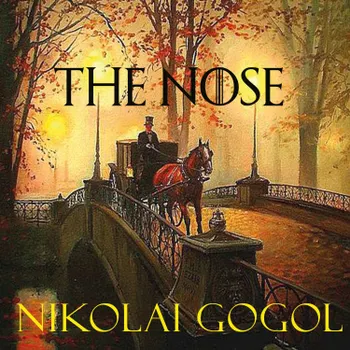
The Nose

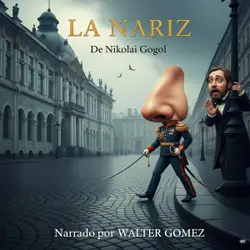
"The Nose" is a satirical short story by Nikolai Gogol written during his time living in St. Petersburg. During this time, Gogol's works were primarily focused on surrealism and the grotesque, with a romantic twist.

Written between 1835 and 1836, "The Nose" tells the story of a St. Petersburg official whose nose leaves his face and develops a life of its own. "The Nose" was originally published in The Contemporary, a literary journal owned by Alexander Pushkin.

"The Nose" is divided into three parts and tells the story of Collegiate Assessor ('Major') Kovalyov, who wakes up one morning without his nose. He later finds out that his nose has developed a life of its own, and has apparently surpassed him by attaining the rank of State Councillor. The short story showcases the obsession with social rank that plagued Russia after Peter the Great introduced the Table of Ranks. By allowing commoners to gain hereditary nobility through service to the state, a huge population was given the chance to move up in social status. This opportunity, however, also gave way to large bureaucracies, in which many of Gogol's characters worked.

Sobre este libro

"The Nose" is a satirical short story by Nikolai Gogol written during his time living in St. Petersburg. During this time, Gogol's works were primarily focused on surrealism and the grotesque, with a romantic twist.

Written between 1835 and 1836, "The Nose" tells the story of a St. Petersburg official whose nose leaves his face and develops a life of its own. "The Nose" was originally published in The Contemporary, a literary journal owned by Alexander Pushkin.

"The Nose" is divided into three parts and tells the story of Collegiate Assessor ('Major') Kovalyov, who wakes up one morning without his nose. He later finds out that his nose has developed a life of its own, and has apparently surpassed him by attaining the rank of State Councillor. The short story showcases the obsession with social rank that plagued Russia after Peter the Great introduced the Table of Ranks. By allowing commoners to gain hereditary nobility through service to the state, a huge population was given the chance to move up in social status. This opportunity, however, also gave way to large bureaucracies, in which many of Gogol's characters worked.
Empieza este libro hoy por 0 €

  • Disfruta de acceso completo a todos los libros de la app durante el periodo de prueba
  • Sin compromiso, cancela cuando quieras
Pruébalo gratis ahora
Más de 52 000 clientes han dado a Nextory 5 estrellas en la App Store y Google Play.

  1. The Light Has Been Broken : The Mark of the Beast, The Ghost Pirates, The Vampyre, Sweeney Todd, The Sleepy Hollow…

    Wilhelm Hauff, Charles Dickens, Mark Twain, Harriet Beecher Stowe, Adelbert von Chamisso, Oscar Wilde, Robert Louis Stevenson, Edgar Allan Poe, William Hope Hodgson, Joseph Sheridan Fanu, John Buchan, Louis Tracy, Bram Stoker, Anatole France, Charlotte Brontë, Emily Brontë, Jack London, Henry James, Théophile Gautier, Arthur Conan Doyle, Richard Le Gallienne, Jane Austen, Ralph Adams Cram, Thomas De Quincey, John Meade Falkner, Guy De Maupassant, Thomas Hardy, William Archer, Daniel Defoe, John Kendrick Bangs, Cleveland Moffett, Brander Matthews, Marie Belloc Lowndes, Horace Walpole, Rudyard Kipling, Lafcadio Hearn, Hugh Walpole, Ambrose Bierce, Frederick Marryat, Ellis Parker Butler, Washington Irving, Leonid Andreyev, David Lindsay, Nathaniel Hawthorne, Grant Allen, Arthur Machen, Wilkie Collins, William Makepeace Thackeray, Thomas Peckett Prest, James Malcolm Rymer, Fergus Hume, Edward Bellamy, Walter Hubbell, Charlotte Perkins Gilman, Leopold Kompert, Richard Marsh, Florence Marryat, Catherine Crowe, John William Polidori, Vincent O'Sullivan, H.G. Wells, Robert W. Chambers, W. W. Jacobs, M.P. Shiel, E F Benson, Jerome K Jerome, M. R. James, E. T. Hoffmann, Stanley G. Weinbaum, George W. Reynolds, H.P. Lovecraft, Robert E. Howard, Edith Nesbit, Sabine Baring-Gould, William Thomas Beckford, Francis Marion Crawford, Lucy Maud Montgomery, Mary Elizabeth Braddon, Mary Louisa Molesworth, Mary E. Freeman, Nikolai Gogol, Mary Shelley, Elizabeth Gaskell, Edward Bulwer-Lytton, Frank R. Stockton, A. T. Quiller-Couch, Ann Radcliffe, Louisa M. Alcott, Amelia B. Edwards, Leonard Kip, Matthew Gregory Lewis, Fitz-James O’Brien, Katherine Rickford, Bithia Mary Croker, Catherine L. Pirkis, Émile Erckmann, Alexandre Chatrian, Pedro De Alarçon, H. H. (Saki), Pliny the Younger, Helena Blavatsky, Villiers de Adam, William F. Harvey, Fiona Macleod, William T. Stead, Gambier Bolton, Andrew Jackson Davis, Nizida, Walter F. Prince, Chester Bailey Fernando

  2. Delphi Complete Works of Nikolai Gogol (Illustrated)

    Nikolai Gogol

  3. 2.0

    Dead Souls

    Nikolai Gogol

  4. The Complete Novels of Nikolai Gogol

    Nikolai Gogol

  5. Resumen

    La nariz

    Nikolai Gogol

  6. Thomas Seltzer

    Nikolai Gogol

  7. The Complete Works of Nikolai Gogol

    Nikolai Gogol

  8. The Government Inspector - Audiobook

    Nikolai Gogol, Classic Audiobooks

  9. The Overcoat and Other Stories - Audiobook

    Nikolai Gogol, Classic Audiobooks

  10. Dead Souls - Audiobook

    Nikolai Gogol, Classic Audiobooks

  11. The Complete Novels of Nikolai Gogol : Dark Humor, Surreal Realism, and Russian Literary Genius

    Nikolai Gogol

  12. World's Greatest Sci-Fi Stories

    Daniel Defoe, Benjamin Franklin, Washington Irving, Mateo Falcone, Charlotte Bronte, Mary Shelley, Nathaniel Hawthorne, Nikolai Gogol, Edgar Allan Poe, Fyodor Dostoyevsky, Charles Dickens, Herman Melville, Mark Twain, Guy De Maupassant, Oscar Wilde, Leo Tolstoy, H.G. Wells, Ambrose Bierce, Stephen Crane, Kate Chopin, Jack London, E. M. Forster


Categorías relacionadas