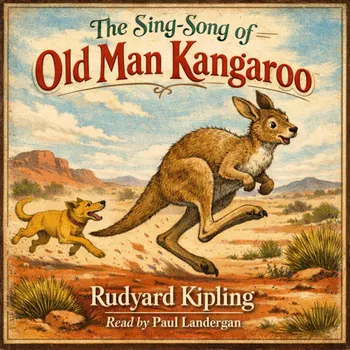
In this spirited Just So Story from Rudyard Kipling, pride sets the pace—and endurance shapes destiny.
Long before he hopped across the Australian plains, Old Man Kangaroo was a small, woolly creature with an oversized opinion of himself. Determined to be different from all other animals—and wonderfully run after—he makes his wish to the powerful god Nqong. The answer arrives not by magic words or gentle spells, but in the form of an endless chase led by the ever-hungry Yellow-Dog Dingo.
Across deserts, salt-pans, grasslands, and rivers, Kangaroo runs, leaps, and finally hops—his legs stretching longer, his balance shifting, his shape forever altered by necessity. The pursuit is tireless, rhythmic, and faintly absurd, carried along by Kipling’s musical language and sly humor.
Part fable, part origin myth, and part comic song of endurance, The Sing-Song of Old Man Kangaroo is a classic tale of transformation achieved the hard way—through effort, repetition, and a very long run. Narrated with warmth and energy by Paul Landergan, this timeless story delights listeners of all ages with its wit, rhythm, and unforgettable voice.