Sobre este libro

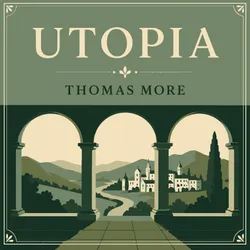
A visionary island. A perfect society. A question that echoes through time.

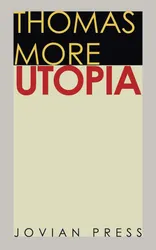
Utopia by Sir Thomas More is one of the most important works of political philosophy and imaginative fiction ever written. First published in 1516, this dialogue presents the ideals of a fictional society—one built on equality, reason, and communal living—as a critique of European politics, religion, and class structures.

More's masterpiece has inspired philosophers, revolutionaries, and writers for centuries, laying the groundwork for later explorations of socialism, communism, and dystopian fiction.

💬 "A classic of irony and idealism—shaping everything from Plato to Orwell."

🧠 Why It Still Resonates Today:

Essential reading for students of philosophy, political science, and literature

Influenced works like 1984, Brave New World, The Republic, and The Communist Manifesto

A timeless reference in debates about justice, equity, and the role of the state

📣 Imagine a Better World. Then Question It.

Buy Utopia today and engage with one of the boldest literary visions of a perfect—and imperfect—society.


Empieza este libro hoy por 0 €

  • Disfruta de acceso completo a todos los libros de la app durante el periodo de prueba
  • Sin compromiso, cancela cuando quieras
Pruébalo gratis ahora
Más de 52 000 clientes han dado a Nextory 5 estrellas en la App Store y Google Play.

Más de Thomas More

  1. Harvard Classics : The Five-Foot Shelf of Books

    Aesop, Dante Alighieri, Hans Christian Andersen, Augustine of Hippo, Marcus Aurelius, Jane Austen, Francis Bacon, Honoré de Balzac, Francis Beaumont, Bjørnstjerne Bjørnson, Thomas Browne, Robert Browning, John Bunyan, EDMUND BURKE, Robert Burns, Lord Byron, Thomas Carlyle, Benvenuto Cellini, Miguel de Cervantes, Marcus Tullius Cicero, Richard Henry Jr., Charles Darwin, Alphonse Daudet, Thomas Dekker, Charles Dickens, Fyodor Dostoevsky, John Dryden, Charles W. Eliot, George Eliot, Ralph Waldo Emerson, Epictetus, John Fletcher, Theodor Fontane, Benjamin Franklin, Johann Wolfgang Goethe, Oliver Goldsmith, Jacob Grimm, Edward Everett Hale, Bret Harte, Nathaniel Hawthorne, Homer, Victor Hugo, Washington Irving, Henry James, Ben Jonson, Gottfried Keller, Thomas à Kempis, Alexander L. Kielland, Martin Luther, Niccolò Machiavelli, Alessandro Manzoni, Christopher Marlowe, Philip Massinger, Guy De Maupassant, John Stuart Mill, John Milton, Thomas More, William Morris, Alfred de Musset, William Allan Neilson, William Penn, Plato, Pliny the Younger, Plutarch, George Sand, Percy Bysshe Shelley, Richard Brinsley Sheridan, Adam Smith, Laurence Sterne, Theodor Storm, William Makepeace Thackeray, Leo Tolstoy, Ivan Turgenev, Mark Twain, Juan Valera, Virgil, Izaak Walton, John Webster, John Woolman

  2. 1800 Citations de philosophes

    Aristote, Épicure, Platon, Thalès de Milet, – Socrate, Protagoras, Anaximandre, Épictète, Héraclite, Marc Aurèle, René Descartes, Michel de Montaigne, Alexis de Tocqueville, Voltaire, Charles De Montesquieu, Jean-Jacques Rousseau, Emmanuel Kant, Hannah Arendt, Gottfried Wilhelm Leibniz, Georg Wilhelm Friedrich Hegel, Friedrich Nietzsche, Arthur Schopenhauer, David Hume, John Locke, Francis Bacon, Thomas Hobbes, Thomas More, Confucius, Érasme, Lao Tseu, Baruch Spinoza, Søren Kierkegaard, Nicolas Machiavel, Thomas d'Aquin, Henry David Thoreau

  3. 3.3

    Utopia

    Thomas More

  4. 3.3

    Utopia

    Thomas More

  5. 3.3

    Utopia

    Thomas More

  6. 3.3

    Utopia

    Thomas More

  7. 3.3

    Utopia

    Thomas More

  8. 3.3

    Utopia

    Thomas More

  9. 3.3

    Utopia

    Thomas More

  10. 3.3

    Utopia

    Thomas More

  11. 3.3

    Utopia

    Thomas More

  12. Utopia : A Visionary Blueprint for Ideal Society

    Thomas More