Sobre este libro

In "William Blake," G.K. Chesterton offers a nuanced exploration of one of England's most enigmatic poets and artists. Chesterton's prose is imbued with his characteristic wit and philosophical insight, weaving together biographical details, critical analysis, and an appreciation for Blake's visionary artistry. The book situates Blake within the context of the Romantic era, emphasizing his nonconformity and the radical nature of his work, which frequently challenged societal norms and embraced the transcendental. Chesterton's literary style is both engaging and erudite, providing a rich tapestry of ideas that reflect Blake's complex interplay of spirituality and creativity. G.K. Chesterton, a celebrated writer, philosopher, and journalist, was a contemporary of the early 20th century's cultural landscape, marked by a clash between traditional values and modernist impulses. His profound admiration for Blake is evident in this work, as Chesterton saw in him a kindred spirit who grappled with the nature of existence and the role of the artist in society. Chesterton's own struggles with faith and the modern world resonate through his writings, making him an ideal commentator on Blake's life and legacy. "William Blake" is a must-read for both scholars and casual readers alike—those seeking to delve into the mind of a genius who defied box-like confines of artistic categorization. Chesterton's insightful and engaging narrative invites readers to reconsider Blake not only as a poet but as a revolutionary thinker. This captivating study enriches our understanding of both Blake's work and the cultural currents that shaped his life.

Empieza este libro hoy por 0 €

  • Disfruta de acceso completo a todos los libros de la app durante el periodo de prueba
  • Sin compromiso, cancela cuando quieras
Pruébalo gratis ahora
Más de 52 000 clientes han dado a Nextory 5 estrellas en la App Store y Google Play.

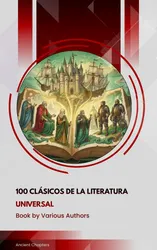
  1. 100 Clásicos de la Literatura Universal

    Francis Scott Fitzgerald, Mary Shelley, Lyman Frank Baum, Louisa May Alcott, Dante Alighieri, Jane Austen, Ambrose Bierce, Emily Brontë, Edgar Rice Burroughs, Lewis Carroll, Wilkie Collins, René Descartes, Charles Dickens, Emily Dickinson, Alexandre Dumas, Gustave Flaubert, Benito Pérez Galdós, Johann Wolfgang von Goethe, Thomas Hardy, E T A Hoffmann, Washington Irving, Henry James, James Joyce, Franz Kafka, Gaston Leroux, Federico García Lorca, H.P. Lovecraft, Publio Virgilio Marón, Lucy Maud Montgomery, John William Polidori, Marco Polo, Antoine de Saint-Exupéry, Emilio Salgari, Walter Scott, Mark Twain, Jules Verne, Julio Verne, H.G. Wells, Edith Wharton, Mary Wollstonecraft, Stefan Zweig, Sun Tzu, Bram Stoker, - Aristoteles, George Bernard Shaw, Henryk Sienkiewicz, Concepción Arenal, Charlotte Brontë, Miguel de Cervantes, G.K. Chesterton, Daniel Defoe, Fyodor Mikhailovich Dostoyevsky, Arthur Conan Doyle, Sigmund Freud, H. Rider Haggard, Homero, Immanuel Kant, Rudyard Kipling, Molière, Friedrich Nietzsche, Fernando de Rojas, Sófocles, William Makepeace Thackeray, León Tolstói, Voltaire, Ramón María del Valle-Inclán, Oscar Wilde, Virginia Woolf

  2. El hombre que fue jueves

    G.K. Chesterton

  3. 4.0

    Ortodoxia

    G.K. Chesterton

  4. 3.7
    #2

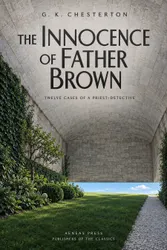
    The Innocence of Father Brown

    G.K. Chesterton

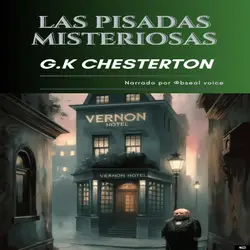
  5. Las pisadas misteriosas

    G.K. Chesterton

  6. #4

    La cruz azul

    G.K. Chesterton

  7. 3.7

    The Incredulity of Father Brown

    G.K. Chesterton

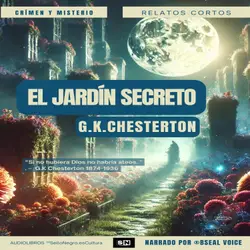
  8. El jardín secreto

    G.K. Chesterton

  9. San Francisco de Asís : Biografía religiosa sobre la pobreza evangélica, la mística medieval y la espiritualidad franciscana

    G.K. Chesterton

  10. Ortodoxia : (Español latino)

    G.K. Chesterton

  11. 3.6
    #1

    The Innocence of Father Brown

    G.K. Chesterton

  12. 5.0

    El candor del Padre Brown

    G.K. Chesterton