Sobre este libro

The most unique city-state in ancient Greece was Sparta, which continues to fascinate people today. It is not entirely clear why Sparta placed such a great emphasis on having a militaristic society, but the result was that military fitness was a preoccupation from birth. If a Spartan baby did not appear physically fit at birth, it was left to die. Spartan children underwent military training around the age of seven, and every male had to join the army around the age of 18.

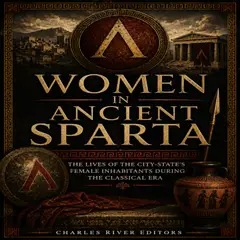
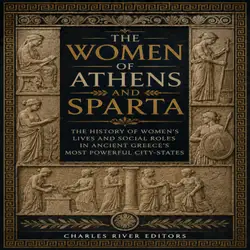
Sparta will forever be known for its military prowess, but they had lives off the battlefield as well, and their way of life was also unique. For example, Spartan females were formally educated, which was a rarity among the city-states, and according to Plutarch, when Leonidas’s wife Gorgo was asked why Spartan women held such places of prominence in society, she replied, “It is because we Spartan women are the only ones who give birth to men."

Athenian girls were married at 14 to husbands they had never met, whereas Spartan girls married in their late teens or twenties. Athenian women were expected to stay indoors, be segregated from men, remain uneducated, and be silent, while Spartan women trained in athletics, exercised in public in scant clothing or none at all, owned property in their own names, and spoke their minds. By the 4th century B.C., according to Aristotle, they owned 40% of the land across the entire polis, and they were credited by foreign observers with influence over their husbands that no other Greek women possessed.

While all of this was acknowledged, the sources are uneven regarding the actual lives of Spartan women, from how they were raised to how they spoke and worshiped. All that can be said for sure is that Sparta had a society in which the female half of the citizen population occupied a position more nearly equal to that of men than anywhere else in the ancient Mediterranean world.
Empieza este libro hoy por 0 €

  • Disfruta de acceso completo a todos los libros de la app durante el periodo de prueba
  • Sin compromiso, cancela cuando quieras
Pruébalo gratis ahora
Más de 52 000 clientes han dado a Nextory 5 estrellas en la App Store y Google Play.

Libros similares

  1. 4.0

    Los moros de Andalucía: la historia de los musulmanes en la Península Ibérica durante la Edad Media

    Charles River Editors

  2. 5.0

    The Sabines: The History and Legacy of the People Who Lived in Central Italy Before the Founding of Rome

    Charles River Editors

  3. Israel’s Most Legendary Operations: The History of the Jewish State’s Famous Intelligence Operations and Special Forces Raids

    Charles River Editors

  4. La Alhambra y el Alcázar de Sevilla: la historia de las famosas fortalezas construidas por los moros en España

    Charles River Editors

  5. La Guerra Civil española: La historia y el legado del controversial conflicto que estableció la dictadura de Francisco Franco en España

    Charles River Editors

  6. 4.0

    The Cumans and Magyars: The History and Legacy of the Steppe Nomads Who Raided Europe Throughout the Late Middle Ages

    Charles River Editors

  7. Los moros del Magreb: la historia de los musulmanes en el norte de África durante la Edad Media

    Charles River Editors

  8. La República de Génova: la historia de la ciudad italiana dominó el Mediterráneo durante toda la Edad Media

    Charles River Editors

  9. La Capilla Sixtina: Historia y legado de la capilla más famosa del mundo

    Charles River Editors

  10. The Spanish Empire in the Americas: The History of Spain’s Colonization across Central America and South America

    Charles River Editors

  11. El Muro de Berlín: La historia y el legado del muro más famoso del mundo

    Charles River Editors

  12. Ancient and Medieval Conspiracy Theories: The History of the World’s Most Persistent Conspiracy Theories

    Charles River Editors