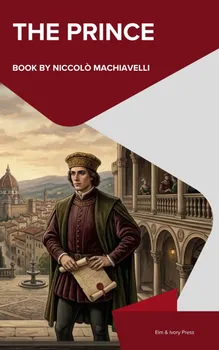
Tietoa kirjasta

What does it really take to gain power, keep it, and govern in a world where political loyalty can change overnight?

Enter the provocative world of Niccolò Machiavelli's The Prince, one of the most influential and controversial works of political philosophy.

Written as a practical examination of political power, the book considers leadership, strategy, military strength, public opinion, political alliances, ambition, and the challenges rulers face when attempting to maintain authority.

Machiavelli draws on historical examples and political observation to examine how leaders can respond to changing circumstances and competing interests. His direct approach has generated centuries of debate about morality, power, leadership, and political necessity.

Written in the early sixteenth century, The Prince remains a foundational text in the study of political thought.

Explore Machiavelli's provocative ideas about power, leadership, strategy, and political survival in The Prince.

Aloita kirja saman tien hintaan 0 €

  • Kokeilujakson aikana käytössäsi on kaikki sovelluksen kirjat
  • Ei sitoumusta, voit perua milloin vain
Kokeile nyt ilmaiseksi
Yli 52 000 ihmistä on antanut Nextorylle viisi tähteä App Storessa ja Google Playssä.

  1. 4.0

    Ruhtinas : Poliittisen vallan hankkiminen, säilyttäminen ja menettäminen – realismia, johtajuutta ja valtapolitiikkaa renessanssin Italiassa

    Niccolò Machiavelli

  2. Ruhtinas

    Niccolò Machiavelli

  3. Harvard Classics : The Five-Foot Shelf of Books

    Aesop, Dante Alighieri, Hans Christian Andersen, Augustine of Hippo, Marcus Aurelius, Jane Austen, Francis Bacon, Honoré de Balzac, Francis Beaumont, Bjørnstjerne Bjørnson, Thomas Browne, Robert Browning, John Bunyan, EDMUND BURKE, Robert Burns, Lord Byron, Thomas Carlyle, Benvenuto Cellini, Miguel de Cervantes, Marcus Tullius Cicero, Richard Henry Jr., Charles Darwin, Alphonse Daudet, Thomas Dekker, Charles Dickens, Fyodor Dostoevsky, John Dryden, Charles W. Eliot, George Eliot, Ralph Waldo Emerson, Epictetus, John Fletcher, Theodor Fontane, Benjamin Franklin, Johann Wolfgang Goethe, Oliver Goldsmith, Jacob Grimm, Edward Everett Hale, Bret Harte, Nathaniel Hawthorne, Homer, Victor Hugo, Washington Irving, Henry James, Ben Jonson, Gottfried Keller, Thomas à Kempis, Alexander L. Kielland, Martin Luther, Niccolò Machiavelli, Alessandro Manzoni, Christopher Marlowe, Philip Massinger, Guy De Maupassant, John Stuart Mill, John Milton, Thomas More, William Morris, Alfred de Musset, William Allan Neilson, William Penn, Plato, Pliny the Younger, Plutarch, George Sand, Percy Bysshe Shelley, Richard Brinsley Sheridan, Adam Smith, Laurence Sterne, Theodor Storm, William Makepeace Thackeray, Leo Tolstoy, Ivan Turgenev, Mark Twain, Juan Valera, Virgil, Izaak Walton, John Webster, John Woolman

  4. The Essential Ancient Wisdom Library : 10 Timeless Works of Stoicism, Philosophy, Strategy and the Art of Living

    Marcus Aurelius, Seneca, Epictetus, Laozi, Plato, Sun Tzu, Musashi Miyamoto, Niccolò Machiavelli, Friedrich Wilhelm Nietzsche, James Allen

  5. The Essential Ancient Wisdom Library : 10 Timeless Classics of Stoicism, Philosophy, Strategy and Self-Mastery

    Marcus Aurelius, Seneca, Epictetus, Laozi, Plato, Sun Tzu, Miyamoto Musashi, Niccolò Machiavelli, Friedrich Nietzsche, James Allen

  6. 5.0

    The Art of War

    Niccolò Machiavelli

  7. Ruhtinas : Rikastettu painos. Renessanssin reaalipolitiikan opas: vallan dynamiikkaa, hallitsemisen strategioita ja käytännön neuvoja hallitsijalle

    Niccolò Machiavelli

  8. 3.9

    Niccolò Machiavelli: The Prince : A philosophical treatise on the gaining and keeping of power

    Niccolò Machiavelli

  9. Uusi

    The Essential Ancient Wisdom Library : 10 Classics of Philosophy, Strategy and Self-Mastery

    Marcus Aurelius, Seneca, Epictetus, Laozi, Plato, Sun Tzu, Musashi Miyamoto, Niccolò Machiavelli, Friedrich Wilhelm Nietzsche, James Allen

  10. Uusi
    3.1

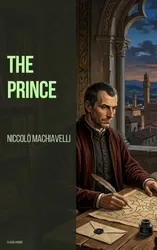
    The Prince

    Niccolò Machiavelli

  11. The Essential Ancient Wisdom Library : 10 Classics of Philosophy, Strategy and Self-Mastery

    Marcus Aurelius, Seneca, Epictetus, Laozi, Plato, Sun Tzu, Musashi Miyamoto, Niccolò Machiavelli, Friedrich Wilhelm Nietzsche, James Allen