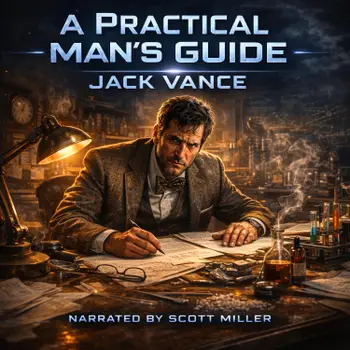
Ralph Banks has built a career on judgment. As editor of a hands-on technical magazine, he knows how to spot nonsense instantly and discard it without regret. When an unusually confident manuscript lands on his desk, its tone irritates him, its formatting amuses him, and its claims strike him as classic delusion. Still, the document has a strange precision that resists dismissal. It doesn’t ask for belief. It offers instructions.
Banks prides himself on knowing the difference between curiosity and foolishness. Yet the manuscript does not behave like the usual crank submission. Its language is urgent but controlled. Its author claims discovery, not inspiration, and insists the truth can be demonstrated quickly with common materials. Faced with an idea that can supposedly be tested in minutes, Banks confronts a rare professional dilemma: ignore it as lunacy, or verify it himself and put the matter permanently to rest.
What follows is a quiet escalation rather than a spectacle. The danger is not announced. No alarms sound. The risk emerges only when preparation becomes action, and the safety of detachment disappears. Once Banks commits to finding out whether the guide works, there is no clear way to stop halfway.
Jack Vance brings meticulous restraint to this unsettling scenario. Known for precision, irony, and an unerring sense of pacing, Vance constructs tension from procedure itself. The menace lies not in what is described, but in how calmly it is carried out. A Practical Man’s Guide turns the act of testing an idea into a moment where rational confidence may no longer be protection.