Discourse on the Method

The Discourse on the Method is a philosophical and mathematical treatise published by René Descartes in 1637. Its full name is Discourse on the Method of Rightly Conducting the Reason, and Searching for Truth in the Sciences (French title: Discours de la méthode pour bien conduire sa raison, et chercher la verité dans les sciences). The Discourse on Method is best known as the source of the famous quotation "Je pense, donc je suis" ("I think, therefore I am"), which occurs in Part IV of the work. (The similar statement in Latin, Cogito ergo sum, is found in §7 of Principles of Philosophy.) In addition, in one of its appendices, La Géométrie, is contained Descartes' first introduction of the Cartesian coordinate system.

The Discourse on the Method is one of the most influential works in the history of modern science. It is a method which gives a solid platform from which all modern natural sciences could evolve. In this work, Descartes tackles the problem of skepticism which had been revived from the ancients such as Sextus Empiricus by authors such as Al-Ghazali and Michel de Montaigne. Descartes modified it to account for a truth that he found to be incontrovertible. Descartes started his line of reasoning by doubting everything, so as to assess the world from a fresh perspective, clear of any preconceived notions.

The book was originally published in Leiden in French, together with his works "Dioptrique, Météores et Géométrie". Later, it was translated into Latin and published in 1656 in Amsterdam.

Together with Meditations on First Philosophy (Meditationes de Prima Philosophia), Principles of Philosophy (Principia philosophiae) and Rules for the Direction of the Mind (Regulae ad directionem ingenii), it forms the base of the Epistemology known as Cartesianism.

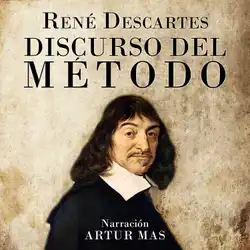
Über dieses Buch

The Discourse on the Method is a philosophical and mathematical treatise published by René Descartes in 1637. Its full name is Discourse on the Method of Rightly Conducting the Reason, and Searching for Truth in the Sciences (French title: Discours de la méthode pour bien conduire sa raison, et chercher la verité dans les sciences). The Discourse on Method is best known as the source of the famous quotation "Je pense, donc je suis" ("I think, therefore I am"), which occurs in Part IV of the work. (The similar statement in Latin, Cogito ergo sum, is found in §7 of Principles of Philosophy.) In addition, in one of its appendices, La Géométrie, is contained Descartes' first introduction of the Cartesian coordinate system.

The Discourse on the Method is one of the most influential works in the history of modern science. It is a method which gives a solid platform from which all modern natural sciences could evolve. In this work, Descartes tackles the problem of skepticism which had been revived from the ancients such as Sextus Empiricus by authors such as Al-Ghazali and Michel de Montaigne. Descartes modified it to account for a truth that he found to be incontrovertible. Descartes started his line of reasoning by doubting everything, so as to assess the world from a fresh perspective, clear of any preconceived notions.

The book was originally published in Leiden in French, together with his works "Dioptrique, Météores et Géométrie". Later, it was translated into Latin and published in 1656 in Amsterdam.

Together with Meditations on First Philosophy (Meditationes de Prima Philosophia), Principles of Philosophy (Principia philosophiae) and Rules for the Direction of the Mind (Regulae ad directionem ingenii), it forms the base of the Epistemology known as Cartesianism.
Starte noch heute mit diesem Buch für € 0

  • Hole dir während der Testphase vollen Zugriff auf alle Bücher in der App
  • Keine Verpflichtungen, jederzeit kündbar
Jetzt kostenlos testen
Mehr als 52 000 Menschen haben Nextory im App Store und auf Google Play 5 Sterne gegeben.

  1. Neu

    100 obras maestras que debes leer antes de morir

    Francis Scott Fitzgerald, Mary Shelley, Lyman Frank Baum, Edith Nesbit, Dante Alighieri, Jane Austen, Ambrose Bierce, Emily Brontë, Edgar Rice Burroughs, Lewis Carroll, Wilkie Collins, René Descartes, Charles Dickens, Emily Dickinson, Alexandre Dumas, Gustave Flaubert, Benito Pérez Galdós, Johann Wolfgang Goethe, Thomas Hardy, E. T. Hoffmann, Washington Irving, Henry James, James Joyce, Franz Kafka, Gaston Leroux, Federico García Lorca, H.P. Lovecraft, Publio Virgilio Marón, Lucy Maud Montgomery, John William Polidori, Marco Polo, Antoine de Saint-Exupéry, Emilio Salgari, Walter Scott, Mark Twain, Jules Verne

  2. 4.6

    Discurso del Método

    René Descartes

  3. 100 Obras Maestras Que Debes Leer Antes De Morir

    Francis Scott Fitzgerald, Mary Shelley, Lyman Frank Baum, Edith Nesbit, Dante Alighieri, Jane Austen, Ambrose Bierce, Emily Brontë, Edgar Rice Burroughs, Lewis Carroll, Wilkie Collins, René Descartes, Charles Dickens, Emily Dickinson, Alexandre Dumas, Gustave Flaubert, Benito Pérez Galdós, Johann Wolfgang von Goethe, Thomas Hardy, E T A Hoffmann, Washington Irving, Henry James, James Joyce, Franz Kafka, Gaston Leroux, Federico García Lorca, H.P. Lovecraft, Publio Virgilio Marón, Lucy Maud Montgomery, John William Polidori, Marco Polo, Antoine de Saint-Exupéry, Emilio Salgari, Walter Scott, Mark Twain, Jules Verne, H.G. Wells, Edith Wharton, Mary Wollstonecraft, Fernando de Rojas

  4. 100 Clásicos de la Literatura Universal

    Francis Scott Fitzgerald, Mary Shelley, Lyman Frank Baum, Louisa May Alcott, Dante Alighieri, Jane Austen, Ambrose Bierce, Emily Brontë, Edgar Rice Burroughs, Lewis Carroll, Wilkie Collins, René Descartes, Charles Dickens, Emily Dickinson, Alexandre Dumas, Gustave Flaubert, Benito Pérez Galdós, Johann Wolfgang von Goethe, Thomas Hardy, E T A Hoffmann, Washington Irving, Henry James, James Joyce, Franz Kafka, Gaston Leroux, Federico García Lorca, H.P. Lovecraft, Publio Virgilio Marón, Lucy Maud Montgomery, John William Polidori, Marco Polo, Antoine de Saint-Exupéry, Emilio Salgari, Walter Scott, Mark Twain, Jules Verne, Julio Verne, H.G. Wells, Edith Wharton, Mary Wollstonecraft, Stefan Zweig, Sun Tzu, Bram Stoker, - Aristoteles, George Bernard Shaw, Henryk Sienkiewicz, Concepción Arenal, Charlotte Brontë, Miguel de Cervantes, G.K. Chesterton, Daniel Defoe, Fyodor Mikhailovich Dostoyevsky, Arthur Conan Doyle, Sigmund Freud, H. Rider Haggard, Homero, Immanuel Kant, Rudyard Kipling, Molière, Friedrich Nietzsche, Fernando de Rojas, Sófocles, William Makepeace Thackeray, León Tolstói, Voltaire, Ramón María del Valle-Inclán, Oscar Wilde, Virginia Woolf

  5. 4.6

    Discurso del método

    René Descartes

  6. Las Pasiones del Alma

    René Descartes

  7. Betrachtungen über die Grundlagen der Philosophie. Ein Klassiker der philosophischen Literatur. : Hörbuchzeit: Klassiker der Weltliteratur

    Hörbuchzeit, René Descartes

  8. El Mundo o el Tratado de la luz

    René Descartes

  9. Discurso del método

    René Descartes

  10. Discurso del método : El Texto Fundamental de la Filosofía Moderna Occidental

    René Descartes

  11. 1800 Citations de philosophes

    Aristote, Épicure, Platon, Thalès de Milet, – Socrate, Protagoras, Anaximandre, Épictète, Héraclite, Marc Aurèle, René Descartes, Michel de Montaigne, Alexis de Tocqueville, Voltaire, Charles De Montesquieu, Jean-Jacques Rousseau, Emmanuel Kant, Hannah Arendt, Gottfried Wilhelm Leibniz, Georg Wilhelm Friedrich Hegel, Friedrich Nietzsche, Arthur Schopenhauer, David Hume, John Locke, Francis Bacon, Thomas Hobbes, Thomas More, Confucius, Érasme, Lao Tseu, Baruch Spinoza, Søren Kierkegaard, Nicolas Machiavel, Thomas d'Aquin, Henry David Thoreau

  12. 350 citations de philosophes français

    René Descartes, Michel de Montaigne, Blaise Pascal, Alexis de Tocqueville, Voltaire, Charles De Montesquieu, Jean-Jacques Rousseau