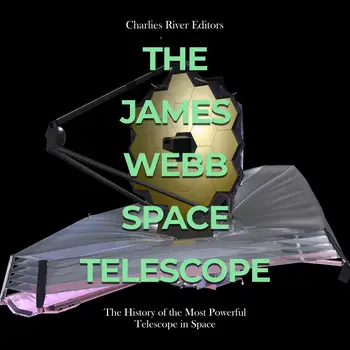
The James Webb Space Telescope: The History of the Most Powerful Telescope in Space

On April 24, 1990, the Space Shuttle Discovery lifted off from Kennedy Space Center on the Space Shuttle Program’s 35th mission, but this was no ordinary mission. In its payload bay, Discovery was carrying the Hubble Space Telescope, with the objective of putting the telescope into orbit. The Hubble telescope, working in space less than 400 miles above the Earth’s surface, produced photos of galaxies previously unseen as they existed only 500 million years before the “Big Bang.” It was fortuitous that Hubble outlived its anticipated lifespan by many years, because the launch of its successor, the James Webb Space Telescope, was delayed by 15 years.

Several new obstacles delayed the launch, but NASA believed that it was finally prepared to proceed in 2020 after completion of construction four years prior. Then came the COVID pandemic, and 2020 became the year of “delayed events,” with the launch of the most sophisticated space telescope in history proving to be no exception.

The increase in excitement was palpable. Scientists had viewed much of the universe through Hubble, almost as it was when it was formed, but they learned that none of these galaxies were the first ones formed. Then ultimately realized that “Hubble wasn’t the right instrument to detect those first galaxies.” “The farther we can see in space, the farther we can see in time…and that’s not a metaphor. That’s actually literally true,” explained scientist Amber Straughn. The Webb Space Telescope represents “looking in a part of space that we’ve never seen before.” The telescope will be able to detect the earliest galaxies because of its unparalleled sensitivity. Another factor is the kind of light it will collect, “light that our eyes aren’t designed to see.”

Starte noch heute mit diesem Buch für € 0

  • Hole dir während der Testphase vollen Zugriff auf alle Bücher in der App
  • Keine Verpflichtungen, jederzeit kündbar
Jetzt kostenlos testen
Mehr als 52 000 Menschen haben Nextory im App Store und auf Google Play 5 Sterne gegeben.

  1. 3.5

    The Boxer Rebellion: The History and Legacy of the Anti-Imperialist Uprising in China at the End of the 19th Century

    Charles River Editors

  2. Niels Bohr and J. Robert Oppenheimer: The Lives and Careers of the Physicists Who Pioneered Atomic Energy

    Charles River Editors

  3. The Iranian Revolution and Iran Hostage Crisis: The History of the Events that Broke American Relations with Iran

    Charles River Editors

  4. The Counter-Reformation: The History of the Catholic Church’s Response to the Protestant Reformation

    Charles River Editors

  5. The Age of Sail’s Most Famous Battles: The History of the Naval Engagements that Shaped Europe in the Early Modern Period

    Charles River Editors

  6. The Christianization of Rome: The History of the Roman Empire’s Religious Conversion

    Charles River Editors

  7. Indian Removal: The History of the Battles and Policies that Displaced Native Americans East of the Mississippi River

    Charles River Editors

  8. Persepolis and Susa: The History of the Achaemenid Persian Empire’s Capitals

    Charles River Editors

  9. Kublai Khan and Marco Polo: The History of a Unique Partnership at the Court of the Mongol Empire

    Charles River Editors

  10. The Height of the Cold War: The History of the Events that Brought the Soviet Union and United States to the Brink

    Charles River Editors

  11. Across the Silk Road and the Atlantic: The History of Marco Polo and Christopher Columbus’ Groundbreaking Voyages

    Charles River Editors

  12. The Dawn of the Age of Exploration: The History of the Initial Expeditions that Led to European Imperialism across the Globe

    Charles River Editors