5.0(4)

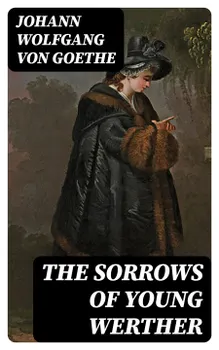
The Sorrows of Young Werther

The Sorrows of Young Werther, written by Johann Wolfgang von Goethe in 1774, is a seminal work of the Sturm und Drang literary movement, characterized by its deep exploration of individual emotion and the human experience. The novel is presented as a collection of letters from the passionate and introspective young artist Werther, who becomes enamored with the engaged Lotte. Goethe's poignant prose captures the turbulent feelings of love, despair, and existential longing, prompting a profound reflection on the conflict between individual desires and societal constraints. This masterpiece not only illustrates the intense emotional landscape of its time but also questions the ethos of Enlightenment rationality by celebrating the power of feeling over reason. Johann Wolfgang von Goethe, a multifaceted German writer and statesman, was immersed in the cultural and philosophical currents of his era, including Romanticism's challenge to traditional notions of sensibility and reason. Inspired by his own unrequited love experiences and the tumultuous socio-political landscape of late 18th-century Europe, Goethe catalyzed the formation of a literary archetype through Werther's tragic narrative, which resonated with the youth of his time and catalyzed a sensation that influenced generations of writers. The Sorrows of Young Werther is essential reading for anyone seeking to delve into the depths of human emotion and the existential plight of the individual. Goethe's exploration of unfulfilled love and the struggle against societal forces remains relevant today, inviting readers to reflect on their own passions and discontents. Through Werther's poignant journey, readers will find a mirror reflecting their own sorrows and joys, making this work not only a cornerstone of world literature but also a timeless exploration of the human condition.
Über dieses Buch

The Sorrows of Young Werther, written by Johann Wolfgang von Goethe in 1774, is a seminal work of the Sturm und Drang literary movement, characterized by its deep exploration of individual emotion and the human experience. The novel is presented as a collection of letters from the passionate and introspective young artist Werther, who becomes enamored with the engaged Lotte. Goethe's poignant prose captures the turbulent feelings of love, despair, and existential longing, prompting a profound reflection on the conflict between individual desires and societal constraints. This masterpiece not only illustrates the intense emotional landscape of its time but also questions the ethos of Enlightenment rationality by celebrating the power of feeling over reason. Johann Wolfgang von Goethe, a multifaceted German writer and statesman, was immersed in the cultural and philosophical currents of his era, including Romanticism's challenge to traditional notions of sensibility and reason. Inspired by his own unrequited love experiences and the tumultuous socio-political landscape of late 18th-century Europe, Goethe catalyzed the formation of a literary archetype through Werther's tragic narrative, which resonated with the youth of his time and catalyzed a sensation that influenced generations of writers. The Sorrows of Young Werther is essential reading for anyone seeking to delve into the depths of human emotion and the existential plight of the individual. Goethe's exploration of unfulfilled love and the struggle against societal forces remains relevant today, inviting readers to reflect on their own passions and discontents. Through Werther's poignant journey, readers will find a mirror reflecting their own sorrows and joys, making this work not only a cornerstone of world literature but also a timeless exploration of the human condition.

Starte noch heute mit diesem Buch für € 0

  • Hole dir während der Testphase vollen Zugriff auf alle Bücher in der App
  • Keine Verpflichtungen, jederzeit kündbar
Jetzt kostenlos testen
Mehr als 52 000 Menschen haben Nextory im App Store und auf Google Play 5 Sterne gegeben.

  1. 100 Meisterwerke der Weltliteratur - Klassiker die man kennen muss

    Franz Kafka, Fjodor Michailowitsch Dostojewski, Rumi, Platon, Tacitus, Homer, Sigmund Freud, Friedrich Nietzsche, Oswald Spengler, Alfred Adler, Marcus Aurelius, Arthur Schopenhauer, Walt Whitman, Joseph Conrad, Robert Louis Stevenson, Karl May, Alexandre Dumas, James Fenimore Cooper, Arthur Conan Doyle, Edgar Allan Poe, Mary Shelley, O.Henry, Stefan Zweig, Charles Dickens, Jacob Grimm, Wilhelm Grimm, Hans Christian Andersen, Joseph von Eichendorff, Klaus Mann, Johann Wolfgang von Goethe, Jane Austen, Emily Brontë, Charlotte Brontë, Else Lasker-Schüler, Heinrich Heine, Herman Melville, Iwan Sergejewitsch Turgenew, Gustav Freytag, Thomas Wolfe, Jonathan Swift, Walter Scott, Nathaniel Hawthorne, Gustave Flaubert, Rainer Maria Rilke, John Galsworthy, Iwan Alexandrowitsch Gontscharow, Oscar Wilde, Lew Wallace, Voltaire, Lewis Carroll, Johanna Spyri, Mark Twain, Selma Lagerlöf, Rudyard Kipling, Jules Verne, Jack London, Miguel de Cervantes, Honoré de Balzac, Emile Zola, Guy De Maupassant, Moliere, Theodor Fontane, Nikolai Gogol, Leo Tolstoi, Anton Pawlowitsch Tschechow, Dante Alighieri, Joseph Roth, Robert Musil, E T A Hoffmann, Heinrich Mann, Kurt Tucholsky, Heinrich von Kleist, Annette von Droste-Hülshoff, Gottfried Keller, Sophie von La Roche, Theodor Storm, William Shakespeare

  2. 9. Aug.

    Zum Schäkespears Tag. Eine Rede auf William Shakespeare. : Hörbuchzeit: Klassiker der Weltliteratur

    Hörbuchzeit, Johann Wolfgang von Goethe

  3. Neu

    Faust I - live! Aus Studio 14 - Erzählbuch (Ungekürzt)

    Meike Rötzer, Johann Wolfgang von Goethe

  4. Faust

    Johann Wolfgang von Goethe

  5. Lyrikalische Bibliothek

    Heinrich Heine, Annette von Droste-Hülshoff, Charles Baudelaire, John Keats, Rainer Maria Rilke, Georg Heym, Wilhelm Busch, Arno Holz, Johann Wolfgang von Goethe, Christian Morgenstern, Joachim Ringelnatz, Georg Trakl, Ludwig Tieck, Stefan Zweig, Hugo von Hoffmannsthal, Edgar Allan Poe, Frank Wedekind, Franz Werfel, Wolfgang Borchert, Karl Kraus, Kurt Tucholsky, Friedrich Nietzsche, Else Lasker-Schüler, Ludwig Kalisch, Jakob van Hoddis, Joseph von Eichendorff, Gotthold Ephraim Lessing

  6. Novelle. Eine Novelle. : Hörbuchzeit: Klassiker der Weltliteratur

    Hörbuchzeit, Johann Wolfgang von Goethe

  7. Die Leiden des jungen Werther : Vollständige klassische Ausgabe - Der berühmte Briefroman des Sturm und Drang

    Johann Wolfgang von Goethe

  8. Penas del joven Werther

    Johann Wolfgang von Goethe

  9. Faust. Der Tragödie Zweiter Teil. Ein Drama. : Hörbuchzeit: Klassiker der Weltliteratur

    Hörbuchzeit, Johann Wolfgang von Goethe

  10. Egmont. Ein Trauerspiel. : Hörbuchzeit: Klassiker der Weltliteratur

    Hörbuchzeit, Johann Wolfgang von Goethe

  11. Iphigenie auf Tauris. Ein Drama. : Hörbuchzeit: Klassiker der Weltliteratur

    Hörbuchzeit, Johann Wolfgang von Goethe

  12. Götz von Berlichingen. Ein Drama. : Hörbuchzeit: Klassiker der Weltliteratur

    Hörbuchzeit, Johann Wolfgang von Goethe