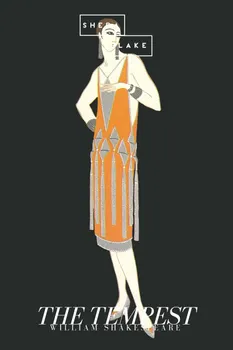
The Tempest

The Tempest is a play by William Shakespeare, believed to have been written in 1610–11, and thought by many critics to be the last play that Shakespeare wrote alone. It is set on a remote island, where the sorcerer Prospero, rightful Duke of Milan, plots to restore his daughter Miranda to her rightful place using illusion and skilful manipulation. He conjures up a storm, the eponymous tempest, to cause his usurping brother Antonio and the complicit King Alonso of Naples to believe they are shipwrecked and marooned on the island. There, his machinations bring about the revelation of Antonio's lowly nature, the redemption of the King, and the marriage of Miranda to Alonso's son, Ferdinand. The story draws heavily on the tradition of the romance, and it was influenced by tragicomedy, the courtly masque and perhaps the commedia dell'arte. It differs from Shakespeare's other plays in its observation of a stricter, more organised neoclassical style. Critics see The Tempest as explicitly concerned with its own nature as a play, frequently drawing links between Prospero's "art" and theatrical illusion, and early critics saw Prospero as a representation of Shakespeare, and his renunciation of magic as signalling Shakespeare's farewell to the stage. The play portrays Prospero as a rational, and not an occultist, magician by providing a contrast to him in Sycorax: her magic is frequently described as destructive and terrible, where Prospero's is said to be wondrous and beautiful. Beginning in about 1950, with the publication of Psychology of Colonization by Octave Mannoni, The Tempest was viewed more and more through the lens of postcolonial theory—exemplified in adaptations like Aimé Césaire's Une Tempête set in Haiti—and there is even a scholarly journal on post-colonial criticism named after Caliban.

Über dieses Buch

The Tempest is a play by William Shakespeare, believed to have been written in 1610–11, and thought by many critics to be the last play that Shakespeare wrote alone. It is set on a remote island, where the sorcerer Prospero, rightful Duke of Milan, plots to restore his daughter Miranda to her rightful place using illusion and skilful manipulation. He conjures up a storm, the eponymous tempest, to cause his usurping brother Antonio and the complicit King Alonso of Naples to believe they are shipwrecked and marooned on the island. There, his machinations bring about the revelation of Antonio's lowly nature, the redemption of the King, and the marriage of Miranda to Alonso's son, Ferdinand. The story draws heavily on the tradition of the romance, and it was influenced by tragicomedy, the courtly masque and perhaps the commedia dell'arte. It differs from Shakespeare's other plays in its observation of a stricter, more organised neoclassical style. Critics see The Tempest as explicitly concerned with its own nature as a play, frequently drawing links between Prospero's "art" and theatrical illusion, and early critics saw Prospero as a representation of Shakespeare, and his renunciation of magic as signalling Shakespeare's farewell to the stage. The play portrays Prospero as a rational, and not an occultist, magician by providing a contrast to him in Sycorax: her magic is frequently described as destructive and terrible, where Prospero's is said to be wondrous and beautiful. Beginning in about 1950, with the publication of Psychology of Colonization by Octave Mannoni, The Tempest was viewed more and more through the lens of postcolonial theory—exemplified in adaptations like Aimé Césaire's Une Tempête set in Haiti—and there is even a scholarly journal on post-colonial criticism named after Caliban.

Starte noch heute mit diesem Buch für € 0

  • Hole dir während der Testphase vollen Zugriff auf alle Bücher in der App
  • Keine Verpflichtungen, jederzeit kündbar
Jetzt kostenlos testen
Mehr als 52 000 Menschen haben Nextory im App Store und auf Google Play 5 Sterne gegeben.

  1. 100 Meisterwerke der englischen Literatur - Klassiker, die man kennen muss : Hamlet, 1984, Ulysses...

    George Orwell, Charles Dickens, Jane Austen, Katherine Mansfield, H.P. Lovecraft, William Wordsworth, John Keats, Percy Bysshe Shelley, Robert Burns, John Milton, William Shakespeare, Christopher Marlowe, Geoffrey Chaucer, Laurence Sterne, Henry Fielding, Mary Shelley, Emily Brontë, Charlotte Brontë, Anne Brontë, William Makepeace Thackeray, George Eliot, D. H. Lawrence, Herman Melville, Thomas Wolfe, Virginia Woolf, Joseph Conrad, Sinclair Lewis, Walt Whitman, Edgar Allan Poe, Oscar Wilde, Jerome K Jerome, Washington Irving, Bram Stoker, H.G. Wells, Daniel Defoe, Lew Wallace, James Fenimore Cooper, Jonathan Swift, Robert Louis Stevenson, Mark Twain, Lewis Carrol, Edward Bulwer-Lytton, F. Scott Fitzgerald, Arthur Conan Doyle, Jack London, Henry David Thoreau, G.K. Chesterton, Edith Wharton, Henry James, Thomas Hardy, Margaret Mitchell, Kate Chopin, Willa Cather, Charlotte Perkins Gilman, James Joyce, John Galsworthy, Francis Hodgson Burnett, Lucy Maud Montgomery, Louisa May Alcott, Rudyard Kipling

  2. Ein Sommernachtstraum

    William Shakespeare

  3. 13. Nov.

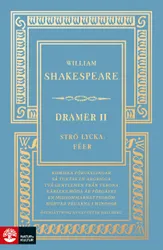
    Dramer II. Strö lycka, féer : Komiska förväxlingar, Så tuktas en argbigga, Två gentlemän från Verona, Kärleks möda är förgäves, En midsommarnattsdröm, Muntra fruarna i Windsor.

    William Shakespeare

  4. 7. Aug.

    William Shakespeare : Zweisprachige ungekürzte Ausgabe / Bilingual unabridged edition: German / English

    William Shakespeare

  5. 31. Juli

    William Shakespeare : Unabridged version with stage directions

    William Shakespeare

  6. 29. Juli

    William Shakespeare : Unabridged version with stage directions

    William Shakespeare

  7. 26. Juli

    William Shakespeare : Unabridged version with stage directions

    William Shakespeare

  8. Neu

    50 Clásicos que Debes Leer Antes de Morir : Un viaje literario por los tesoros de la literatura universal

    Dante Alighieri, Aristóteles, Jane Austen, Charles Baudelaire, Giovanni Boccaccio, Anne Brontë, C. Collodi, James Fenimore Cooper, Fedor Mikhaïlovitch Dostoïevski, Arthur Conan Doyle, Alexandre Dumas, José de Espronceda, Gustave Flaubert, Sigmund Freud, Benito Pérez Galdós, Kahlil Gibran, Johann Wolfgang Goethe, Victor Hugo, Thomas Hardy, Nathaniel Hawthorne, Vicente Blasco Ibáñez, Washington Irving, James Joyce, Mariano José Larra, Jack London, Federico García Lorca, H.P. Lovecraft, Antonio Machado, Gustav Meyrink, John Stuart Mill, Amado Nervo, Friedrich Nietzsche, Solomon Northup, Alexander Sergeyevich Pushkin, Francisco de Quevedo, Walter Scott, William Shakespeare, Robert Louis Stevenson, Harriet Beecher Stowe, Jonathan Swift, Mark Twain, Miguel De Unamuno, Ramón María Valle-Inclán, Julio Verne, Virginia Woolf

  9. Neu

    The Big Book of Christmas

    Louisa May Alcott, O.Henry, Mark Twain, Beatrix Potter, Charles Dickens, William Shakespeare, Harriet Beecher Stowe, Emily Dickinson, Robert Louis Stevenson, Rudyard Kipling

  10. Neu
    3.3

    Romeo and Juliet

    William Shakespeare

  11. Neu
    2.7

    A Midsummer Night's Dream

    William Shakespeare

  12. Neu
    4.1

    Hamlet

    William Shakespeare