Über dieses Buch

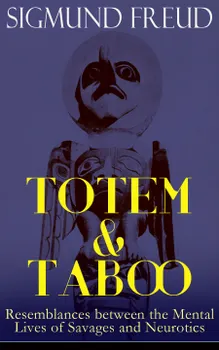
In Totem and Taboo: Resemblances between the Mental Lives of Savages and Neurotics, Sigmund Freud extends psychoanalysis beyond the clinic into anthropology, religion, and the origins of culture. Written in a bold, speculative, and comparative style, the essays interpret totemism, taboo, animism, and ritual prohibition through the mechanisms of repression, ambivalence, and unconscious desire. Though marked by the evolutionary anthropology and colonial vocabulary of its early twentieth-century context, the work remains a landmark in modernist attempts to explain social institutions through psychic conflict. Freud, already renowned for The Interpretation of Dreams and his theories of sexuality, neurosis, and the unconscious, wrote this book at a moment when psychoanalysis was seeking broader cultural authority. Drawing on James Frazer, W. Robertson Smith, and contemporary ethnology, he proposed that the Oedipus complex might illuminate not only individual development but also the formation of morality, religion, and communal law. His medical background and clinical encounters with obsessional neurosis deeply shaped these analogies. This book is recommended for readers interested in psychoanalysis, intellectual history, anthropology, and the genealogy of religious and moral thought. It should be read critically, but also attentively, as a provocative classic whose influence far exceeds the validity of many of its anthropological assumptions.

This enriched edition has been carefully crafted to add value to your reading experience.

- A succinct Introduction situates the work's timeless appeal and themes.

- The Synopsis outlines the central plot, highlighting key developments without spoiling critical twists.

- A detailed Historical Context immerses you in the era's events and influences that shaped the writing.

- An Author Biography reveals milestones in the author's life, illuminating the personal insights behind the text.

- A thorough Analysis dissects symbols, motifs, and character arcs to unearth underlying meanings.

- Reflection questions prompt you to engage personally with the work's messages, connecting them to modern life.

- Hand‐picked Memorable Quotes shine a spotlight on moments of literary brilliance.

- Interactive footnotes clarify unusual references, historical allusions, and archaic phrases for an effortless, more informed read.

Starte noch heute mit diesem Buch für € 0

  • Hole dir während der Testphase vollen Zugriff auf alle Bücher in der App
  • Keine Verpflichtungen, jederzeit kündbar
Jetzt kostenlos testen
Mehr als 52 000 Menschen haben Nextory im App Store und auf Google Play 5 Sterne gegeben.

  1. 4.0

    Weshalb führen wir Krieg? : Ein inspirierender Briefwechsel zwischen Albert Einstein und Sigmund Freud | Mit einer Kurzeinschätzung von Franz-Stefan Gady - Militäranalyst

    Albert Einstein, Sigmund Freud

  2. Meisterwerke der deutschen Literatur : Literaturkanon von Mittelalterepos und Klassik bis Moderne, Exil, Philosophie und Psychoanalyse

    Rainer Maria Rilke, Hans Fallada, Annette von Droste-Hülshoff, Stefan Zweig, Franz Kafka, Johann Wolfgang Goethe, Klaus Mann, Hermann Broch, Heinrich Mann, Friedrich Nietzsche, Heinrich Heine, Friedrich Schiller, Robert Musil, Joseph Roth, Heinrich von Kleist, Kurt Tucholsky, Ödön von Horváth, Karl May, Wilhelm Busch, Heinrich Hoffmann, Johanna Spyri, Else Lasker-Schüler, Georg Büchner, Joseph von Eichendorff, Arthur Schnitzler, Theodor Storm, Hugo von Hofmannsthal, Christoph Martin Wieland, E. T. Hoffmann, Gotthold Ephraim Lessing, Frank Wedekind, Gottfried Keller, Theodor Fontane, Clemens Brentano, Achim von Arnim, Jacob Grimm, Wilhelm Grimm, Adelbert von Chamisso, Arthur Schopenhauer, August Klingemann, Novalis, Friedrich Hölderlin, Jean Paul, Sigmund Freud, Elisabeth Langgässer, Gottfried August Bürger, Jakob Michael Lenz, Friedrich Gottlieb Klopstock, Gottfried von Straßburg, Wolfram von Eschenbach, Sebastian Brant, Hermann Bote, Hans Jakob Grimmelshausen, Hildegard von Bingen

  3. Neu

    50 Clásicos que debes leer antes de morir

    Dante Alighieri, Aristóteles, Jane Austen, Charles Baudelaire, Giovanni Boccaccio, Anne Brontë, C. Collodi, James Fenimore Cooper, Fedor Mikhaïlovitch Dostoïevski, Arthur Conan Doyle, Alexandre Dumas, José de Espronceda, Gustave Flaubert, Sigmund Freud, Benito Pérez Galdós, Kahlil Gibran

  4. Neu

    Sigmund Freud - Obras Completas

    Sigmund Freud

  5. Neu

    Guide till drömtydning

    Sigmund Freud

  6. Psicopatología de la vida cotidiana : El inconsciente revelado en la vida cotidiana

    Sigmund Freud

  7. Tres ensayos de teoría sexual : Un clásico del psicoanálisis sobre libido, sexualidad y desarrollo psicosexual

    Sigmund Freud

  8. Psicología de las masas : Psicoanálisis social de la conducta colectiva, la sugestión, el liderazgo y los vínculos afectivos grupales

    Sigmund Freud

  9. Au-delà du principe de plaisir

    Sigmund Freud

  10. Le rêve et son interprétation : Avec une préface inédite

    Sigmund Freud

  11. 4.0

    Le Moi et le Ça

    Sigmund Freud

  12. El Yo y el Ello

    Sigmund Freud