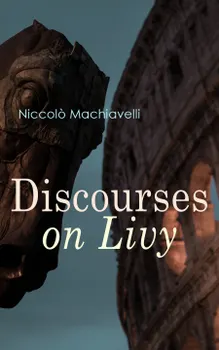
Über dieses Buch

In Discourses on Livy, Niccolò Machiavelli turns from princely rule to republican freedom, using the first ten books of Livy's history of Rome as the framework for a searching inquiry into laws, institutions, civic virtue, religion, military organization, and political corruption. Written in a lucid, aphoristic, and argumentative Renaissance prose, the work belongs to the humanist tradition of reading antiquity as a guide to modern statecraft, yet its realism and analytic boldness make it strikingly original. Machiavelli wrote from the experience of a Florentine secretary, diplomat, and political observer whose career was shaped by war, faction, exile, and the instability of Italian city-states. His enforced retirement after the Medici return gave him the occasion to transform practical knowledge into political theory. The Discourses reflects both his admiration for ancient Rome and his urgent concern for Italy's weakness, dependence on mercenaries, and failure to sustain durable republican institutions. This book is essential for readers seeking Machiavelli beyond The Prince. It rewards students of history, politics, and literature with a profound account of liberty, conflict, and institutional design, offering not easy moral consolation but a bracing education in political judgment.

This enriched edition has been carefully crafted to add value to your reading experience.

- A succinct Introduction situates the work's timeless appeal and themes.

- The Synopsis outlines the central plot, highlighting key developments without spoiling critical twists.

- A detailed Historical Context immerses you in the era's events and influences that shaped the writing.

- An Author Biography reveals milestones in the author's life, illuminating the personal insights behind the text.

- A thorough Analysis dissects symbols, motifs, and character arcs to unearth underlying meanings.

- Reflection questions prompt you to engage personally with the work's messages, connecting them to modern life.

- Hand‐picked Memorable Quotes shine a spotlight on moments of literary brilliance.

- Interactive footnotes clarify unusual references, historical allusions, and archaic phrases for an effortless, more informed read.
Starte noch heute mit diesem Buch für 0 €

  • Hole dir während der Testphase vollen Zugriff auf alle Bücher in der App
  • Keine Verpflichtungen, jederzeit kündbar
Jetzt kostenlos testen
Mehr als 52 000 Menschen haben Nextory im App Store und auf Google Play 5 Sterne gegeben.

Ähnliche Bücher

  1. 50 Meisterwerke der Philosophie : Metaphysik, Das Gastmahl, Bhagavadgita, Tractatus logico-philosophicus, Kritik der reinen Vernunft, Also sprach Zarathustra, Selbstbetrachtungen von Marcus Aurelius

    Ludwig Wittgenstein, Edmund Husserl, Karl Marx, Søren Kierkegaard, Friedrich Nietzsche, Ralph Waldo Emerson, John Stuart Mill, Georg Wilhelm Hegel, Friedrich Schelling, Johann Gottlieb Fichte, Immanuel Kant, John Locke, Montesquieu, Jean-Jacques Rousseau, David Hume, Gottfried Wilhelm Leibniz, Baruch Spinoza, - Konfuzius, Lao Tse, Platon, Xenophon, - Aristoteles, Marcus Tullius Cicero, Seneca, Epiktet, Marc Aurel, Plotin, Thomas von Aquin, Nicolaus von Cues, - Erasmus von Rotterdam, Niccolò Machiavelli, Tommaso Campanella, Martin Luther, Giordano Bruno, Samuel von Pufendorf, Abbé Castel Saint-Pierre, Michel de Montaigne, René Descartes, Francis Bacon, Blaise Pascal

  2. 4.0

    Der Fürst

    Niccolò Machiavelli

  3. Neu

    The Essential Ancient Wisdom Library : 10 Classics of Philosophy, Strategy and Self-Mastery

    Marcus Aurelius, Seneca, Epictetus, Laozi, Plato, Sun Tzu, Musashi Miyamoto, Niccolò Machiavelli, Friedrich Wilhelm Nietzsche, James Allen

  4. 50 Meisterwerke des Mittelalters - Klassiker, die man kennen muss : Beowulf, Rolandslied, 1001 Nacht, Das Gedicht von der Rose, Nibelungenlied, Tristan, Die Edda, Die Göttliche Komödie, Decamerone...

    Marco Polo, Omar Chayyām, Gregor von Tours, Einhard, Anicius Manlius Boethius, Benedikt von Nursia, Gregor der Große, Prokop von Cäsarea, Hildegard von Bingen, Wolfram von Eschenbach, Walther von Vogelweide, Heinrich von Morungen, Gottfried von Straßburg, Heinrich Wittenwiler, Franz von Assisi, Thomas von Aquin, Guillaume de Lorris, Konrad von Würzburg, Dante Alighieri, Giovanni Boccaccio, Geoffrey Chaucer, Johannes von Tepl, Nicolaus von Cues, Sebastian Brant, Hermann Bote, Niccolò Machiavelli, Ludovico Ariosto, Giorgio Vasari, Eusebius, Hieronymus, Agathias, Michael Psellos, Anna Komnena, Abaelard, Augustinus von Hippo

  5. 3.1

    The Prince

    Niccolò Machiavelli

  6. Gekürzt

    Strategie und Management: Die Hörbuch Box mit Sun Tzu, Machiavelli und Clausewitz : Die Kunst des Krieges, Der Fürst, Vom Kriege: Standard-Werke der Business-Literatur

    Sun Tzu, Niccolò Machiavelli, Carl von Clausewitz

  7. Die Kunst der Staatsführung : Politische Philosophie, Realpolitik und strategische Führung von der Antike bis zur Moderne

    Niccolò Machiavelli, Platon, Marcus Aurelius, Marcus Tullius Cicero, Carl von Clausewitz, Friedrich der Große, Benjamin Franklin, Otto von Bismarck, Friedrich Christoph Dahlmann, Karel Čapek, Hans Delbrück

  8. Die größten Klassiker der Philosophie (Kommentiert) : Erweiterte Ausgabe. Also sprach Zarathustra, Utopia, Phänomenologie des Geistes, Neues Organon, Selbstbetrachtungen, Das Gastmahl, Nikomachische Ethik

    Immanuel Kant, Søren Kierkegaard, Edmund Husserl, Ludwig Wittgenstein, Friedrich Nietzsche, - Konfuzius, Platon, Xenophon, - Aristoteles, Lao Tse, Marcus Tullius Cicero, Marcus Aurelius, Plotin, Thomas von Aquin, Niccolò Machiavelli, Thomas Morus, Giordano Bruno, Michel de Montaigne, René Descartes, Francis Bacon, Blaise Pascal, Baruch Spinoza, Gottfried Wilhelm Leibniz, David Hume, Jean-Jacques Rousseau, Friedrich Schelling, John Locke, Georg Wilhelm Hegel, John Stuart Mill, Karl Marx

  9. Meisterwerke der Weltphilosophie (Kommentiert) : Erweiterte Ausgabe. Das Gastmahl, Nikomachische Ethik, Also sprach Zarathustra, Utopia, Phänomenologie des Geistes, Neues Organon, Selbstbetrachtungen

    Immanuel Kant, Søren Kierkegaard, Edmund Husserl, Ludwig Wittgenstein, Friedrich Nietzsche, - Konfuzius, Platon, Xenophon, - Aristoteles, Lao Tse, Marcus Tullius Cicero, Marcus Aurelius, Plotin, Thomas von Aquin, Niccolò Machiavelli, Thomas Morus, Giordano Bruno, Michel de Montaigne, René Descartes, Francis Bacon, Blaise Pascal, Baruch Spinoza, Gottfried Wilhelm Leibniz, David Hume, Jean-Jacques Rousseau, Friedrich Schelling, John Locke, Georg Wilhelm Hegel, John Stuart Mill, Karl Marx

  10. Die größten Klassiker des Mittelalters (Kommentiert) : Erweiterte Ausgabe. Mystik, Scholastik und höfische Liebe zwischen Ritterepos, Reisebericht und Renaissance-Satire

    Franz von Assisi, Prophet Mohammed, Dante Alighieri, Omar Chayyām, Marco Polo, Giovanni Boccaccio, Geoffrey Chaucer, Thomas von Aquin, Peter Abelard, Héloïse d'Argenteuil, Sebastian Brant, Hermann Bote, Ludovico Ariosto, Hartmann von Aue, Guillaume de Lorris, Wolfram von Eschenbach, Gottfried von Straßburg, Hildegard von Bingen, Niccolò Machiavelli

  11. Der Fürst

    Niccolò Machiavelli

  12. 4.7

    Niccolò Machiavelli: Der Fürst : Ungekürzte Lesung

    Niccolò Machiavelli