oder

Finde dein nächstes Lieblingsbuch

Liste überspringen
  1. 3.0

    200 Meisterwerke der Literaturgeschichte : Die größten Klassiker der Weltliteratur

    Franz Kafka, Victor Hugo, Fjodor Michailowitsch Dostojewski, Lord Byron, Giacomo Leopardi, Marcel Proust, Henrik Ibsen, Percy Bysshe Shelley, Charles Dickens, Jane Austen, Mary Shelley, Emily Brontë, Charlotte Brontë, Anne Brontë, William Makepeace Thackeray, Bram Stoker, Henry Fielding, George Eliot, William Shakespeare, D. H. Lawrence, Walt Whitman, Herman Melville, Thomas Wolfe, Virginia Woolf, Joseph Conrad, Sinclair Lewis, Lewis Carrol, Edgar Allan Poe, Edward Bulwer-Lytton, Oscar Wilde, H.G. Wells, Daniel Defoe, James Fenimore Cooper, Lew Wallace, Jonathan Swift, Robert Louis Stevenson, Mark Twain, Walter Scott, Nathaniel Hawthorne, Harriet Beecher Stowe, Laurence Sterne, Frances Hodgson Burnett, Arthur Conan Doyle, Wilkie Collins, Edgar Wallace, Jack London, Henry David Thoreau, John Galsworthy, F. Scott Fitzgerald, Rudyard Kipling, G.K. Chesterton, Washington Irvin, O.Henry, Ambrose Bierce, Alexander Sergejewitsch Puschkin, Michail Lermontow, Iwan Sergejewitsch Turgenew, Leo Tolstoi, Nikolai Gogol, Iwan Gontscharow, Nikolai Leskow, Anton Pawlowitsch Tschechow, Maxim Gorki, François Rabelais, Jean de la Fontaine, Blaise Pascal, Pierre Corneille, Moliere, Jean Baptiste Racine, Charles Perrault, Voltaire, Denis Diderot, Jean-Jacques Rousseau, Pierre-Ambroise Choderlos de Laclos, Antoine-François Prévost, Marquis De Sade, François René Chateaubriand, Stendhal, Honoré de Balzac, Alexandre Dumas, Alphonse de Lamartine, George Sand, Gustave Flaubert, Emile Zola, Guy De Maupassant, Alphonse Daudet, Jules Verne, Joris-Karl Huysmans, Prosper Mérimée, Charles Baudelaire, Stéphane Mallarmé, Arthur Rimbaud, André Gide, Arthur Schopenhauer, Heinrich Heine, Friedrich Schiller, Johann Wolfgang von Goethe, Jacob Grimm, Gottfried von Straßburg, Wolfram von Eschenbach, E T A Hoffmann, Annette von Droste-Hülshoff, Heinrich von Kleist, Friedrich Hölderlin, Theodor Fontane, Gustav Freytag, Gottfried Keller, Theodor Storm, Stefan Zweig, Joseph von Eichendorff, Klaus Mann, Rainer Maria Rilke, Johanna Spyri, Joseph Roth, Karl May, Robert Musil, Heinrich Mann, Sigmund Freud, Friedrich Nietzsche, Dante Alighieri, Giovanni Boccaccio, Giacomo Casanova, Luigi Pirandello, Giosuè Carducci, Gabriele D’Annunzio, Niccolo Machiavelli, Miguel Cervantes de Saavedra, Pedro Calderón de la Barca, Vicente Blasco Ibañez, Knut Hamsun, Homer, Äsop, Herodot, Thukydides, Xenophon, Platon, - Aristoteles, - Sophokles, Euripides, - Aristophanes, Lao Tse, - Konfuzius, Siddhartha Gautama Buddha, Titus Livius, Tacitus, Marcus Tullius Cicero, Vergil, Ovid, Lukian, Petronius, Apuleius, Longos von Lesbos, Mark Aurel, Aurelius Augustinus

  2. 50 Meisterwerke der Philosophie : Metaphysik, Das Gastmahl, Bhagavadgita, Tractatus logico-philosophicus, Kritik der reinen Vernunft, Also sprach Zarathustra, Selbstbetrachtungen von Marcus Aurelius

    Ludwig Wittgenstein, Edmund Husserl, Karl Marx, Søren Kierkegaard, Friedrich Nietzsche, Ralph Waldo Emerson, John Stuart Mill, Georg Wilhelm Friedrich Hegel, Friedrich Schelling, Johann Gottlieb Fichte, Immanuel Kant, John Locke, Montesquieu, Jean-Jacques Rousseau, David Hume, Gottfried Wilhelm Leibniz, Baruch Spinoza, - Konfuzius, Lao Tse, Platon, Xenophon, - Aristoteles, Marcus Tullius Cicero, Seneca, Epiktet, Marc Aurel, Plotin, Thomas von Aquin, Nicolaus von Cues, - Erasmus von Rotterdam, Niccolò Machiavelli, Tommaso Campanella, Martin Luther, Giordano Bruno, Samuel von Pufendorf, Abbé Castel de Saint-Pierre, Michel de Montaigne, René Descartes, Francis Bacon, Blaise Pascal

  3. 200 Literarische Meisterwerke der Weltgeschichte : Die größten Klassiker aus Deutschland, England, den USA, Russland und Frankreich

    Lew Tolstoi, Virginia Woolf, Henrik Ibsen, Franz Kafka, Fjodor Michailowitsch Dostojewski, Lord Byron, Victor Hugo, Giacomo Leopardi, Marcel Proust, Percy Bysshe Shelley, Charles Dickens, Jane Austen, Mary Shelley, Emily Brontë, Charlotte Brontë, Anne Brontë, William Makepeace Thackeray, Bram Stoker, Henry Fielding, George Eliot, William Shakespeare, D. H. Lawrence, Walt Whitman, Herman Melville, Thomas Wolfe, Joseph Conrad, Sinclair Lewis, Lewis Carrol, Edgar Allan Poe, Edward Bulwer-Lytton, Oscar Wilde, H.G. Wells, Daniel Defoe, James Fenimore Cooper, Lew Wallace, Jonathan Swift, Robert Louis Stevenson, Mark Twain, Walter Scott, Nathaniel Hawthorne, Harriet Beecher Stowe, Laurence Sterne, Frances Hodgson Burnett, Arthur Conan Doyle, Wilkie Collins, Edgar Wallace, Jack London, Henry David Thoreau, John Galsworthy, F. Scott Fitzgerald, Rudyard Kipling, G.K. Chesterton, Alexander Sergejewitsch Puschkin, Leo Tolstoi, Nikolai Gogol, Charles Baudelaire, Arthur Rimbaud, Edmond Rostand, Jean Giraudoux, André Gide, Arthur Schopenhauer, Heinrich Heine, Friedrich Schiller, Johann Wolfgang von Goethe, Jacob Grimm, Wilhelm Grimm, Gottfried von Straßburg, Wolfram von Eschenbach, E T A Hoffmann, Annette von Droste-Hülshoff, Dante Alighieri, Giovanni Boccaccio, Luigi Pirandello, Niccolo Machiavelli, Miguel Cervantes de Saavedra, Pedro Calderón de la Barca, Vicente Blasco Ibañez, Knut Hamsun, Friedrich Nietzsche, Homer, Äsop, Herodot, Thukydides, Xenophon, Platon, - Aristoteles, Tacitus, - Konfuzius, Siddhartha Gautama Buddha, Marcus Tullius Cicero, Vergil, Ovid, Mark Aurel, Aurelius Augustinus

  4. Meisterwerke der deutschen Literatur : 100 Klassiker, die man kennen muss

    Rainer Maria Rilke, Hans Fallada, Annette von Droste-Hülshoff, Stefan Zweig, Franz Kafka, Johann Wolfgang Goethe, Klaus Mann, Hermann Broch, Heinrich Mann, Friedrich Nietzsche, Heinrich Heine, Friedrich Schiller, Robert Musil, Joseph Roth, Heinrich von Kleist, Kurt Tucholsky, Ödön von Horváth, Karl May, Wilhelm Busch, Heinrich Hoffmann, Johanna Spyri, Else Lasker-Schüler, Georg Büchner, Joseph von Eichendorff, Arthur Schnitzler, Theodor Storm, Hugo von Hofmannsthal, Christoph Martin Wieland, E T A Hoffmann, Gotthold Ephraim Lessing, Frank Wedekind, Gottfried Keller, Theodor Fontane, Clemens Brentano, Achim von Arnim, Jacob Grimm, Wilhelm Grimm, Adelbert von Chamisso, Arthur Schopenhauer, August Klingemann, Novalis, Friedrich Hölderlin, Jean Paul, Gottfried von Straßburg, Sigmund Freud, Elisabeth Langgässer, Gottfried August Bürger, Jakob Michael Reinhold Lenz, Friedrich Gottlieb Klopstock, Wolfram von Eschenbach, Sebastian Brant, Hermann Bote, Hans Jakob Christoffel von Grimmelshausen, Hildegard von Bingen

  5. 1.0

    100 Meisterwerke der Weltliteratur - Klassiker die man kennen muss : Bereicherte Ausgabe. Ein literarisches Panorama: Meisterwerke, Klassiker und Autoren der Weltliteratur

    Johann Wolfgang von Goethe, Jules Verne, Gustave Flaubert, Franz Kafka, Lewis Carroll, Selma Lagerlöf, Sigmund Freud, Johanna Spyri, Theodor Storm, Rainer Maria Rilke, Charles Dickens, Stefan Zweig, Heinrich Heine, Honoré de Balzac, Theodor Fontane, Karl May, Gottfried Keller, Mark Twain, Heinrich Mann, Else Lasker-Schüler, Robert Musil, Walt Whitman, Oscar Wilde, Annette von Droste-Hülshoff, Arthur Schopenhauer, Robert Louis Stevenson, Gustav Freytag, James Fenimore Cooper, Edgar Allan Poe, Heinrich von Kleist, William Shakespeare, Dante Alighieri, Charlotte Brontë, Emily Brontë, Jack London, Arthur Conan Doyle, Joseph Conrad, Jane Austen, Herman Melville, Guy De Maupassant, Walter Scott, Jonathan Swift, Jacob Grimm, Wilhelm Grimm, Alexandre Dumas, Rudyard Kipling, Nathaniel Hawthorne, Homer, O.Henry, Voltaire, Lew Wallace, John Galsworthy, E T A Hoffmann, Marcus Aurelius, Hans Christian Andersen, Anton Pawlowitsch Tschechow, Platon, Friedrich Nietzsche, Iwan Sergejewitsch Turgenew, Tacitus, Nikolai Gogol, Miguel de Cervantes, Mary Shelley, Thomas Wolfe, Emile Zola, Fjodor Michailowitsch Dostojewski, Leo Tolstoi, Joseph Roth, Joseph von Eichendorff, Kurt Tucholsky, Iwan Alexandrowitsch Gontscharow, Oswald Spengler, Moliere, Alfred Adler, Sophie von La Roche, Klaus Mann, Rumi

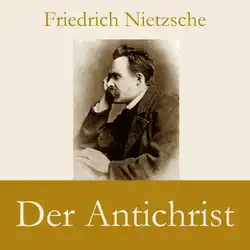
  6. Der Antichrist

    Friedrich Nietzsche

  7. 4.0

    Der Antichrist

    Friedrich Nietzsche

  8. Gesammelte Werke: Philosophische & Philologische Werke, Autobiographische Aufzeichnungen, Lyrik, Aufsätze und Briefe : Also sprach Zarathustra, Der Antichrist, Die Geburt der Tragödie, Morgenröthe...

    Friedrich Nietzsche

  9. 15. Mai
    4.3

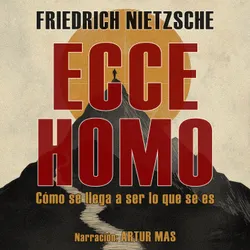
    Ecce Homo : Cómo se llega a ser lo que se es

    Friedrich Nietzsche

  10. Neu
    4.3

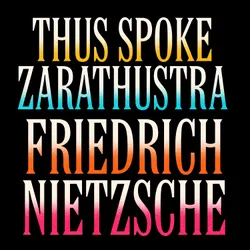
    Thus Spoke Zarathustra

    Friedrich Nietzsche

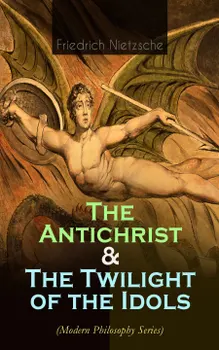
The Antichrist & The Twilight of the Idols (Modern Philosophy Series) : 2 Controversial Philosophical Tracts with Autobiography & Letters of the Author

This carefully crafted ebook collection is formatted for your eReader with a functional and detailed table of contents.

"The Antichrist" is an attack on the "slave morality" and apathy of Western Christianity. Nietzsche's basic claim is that Christianity (as he saw it in the West) is a poisoner of western culture and perversion of the words of and practice of Jesus.

"The Twilight of the Idols" criticizes German culture of the day as unsophisticated and nihilistic, and shoots some disapproving arrows at key French, British, and Italian cultural figures who represent similar tendencies. In contrast to all these alleged representatives of cultural "decadence", Nietzsche applauds Caesar, Napoleon, Goethe, Thucydides and the Sophists as healthier and stronger types.

"Ecce Homo: How One Becomes What One Is" is the last book written by Nietzsche before his final years of insanity that lasted until his death in 1900. According to Walter Kaufmann, Nietzsche's most prominent English translators, the book offers "Nietzsche's own interpretation of his development, his works, and his significance."

"Selected Personal Letters" includes letters to his family and friends.

Friedrich Nietzsche (1844–1900) was a German philosopher, poet, and Latin and Greek scholar whose work has exerted a profound influence on Western philosophy and modern intellectual history. Because of Nietzsche's evocative style and provocative ideas, his philosophy generates passionate reactions. His works remain controversial, due to varying interpretations and misinterpretations of his work. In the Western philosophy tradition, Nietzsche's writings have been described as the unique case of free revolutionary thought, that is, revolutionary in its structure and problems, although not tied to any revolutionary project.