
ou

Trouvez une histoire immédiatement

Passer la liste
  1. 50 Chefs-D'œuvre Que Vous Devez Lire Avant De Mourir: Vol 2

    Honoré de Balzac, Alphonse Daudet, Arthur Conan Doyle, Alexandre Dumas, Gustave Flaubert, Francis Scott Fitzgerald, Nikolai Gogol, Victor Hugo, Maurice Leblanc, Jack London, Madame de La Fayette, Guy De Maupassant, Friedrich Nietzsche, Jean-Jacques Rousseau, Robert Louis Stevenson, Jules Verne, H.G. Wells, Michel de Montaigne, Golden Deer Classics

  2. Le Gai Savoir

    Friedrich Nietzsche

  3. Le Gai Savoir

    Friedrich Nietzsche

  4. Nietzsche: Le Gai Savoir : Édition enrichie.

    Friedrich Nietzsche

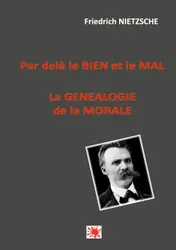
  5. Par delà le bien et le mal -- La généalogie de la morale

    Friedrich Nietzsche

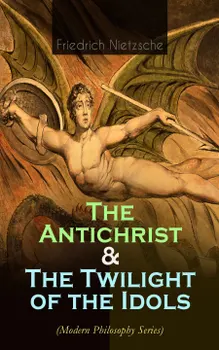
  6. L'Antéchrist, Imprécation contre le christianisme : un essai du philosophe allemand Friedrich Nietzsche contre l'apathie du christianisme occidental.

    Frédéric Nietzsche, Friedrich Nietzsche

  7. Ainsi parlait Zarathoustra

    Friedrich Nietzsche

  8. 5.0

    Le Crépuscule des idoles

    Friedrich Nietzsche

  9. Schopenhauer éducateur : Considérations inactuelles vol 5, tome 2

    Friedrich Nietzsche

  10. 33 Masterpieces of Philosophy and Science to Read Before You Die (Illustrated) : Utopia, The Meditations, The Art of War, The Kama Sutra, Candide

    Thomas More, Marcus Aurelius Antoninus, Sun Tzu, Vatsyayana, Voltaire, Edwin A. Abbott, Aristotle, Dale Carnegie, Gilbert Keith Chesterton, René Descartes, Epictetus, Sigmund Freud, Hermann Hesse, David Hume, Lao Tzu, David Herbert Lawrence, Niccolò Machiavelli, John Mill, Prentice Mulford, Friedrich Nietzsche, Plato, Bertrand Russell, H.G. Wells, Frances Bacon

  11. Ainsi Parlait Zarathoustra

    Friedrich Nietzsche

  12. 50 Capolavori Da Leggere Prima Di Morire: Vol. 1 (Golden Deer Classics)

    Carlo Collodi, Golden Deer Classics, Dante Alighieri, Niccolò Machiavelli, Daniel Defoe, Charlotte Brontë, Nathaniel Hawthorne, Jules Verne, Plato, Edmondo de Amicis, Rudyard Kipling, Voltaire, Homer, Sofocle, Lao Tzu, Jonathan Swift, Friedrich Schiller, Johann Wolfgang von Goethe, Honoré de Balzac, Aleksandr Puškin, Charles Dickens, Edgar Allan Poe, Fëdor Dostoevskij, Fyodor Dostoevsky, Herman Melville, Henry David Thoreau, Harriet Beecher Stowe, Lewis Carroll, Iginio Ugo Tarchetti, Arthur Schopenhauer, Friedrich Nietzsche, Emilio De Marchi, Gabriele D’Annunzio, Giovanni Verga, Jerome Klapka Jerome, Anatole France, Émile Zola, Oscar Wilde, J.M. Barrie, Matilde Serao, Grazia Deledda, Gilbert K. Chesterton, Italo Svevo, Luigi Pirandello, Augusto de Angelis, Stendhal, Alessandro Manzoni

The Antichrist & The Twilight of the Idols (Modern Philosophy Series) : 2 Controversial Philosophical Tracts with Autobiography & Letters of the Author

This carefully crafted ebook collection is formatted for your eReader with a functional and detailed table of contents.

"The Antichrist" is an attack on the "slave morality" and apathy of Western Christianity. Nietzsche's basic claim is that Christianity (as he saw it in the West) is a poisoner of western culture and perversion of the words of and practice of Jesus.

"The Twilight of the Idols" criticizes German culture of the day as unsophisticated and nihilistic, and shoots some disapproving arrows at key French, British, and Italian cultural figures who represent similar tendencies. In contrast to all these alleged representatives of cultural "decadence", Nietzsche applauds Caesar, Napoleon, Goethe, Thucydides and the Sophists as healthier and stronger types.

"Ecce Homo: How One Becomes What One Is" is the last book written by Nietzsche before his final years of insanity that lasted until his death in 1900. According to Walter Kaufmann, Nietzsche's most prominent English translators, the book offers "Nietzsche's own interpretation of his development, his works, and his significance."

"Selected Personal Letters" includes letters to his family and friends.

Friedrich Nietzsche (1844–1900) was a German philosopher, poet, and Latin and Greek scholar whose work has exerted a profound influence on Western philosophy and modern intellectual history. Because of Nietzsche's evocative style and provocative ideas, his philosophy generates passionate reactions. His works remain controversial, due to varying interpretations and misinterpretations of his work. In the Western philosophy tradition, Nietzsche's writings have been described as the unique case of free revolutionary thought, that is, revolutionary in its structure and problems, although not tied to any revolutionary project.