
eller

Hitta en berättelse direkt

Hoppa över listan
  1. 4.4

    Beyond Good and Evil

    Friedrich Nietzsche

  2. 33 Masterpieces of Philosophy and Science to Read Before You Die (Illustrated) : Utopia, The Meditations, The Art of War, The Kama Sutra, Candide

    Thomas More, Marcus Aurelius Antoninus, Sun Tzu, Vatsyayana, Voltaire, Edwin A. Abbott, Aristotle, Dale Carnegie, Gilbert Keith Chesterton, René Descartes, Epictetus, Sigmund Freud, Hermann Hesse, David Hume, Lao Tzu, David Herbert Lawrence, Niccolò Machiavelli, John Mill, Prentice Mulford, Friedrich Nietzsche, Plato, Bertrand Russell, H.G. Wells, Frances Bacon

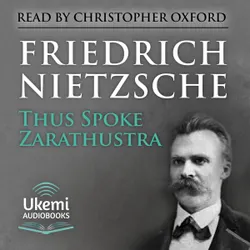
  3. Thus Spoke Zarathustra : A Book for All and None

    Friedrich Nietzsche

  4. Ny
    4.3

    Thus Spoke Zarathustra

    Friedrich Nietzsche

  5. Ny

    Beyond Good and Evil

    Friedrich Nietzsche

  6. Thus Spake Zarathustra : A Book for All and None

    Friedrich Nietzsche

  7. The Antichrist :

    Friedrich Nietzsche

  8. 4.5

    Thus Spoke Zarathustra : Enriched edition.

    Friedrich Nietzsche

  9. 5.0

    The Twilight of the Idols

    Friedrich Nietzsche

  10. 33 Human Science Masterpieces You Must Read Before You Die. Illustrated : The Art of Public Speaking, The Meditations, The Kama Sutra and other masterpieces

    Edwin A. Abbott, Aristotle, Dale Carnegie, Gilbert Chesterton, René Descartes, Epictetus, Marcus Aurelius Antoninus, Sigmund Freud, Hermann Hesse, David Hume, Lao Tzu, Confucius, Swami Abhedananda, Anonimous, David Herbert Lawrence, Niccolò Machiavelli, Benedictus de Spinoza, John Mill, Prentice Mulford, Thomas More, Friedrich Nietzsche, J. Allanson Picton, Plato, Sun Tzu, Vatsyayana, Voltaire, H.G. Wells, Frances Bacon

  11. 4.5

    Así hablo Zaratustra

    Friedrich Nietzsche

  12. Nietzsche’s The Birth of Tragedy: From the Spirit of Music

    Friedrich Nietzsche

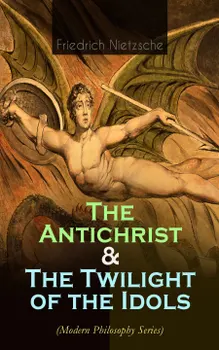
The Antichrist & The Twilight of the Idols (Modern Philosophy Series) : 2 Controversial Philosophical Tracts with Autobiography & Letters of the Author

This carefully crafted ebook collection is formatted for your eReader with a functional and detailed table of contents.

"The Antichrist" is an attack on the "slave morality" and apathy of Western Christianity. Nietzsche's basic claim is that Christianity (as he saw it in the West) is a poisoner of western culture and perversion of the words of and practice of Jesus.

"The Twilight of the Idols" criticizes German culture of the day as unsophisticated and nihilistic, and shoots some disapproving arrows at key French, British, and Italian cultural figures who represent similar tendencies. In contrast to all these alleged representatives of cultural "decadence", Nietzsche applauds Caesar, Napoleon, Goethe, Thucydides and the Sophists as healthier and stronger types.

"Ecce Homo: How One Becomes What One Is" is the last book written by Nietzsche before his final years of insanity that lasted until his death in 1900. According to Walter Kaufmann, Nietzsche's most prominent English translators, the book offers "Nietzsche's own interpretation of his development, his works, and his significance."

"Selected Personal Letters" includes letters to his family and friends.

Friedrich Nietzsche (1844–1900) was a German philosopher, poet, and Latin and Greek scholar whose work has exerted a profound influence on Western philosophy and modern intellectual history. Because of Nietzsche's evocative style and provocative ideas, his philosophy generates passionate reactions. His works remain controversial, due to varying interpretations and misinterpretations of his work. In the Western philosophy tradition, Nietzsche's writings have been described as the unique case of free revolutionary thought, that is, revolutionary in its structure and problems, although not tied to any revolutionary project.