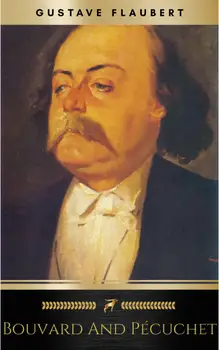
Bouvard and Pécuchet

Nowhere do Flaubert's explorations of the relation of signs to the objects they signify reach a more thorough study than in this work. Bouvard and Pécuchet systematically confuse signs and symbols with reality, an assumption that causes them much suffering, as it does for Emma Bovary and Frédéric Moreau. Yet here, due to the explicit focus on books and knowledge, Flaubert's ideas reach a climax. Consequently, the book is widely read as a precursor to modern theories on semiotics and postmodernism. The relentless failure of Bouvard and Pécuchet to learn anything from their adventures raises the question of what is knowable. Whenever they achieve some small measure of success (a rare occurrence), it is the result of unknown external forces beyond their comprehension. In this sense, they strongly resemble Antony in The Temptation of St. Anthony, a work which addresses similar epistemological themes as they relate to classical literature. Lionel Trilling wrote that the novel expresses a belief in the alienation of human thought from human experience. The worldview that emerges from the work, one of human beings proceeding relentlessly forward without comprehending the results of their actions or the processes of the world around them, does not seem an optimistic one. But given that Bouvard and Pécuchet do gain some comprehension of humanity's ignorant state (as demonstrated by their composition of the Dictionary of Received Ideas), it could be argued that Flaubert allows for the possibility of relative enlightenment.
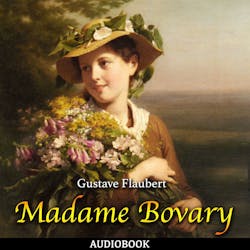
Om denne bog

Nowhere do Flaubert's explorations of the relation of signs to the objects they signify reach a more thorough study than in this work. Bouvard and Pécuchet systematically confuse signs and symbols with reality, an assumption that causes them much suffering, as it does for Emma Bovary and Frédéric Moreau. Yet here, due to the explicit focus on books and knowledge, Flaubert's ideas reach a climax. Consequently, the book is widely read as a precursor to modern theories on semiotics and postmodernism. The relentless failure of Bouvard and Pécuchet to learn anything from their adventures raises the question of what is knowable. Whenever they achieve some small measure of success (a rare occurrence), it is the result of unknown external forces beyond their comprehension. In this sense, they strongly resemble Antony in The Temptation of St. Anthony, a work which addresses similar epistemological themes as they relate to classical literature. Lionel Trilling wrote that the novel expresses a belief in the alienation of human thought from human experience. The worldview that emerges from the work, one of human beings proceeding relentlessly forward without comprehending the results of their actions or the processes of the world around them, does not seem an optimistic one. But given that Bouvard and Pécuchet do gain some comprehension of humanity's ignorant state (as demonstrated by their composition of the Dictionary of Received Ideas), it could be argued that Flaubert allows for the possibility of relative enlightenment.
Kom i gang med denne bog i dag for 0 kr.

  • Få fuld adgang til alle bøger i appen i prøveperioden
  • Ingen forpligtelser, opsiges når som helst
Prøv gratis nu
Mere end 52.000 mennesker har givet Nextory fem stjerner i App Store og Google Play.

  1. 3.3

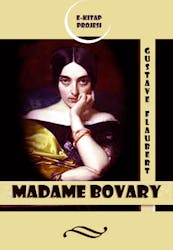
    Madame Bovary

    Gustave Flaubert

  2. Madame Bovary : The Scandalous Tale of Passion, Desire, and Disillusionment by Gustave Flaubert

    Gustave Flaubert

  3. Madame Bovary : Desires and Despair

    Gustave Flaubert

  4. 5.0

    50 Masterpieces you have to read before you die vol: 2 : Timeless Classics to Enrich Your Mind and Soul

    Louisa, Jane Austen, Joseph Conrad, D. H. Lawrence, George Eliot, Leo Tolstoy, James Joyce, Charles Dickens, Bram Stoker, Oscar Wilde, Honoré de Balzac, Edgar Rice Burroughs, Anne Brontë, Charlotte Brontë, Emily Brontë, Lewis Carroll, Willa Cather, Miguel de Cervantes, E. E. Cummings, Fyodor Dostoyevsky, Daniel Defoe, Arthur Conan Doyle, Alexandre Dumas, Gustave Flaubert, Henry James, Victor Hugo, HB Classics

  5. 4.0

    Madame Bovary

    Gustave Flaubert

  6. Madame Bovary

    Gustave Flaubert

  7. 2.0

    Madame Bovary

    Gustave Flaubert

  8. Madame Bovary

    Gustave Flaubert

  9. Madame Bovary

    Gustave Flaubert

  10. Madame Bovary

    Gustave Flaubert

  11. Ny

    100 Obras Maestras Que Debes Leer Antes De Morir

    Francis Scott Fitzgerald, Mary Shelley, Lyman Frank Baum, Edith Nesbit, Dante Alighieri, Jane Austen, Ambrose Bierce, Emily Brontë, Edgar Rice Burroughs, Lewis Carroll, Wilkie Collins, René Descartes, Charles Dickens, Emily Dickinson, Alexandre Dumas, Gustave Flaubert, Benito Pérez Galdós, Johann Wolfgang von Goethe, Thomas Hardy, E T A Hoffmann, Washington Irving, Henry James, James Joyce, Franz Kafka, Gaston Leroux, Federico García Lorca, H.P. Lovecraft, Publio Virgilio Marón, Lucy Maud Montgomery, John William Polidori, Marco Polo, Antoine de Saint-Exupéry, Emilio Salgari, Walter Scott, Mark Twain, Jules Verne, H.G. Wells, Edith Wharton, Mary Wollstonecraft, Fernando de Rojas

  12. Ny

    100 Clásicos de la Literatura Universal

    Francis Scott Fitzgerald, Mary Shelley, Lyman Frank Baum, Louisa May Alcott, Dante Alighieri, Jane Austen, Ambrose Bierce, Emily Brontë, Edgar Rice Burroughs, Lewis Carroll, Wilkie Collins, René Descartes, Charles Dickens, Emily Dickinson, Alexandre Dumas, Gustave Flaubert, Benito Pérez Galdós, Johann Wolfgang von Goethe, Thomas Hardy, E T A Hoffmann, Washington Irving, Henry James, James Joyce, Franz Kafka, Gaston Leroux, Federico García Lorca, H.P. Lovecraft, Publio Virgilio Marón, Lucy Maud Montgomery, John William Polidori, Marco Polo, Antoine de Saint-Exupéry, Emilio Salgari, Walter Scott, Mark Twain, Jules Verne, Julio Verne, H.G. Wells, Edith Wharton, Mary Wollstonecraft, Stefan Zweig, Sun Tzu, Bram Stoker, - Aristoteles, George Bernard Shaw, Henryk Sienkiewicz, Concepción Arenal, Charlotte Brontë, Miguel de Cervantes, G.K. Chesterton, Daniel Defoe, Fyodor Mikhailovich Dostoyevsky, Arthur Conan Doyle, Sigmund Freud, H. Rider Haggard, Homero, Immanuel Kant, Rudyard Kipling, Molière, Friedrich Nietzsche, Fernando de Rojas, Sófocles, William Makepeace Thackeray, León Tolstói, Voltaire, Ramón María del Valle-Inclán, Oscar Wilde, Virginia Woolf


Relaterede kategorier