Daniel Deronda

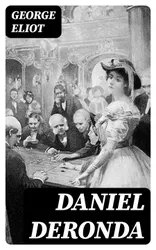
We rely on your support to help us keep producing beautiful, free, and unrestricted editions of literature for the digital age. Will you support our efforts with a donation ? Daniel Deronda , published in 1876, was George Eliot's last novel. It deals with two major characters whose lives intersect: One is a spoiled young woman named Gwendolen Harleth who makes an unwise marriage to escape impending poverty; the other is the titular character, Daniel Deronda, a wealthy young man who feels a mission to help the suffering. During her childhood Gwendolen's family was well-off. She lived in comfort and was indulged and pampered. But the family's fortune is lost through an unwise investment, and she returns to a life of near-poverty, a change which she greatly resents both for herself and for her widowed mother. The only escape seems to be for her to marry a wealthy older man who has been courting her in a casual, unemotional way. The marriage turns out to be a terrible mistake. Daniel Deronda has been raised by Sir Hugo Mallinger as his nephew, but Daniel has never discovered his true parentage, thinking it likely that he is Sir Hugo's natural son. This consciousness of his probable illegitimacy moves him to kindness and tolerance towards anyone who is suffering from disadvantage. One evening, while rowing on the river Thames, he spots a young woman about to leap into the water to drown herself. He persuades her instead to come with him for shelter to a family he knows. The young woman turns out to be Jewish, and through his trying to help her find her lost family, Deronda comes into contact with Jewish culture—and in particular with a man named Mordecai, who has a passionate vision for the future of the Jewish race and who sees in Daniel a kindred spirit. The paths that Gwendolen and Daniel follow intersect often, and Daniel's kindly nature moves him to try to offer her comfort and advice in her moments of distress. Unsurprisingly, Gwendolen misinterprets Daniel's attentions. In Daniel Deronda Eliot demonstrates considerable sympathy towards the Jewish people, their culture, and their aspirations for a national homeland. At the time this was an unpopular and even.
Om denne bog

We rely on your support to help us keep producing beautiful, free, and unrestricted editions of literature for the digital age. Will you support our efforts with a donation ? Daniel Deronda , published in 1876, was George Eliot's last novel. It deals with two major characters whose lives intersect: One is a spoiled young woman named Gwendolen Harleth who makes an unwise marriage to escape impending poverty; the other is the titular character, Daniel Deronda, a wealthy young man who feels a mission to help the suffering. During her childhood Gwendolen's family was well-off. She lived in comfort and was indulged and pampered. But the family's fortune is lost through an unwise investment, and she returns to a life of near-poverty, a change which she greatly resents both for herself and for her widowed mother. The only escape seems to be for her to marry a wealthy older man who has been courting her in a casual, unemotional way. The marriage turns out to be a terrible mistake. Daniel Deronda has been raised by Sir Hugo Mallinger as his nephew, but Daniel has never discovered his true parentage, thinking it likely that he is Sir Hugo's natural son. This consciousness of his probable illegitimacy moves him to kindness and tolerance towards anyone who is suffering from disadvantage. One evening, while rowing on the river Thames, he spots a young woman about to leap into the water to drown herself. He persuades her instead to come with him for shelter to a family he knows. The young woman turns out to be Jewish, and through his trying to help her find her lost family, Deronda comes into contact with Jewish culture—and in particular with a man named Mordecai, who has a passionate vision for the future of the Jewish race and who sees in Daniel a kindred spirit. The paths that Gwendolen and Daniel follow intersect often, and Daniel's kindly nature moves him to try to offer her comfort and advice in her moments of distress. Unsurprisingly, Gwendolen misinterprets Daniel's attentions. In Daniel Deronda Eliot demonstrates considerable sympathy towards the Jewish people, their culture, and their aspirations for a national homeland. At the time this was an unpopular and even.
Kom i gang med denne bog i dag for 0 kr.

  • Få fuld adgang til alle bøger i appen i prøveperioden
  • Ingen forpligtelser, opsiges når som helst
Prøv gratis nu
Mere end 52.000 mennesker har givet Nextory fem stjerner i App Store og Google Play.

  1. 5.0

    50 Masterpieces you have to read before you die vol: 2 : Timeless Classics to Enrich Your Mind and Soul

    Louisa, Jane Austen, Joseph Conrad, D. H. Lawrence, George Eliot, Leo Tolstoy, James Joyce, Charles Dickens, Bram Stoker, Oscar Wilde, Honoré de Balzac, Edgar Rice Burroughs, Anne Brontë, Charlotte Brontë, Emily Brontë, Lewis Carroll, Willa Cather, Miguel de Cervantes, E. E. Cummings, Fyodor Dostoyevsky, Daniel Defoe, Arthur Conan Doyle, Alexandre Dumas, Gustave Flaubert, Henry James, Victor Hugo, HB Classics

  2. #3

    Middlemarch (Book 3: Waiting for Death)

    George Eliot

  3. #1

    Middlemarch (Book 1: Miss Brooke)

    George Eliot

  4. Silas Marner

    George Eliot

  5. 4.3

    100 Quotes That Will Change Your life

    Napoleon Hill, Steve Jobs, Lao Tzu, Sam Levenson, Winston Churchill, George Eliot, Franklin D. Roosevelt, Theodore Roosevelt, Henry Ford, Buddha, Norman Vincent Peale, John D. Rockefeller, Oscar Wilde, Elon Musk, Mahatma Gandhi, Stephen King, Vincent van Gogh, Andrew Carnegie, Paulo Coelho, Muhammad Ali

  6. Brother Jacob

    George Eliot

  7. 3.0

    50 Masterpieces you have to read before you die vol: 1 (2020 Edition) : Included: Little Women, The Richest Man in Babylon Emma, The Call Of The Wild ....

    Louisa May Alcott, Dante Alighieri, Marcus Aurelius, Jane Austen, L. Frank Baum, Charlotte Brontë, Emily Brontë, Anne Brontë, Miguel de Cervantes, Agatha Christie, George S. Clason, Arthur Conan Doyle, Joseph Conrad, Charles Dickens, Fyodor Dostoyevsky, Alexandre Dumas, George Eliot, G.K. Chesterton, G.K. Chesterton, Zane Grey, Nathaniel Hawthorne, Napoleon Hill, Homer, Victor Hugo, Frances Hodgson Burnett, Washington Irving, Henry James, Franz Kafka, Rudyard Kipling, Jack London, Leo Tolstoy, H.P. Lovecraft, Lucy Maud Montgomery, Joseph Murphy, Robert Louis Stevenson, Edgar Allan Poe, Marcel Proust, Publius, Mary Shelley, Bram Stoker, Mark Twain, Sun Tzu, Lew Wallace, Wallace D. Wattles, H.G. Wells

  8. Topbedømt
    4.8

    Middlemarch

    George Eliot

  9. The Essays of George Eliot

    George Eliot

  10. 3.6

    Middlemarch

    George Eliot

  11. 50 Masterpieces you have to read before you die vol: 2

    Louisa May Alcott, Jane Austen, Joseph Conrad, D. H. Lawrence, George Eliot, Leo Tolstoy, James Joyce, Charles Dickens, Bram Stoker, Oscar Wilde, Honoré de Balzac, Edgar Rice Burroughs, Anne Brontë, Charlotte Brontë, Emily Brontë, Lewis Carroll, Willa Cather, Miguel de Cervantes, E. Cummings, Fyodor Dostoyevsky, Daniel Defoe, Arthur Conan Doyle, Alexandre Dumas, Gustave Flaubert, Henry James, Victor Hugo

  12. 50 Masterpieces you have to read before you die vol 1

    Louisa May Alcott, Jane Austen, Joseph Conrad, Edwin Abbott, George Eliot, Leo Tolstoy, James Joyce, Charles Dickens, Bram Stoker, Oscar Wilde, Honoré de Balzac, Edgar Rice Burroughs, Anne Brontë, Charlotte Brontë, Emily Brontë, Lewis Carroll, Willa Cather, Miguel de Cervantes, E. Cummings, Fyodor Dostoyevsky, Daniel Defoe, Arthur Conan Doyle, Alexandre Dumas, Gustave Flaubert, Henry James, Victor Hugo