Jude the Obscure

Jude Fawley is a simple working-class man who dreams of one day becoming something more. Yet after the failure of his first marriage, a loveless entrapment built upon lies, Jude starts to have feelings for his cousin, Sue Bridehead, and soon sacrifices all that he has to pursue a life together with her.

A dark and pessimistic story of how man's unfettered desire may lead to the ruin of everyone around him, ‘Jude the Obscure’ led to a scandalous outcry amongst its Victorian readership. It is the final novel written by Thomas Hardy, and one of his most powerful in its unabashed exploration of class, religion, and sexuality.

‘Jude the Obscure’ is a perfect tragedy for readers of Brontë’s ‘Wuthering Heights’ or du Maurier's ‘Rebecca’.

Thomas Hardy (1840-1928) was an English writer of poetry, novels, and short stories. He belonged to the Victorian realist tradition in English literature and was influenced by the writings of Romanticism.

His novels strongly criticise Victorian society for constraining individuals in regard to marriage, education, and religion: shunning happiness in the name of social propriety.

Hardy’s works explore themes of love, class, and poverty with a painstaking devotion to realism. His best-known works include ‘Far From the Madding Crowd’, ‘The Mayor of Casterbridge’, ‘Tess of the d’Urbervilles’, and ‘Jude the Obscure’.

Om denne bog

Jude Fawley is a simple working-class man who dreams of one day becoming something more. Yet after the failure of his first marriage, a loveless entrapment built upon lies, Jude starts to have feelings for his cousin, Sue Bridehead, and soon sacrifices all that he has to pursue a life together with her.

A dark and pessimistic story of how man's unfettered desire may lead to the ruin of everyone around him, ‘Jude the Obscure’ led to a scandalous outcry amongst its Victorian readership. It is the final novel written by Thomas Hardy, and one of his most powerful in its unabashed exploration of class, religion, and sexuality.

‘Jude the Obscure’ is a perfect tragedy for readers of Brontë’s ‘Wuthering Heights’ or du Maurier's ‘Rebecca’.

Thomas Hardy (1840-1928) was an English writer of poetry, novels, and short stories. He belonged to the Victorian realist tradition in English literature and was influenced by the writings of Romanticism.

His novels strongly criticise Victorian society for constraining individuals in regard to marriage, education, and religion: shunning happiness in the name of social propriety.

Hardy’s works explore themes of love, class, and poverty with a painstaking devotion to realism. His best-known works include ‘Far From the Madding Crowd’, ‘The Mayor of Casterbridge’, ‘Tess of the d’Urbervilles’, and ‘Jude the Obscure’.
Kom i gang med denne bog i dag for 0 kr.

  • Få fuld adgang til alle bøger i appen i prøveperioden
  • Ingen forpligtelser, opsiges når som helst
Prøv gratis nu
Mere end 52.000 mennesker har givet Nextory fem stjerner i App Store og Google Play.

  1. 3.8

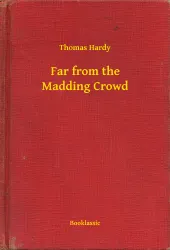
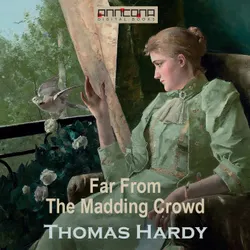
    Far From The Madding Crowd

    Thomas Hardy

  2. The Mayor of Casterbridge

    Thomas Hardy

  3. Pumpkins' Glow: 200+ Eerie Tales for Halloween : Horror Classics, Mysterious Cases, Gothic Novels, Monster Tales & Supernatural Stories

    Wilhelm Hauff, Charles Dickens, Mark Twain, Harriet Beecher Stowe, Edgar Allan Poe, William Hope Hodgson, John Buchan, George MacDonald, Bram Stoker, Anatole France, Jack London, Henry James, Théophile Gautier, Arthur Conan Doyle, Richard Le Gallienne, Ralph Adams Cram, Guy De Maupassant, Thomas Hardy, William Archer, Daniel Defoe, Brander Matthews, Lafcadio Hearn, Ambrose Bierce, Ellis Parker Butler, Washington Irving, Nathaniel Hawthorne, Grant Allen, Arthur Machen, Wilkie Collins, Thomas Peckett Prest, James Malcolm Rymer, Fergus Hume, Walter Hubbell, Leopold Kompert, Florence Marryat, John William Polidori, Vincent O'Sullivan, W. Jacobs, M.P. Shiel, M. R. James, H.P. Lovecraft, Francis Marion Crawford, Mary Shelley, Margaret Oliphant, Frank R. Stockton, A. T. Quiller-Couch, Leonard Kip, Katherine Rickford, Bithia Mary Croker, Catherine L. Pirkis, Pedro De Alarçon, Pliny the Younger, Helena Blavatsky, Villiers de l'Isle-Adam, William F. Harvey, Fiona Macleod, William T. Stead, Gambier Bolton, Andrew Jackson Davis, Nizida, Walter F. Prince, Chester Bailey Fernando

  4. 3.0

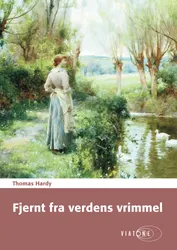
    Fjernt fra verdens vrimmel

    Thomas Hardy

  5. 3.5

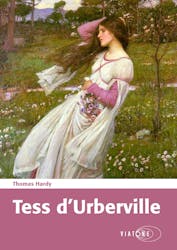
    Tess d'Urberville

    Thomas Hardy

  6. 2.0

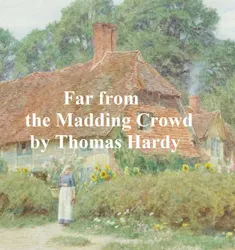
    Far from the Madding Crowd

    Thomas Hardy

  7. #21

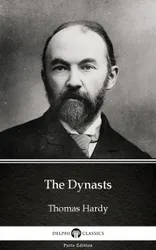
    The Dynasts by Thomas Hardy (Illustrated)

    Thomas Hardy

  8. Far from the Madding Crowd

    Thomas Hardy

  9. 4. dec.

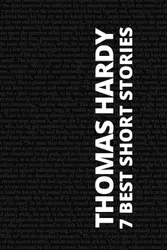
    7 Best Short Stories - Thomas Hardy

    Thomas Hardy, August Nemo

  10. Ny

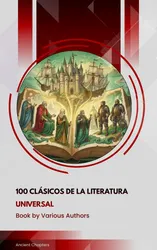
    100 Clásicos de la Literatura Universal

    Francis Scott Fitzgerald, Mary Shelley, Lyman Frank Baum, Louisa May Alcott, Dante Alighieri, Jane Austen, Ambrose Bierce, Emily Brontë, Edgar Rice Burroughs, Lewis Carroll, Wilkie Collins, René Descartes, Charles Dickens, Emily Dickinson, Alexandre Dumas, Gustave Flaubert, Benito Pérez Galdós, Johann Wolfgang von Goethe, Thomas Hardy, E T A Hoffmann, Washington Irving, Henry James, James Joyce, Franz Kafka, Gaston Leroux, Federico García Lorca, H.P. Lovecraft, Publio Virgilio Marón, Lucy Maud Montgomery, John William Polidori, Marco Polo, Antoine de Saint-Exupéry, Emilio Salgari, Walter Scott, Mark Twain, Jules Verne, Julio Verne, H.G. Wells, Edith Wharton, Mary Wollstonecraft, Stefan Zweig, Sun Tzu, Bram Stoker, - Aristoteles, George Bernard Shaw, Henryk Sienkiewicz, Concepción Arenal, Charlotte Brontë, Miguel de Cervantes, G.K. Chesterton, Daniel Defoe, Fyodor Mikhailovich Dostoyevsky, Arthur Conan Doyle, Sigmund Freud, H. Rider Haggard, Homero, Immanuel Kant, Rudyard Kipling, Molière, Friedrich Nietzsche, Fernando de Rojas, Sófocles, William Makepeace Thackeray, León Tolstói, Voltaire, Ramón María del Valle-Inclán, Oscar Wilde, Virginia Woolf

  11. Ny

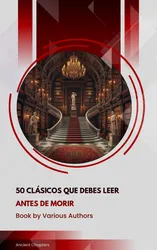
    50 Clásicos que Debes Leer Antes de Morir : Un viaje literario por los tesoros de la literatura universal

    Dante Alighieri, Aristóteles, Jane Austen, Charles Baudelaire, Giovanni Boccaccio, Anne Brontë, C. Collodi, James Fenimore Cooper, Fedor Mikhaïlovitch Dostoïevski, Arthur Conan Doyle, Alexandre Dumas, José de Espronceda, Gustave Flaubert, Sigmund Freud, Benito Pérez Galdós, Kahlil Gibran, Johann Wolfgang Goethe, Johann Wolfgang von Goethe, Victor Hugo, Thomas Hardy, Nathaniel Hawthorne, Vicente Blasco Ibáñez, Washington Irving, James Joyce, Mariano José de Larra, Jack London, Federico García Lorca, H.P. Lovecraft, Antonio Machado, Gustav Meyrink, John Stuart Mill, Amado Nervo, Friedrich Nietzsche, Solomon Northup, Alexander Sergeyevich Pushkin, Francisco de Quevedo, Walter Scott, William Shakespeare, Robert Louis Stevenson, Harriet Beecher Stowe, Jonathan Swift, Mark Twain, Miguel De Unamuno, Ramón María del Valle-Inclán, Julio Verne, Virginia Woolf

  12. Ny

    100 Obras Maestras Que Debes Leer Antes De Morir

    Francis Scott Fitzgerald, Mary Shelley, Lyman Frank Baum, Edith Nesbit, Dante Alighieri, Jane Austen, Ambrose Bierce, Emily Brontë, Edgar Rice Burroughs, Lewis Carroll, Wilkie Collins, René Descartes, Charles Dickens, Emily Dickinson, Alexandre Dumas, Gustave Flaubert, Benito Pérez Galdós, Johann Wolfgang von Goethe, Thomas Hardy, E T A Hoffmann, Washington Irving, Henry James, James Joyce, Franz Kafka, Gaston Leroux, Federico García Lorca, H.P. Lovecraft, Publio Virgilio Marón, Lucy Maud Montgomery, John William Polidori, Marco Polo, Antoine de Saint-Exupéry, Emilio Salgari, Walter Scott, Mark Twain, Jules Verne, H.G. Wells, Edith Wharton, Mary Wollstonecraft, Fernando de Rojas