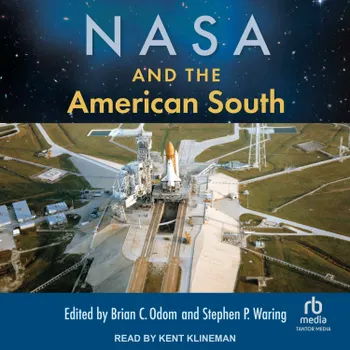
NASA and the American South

During the Cold War, federal funding for the space program transformed the southern United States as NASA built most of its major new facilities in the region and invested heavily in Project Apollo. This volume examines the economic, social, political, and cultural impacts of NASA on the South since the space program was founded in 1958 and explores how the program's strong relationship to the region has affected NASA's organizational culture, technological development, and programmatic goals.

Featuring contributions by scholars from a range of backgrounds, including space historians and specialists in other fields, NASA and the American South offers perspectives on how NASA provided a springboard for the complete restructuring of communities that were home to its facilities in Alabama, Florida, Mississippi, Louisiana, and Texas. These changes unsettled previous patterns of life, and the chapters in this volume include assessments of NASA's influence on regional development, tourism, art and architecture, religion, and Black institutions of higher education.

Bridging the gap between the history of technology and its geographical and cultural contexts, this book offers an unprecedented reevaluation of the impact of the space program on its surrounding landscape, introducing a new framework for interpreting the agency's legacy.

Om denne bog

During the Cold War, federal funding for the space program transformed the southern United States as NASA built most of its major new facilities in the region and invested heavily in Project Apollo. This volume examines the economic, social, political, and cultural impacts of NASA on the South since the space program was founded in 1958 and explores how the program's strong relationship to the region has affected NASA's organizational culture, technological development, and programmatic goals.

Featuring contributions by scholars from a range of backgrounds, including space historians and specialists in other fields, NASA and the American South offers perspectives on how NASA provided a springboard for the complete restructuring of communities that were home to its facilities in Alabama, Florida, Mississippi, Louisiana, and Texas. These changes unsettled previous patterns of life, and the chapters in this volume include assessments of NASA's influence on regional development, tourism, art and architecture, religion, and Black institutions of higher education.

Bridging the gap between the history of technology and its geographical and cultural contexts, this book offers an unprecedented reevaluation of the impact of the space program on its surrounding landscape, introducing a new framework for interpreting the agency's legacy.

Kom i gang med denne bog i dag for 0 kr.

  • Få fuld adgang til alle bøger i appen i prøveperioden
  • Ingen forpligtelser, opsiges når som helst
Prøv gratis nu
Mere end 52.000 mennesker har givet Nextory fem stjerner i App Store og Google Play.