The Critique of Practical Reason

The Critique of Practical Reason Immanuel Kant - The second of Kant's three critiques, Critique of Practical Reason forms the center of Kantian philosophy; published in 1788, it is bookended by his Critique of Pure Reason and Critique of Judgement. With this work Kant establishes his role as a vindicator of the truth of Christianity; he approaches his proof by presenting positive affirmation of the immortality of the soul and the existence of God. The philosopher offers an argument concerning the summum bonum of life: people should not simply search after happiness, but follow the moral law and seek to become worthy of the happiness that God can bestow.This Critique comprises three sections: the Analytic, the Dialectic, and the Doctrine of Method. The Analytic defines the ultimate moral principle, the categorical imperative, and argues that to obey it is to exercise a freedom. The Dialectic make the assumption that immortality and God exist, arguing that pure practical reason falls into error when it expects perfection in this world; we should anticipate finding perfection in the next world, with God's help. The final section, the Doctrine of Method, offers suggestions in educating people in the use of pure practical reason.A seminal text in the history of moral philosophy, this volume offers the most complete statement of Kant's theory of free will and a full development of his practical metaphysics.

Om denne bog

The Critique of Practical Reason Immanuel Kant - The second of Kant's three critiques, Critique of Practical Reason forms the center of Kantian philosophy; published in 1788, it is bookended by his Critique of Pure Reason and Critique of Judgement. With this work Kant establishes his role as a vindicator of the truth of Christianity; he approaches his proof by presenting positive affirmation of the immortality of the soul and the existence of God. The philosopher offers an argument concerning the summum bonum of life: people should not simply search after happiness, but follow the moral law and seek to become worthy of the happiness that God can bestow.This Critique comprises three sections: the Analytic, the Dialectic, and the Doctrine of Method. The Analytic defines the ultimate moral principle, the categorical imperative, and argues that to obey it is to exercise a freedom. The Dialectic make the assumption that immortality and God exist, arguing that pure practical reason falls into error when it expects perfection in this world; we should anticipate finding perfection in the next world, with God's help. The final section, the Doctrine of Method, offers suggestions in educating people in the use of pure practical reason.A seminal text in the history of moral philosophy, this volume offers the most complete statement of Kant's theory of free will and a full development of his practical metaphysics.
Kom i gang med denne bog i dag for 0 kr.

  • Få fuld adgang til alle bøger i appen i prøveperioden
  • Ingen forpligtelser, opsiges når som helst
Prøv gratis nu
Mere end 52.000 mennesker har givet Nextory fem stjerner i App Store og Google Play.

  1. 4.0

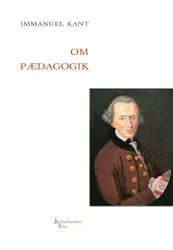
    Om pædagogik

    Immanuel Kant

  2. Ny

    100 Clásicos de la Literatura Universal

    Francis Scott Fitzgerald, Mary Shelley, Lyman Frank Baum, Louisa May Alcott, Dante Alighieri, Jane Austen, Ambrose Bierce, Emily Brontë, Edgar Rice Burroughs, Lewis Carroll, Wilkie Collins, René Descartes, Charles Dickens, Emily Dickinson, Alexandre Dumas, Gustave Flaubert, Benito Pérez Galdós, Johann Wolfgang von Goethe, Thomas Hardy, E T A Hoffmann, Washington Irving, Henry James, James Joyce, Franz Kafka, Gaston Leroux, Federico García Lorca, H.P. Lovecraft, Publio Virgilio Marón, Lucy Maud Montgomery, John William Polidori, Marco Polo, Antoine de Saint-Exupéry, Emilio Salgari, Walter Scott, Mark Twain, Jules Verne, Julio Verne, H.G. Wells, Edith Wharton, Mary Wollstonecraft, Stefan Zweig, Sun Tzu, Bram Stoker, - Aristoteles, George Bernard Shaw, Henryk Sienkiewicz, Concepción Arenal, Charlotte Brontë, Miguel de Cervantes, G.K. Chesterton, Daniel Defoe, Fyodor Mikhailovich Dostoyevsky, Arthur Conan Doyle, Sigmund Freud, H. Rider Haggard, Homero, Immanuel Kant, Rudyard Kipling, Molière, Friedrich Nietzsche, Fernando de Rojas, Sófocles, William Makepeace Thackeray, León Tolstói, Voltaire, Ramón María del Valle-Inclán, Oscar Wilde, Virginia Woolf

  3. Hacia la paz perpetua

    Immanuel Kant

  4. Teoría y praxis : Estudio preliminar: Eduardo García Belsunce

    Immanuel Kant

  5. La paz perpetua : Octava edición

    Immanuel Kant

  6. Yaşam Felsefesi

    Immanuel Kant

  7. La Paz Perpetua :

    Immanuel Kant

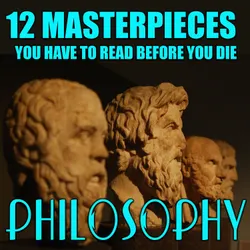
  8. 12 Masterpieces You Have to Read Before You Die. Philosophy

    Niccolo Machiavelli, Tommaso Campanella, Francis Bacon, Thomas More, John Stuart Mill, Immanuel Kant, Kahlil Gibran, Leo Tolstoy, G.K. Chesterton, Henry David Thoreau

  9. Crítica de la Razón Pura

    Immanuel Kant

  10. 2.5

    An Answer to the Question: What is Enlightenment?

    Immanuel Kant

  11. 3.6

    Ikuiseen rauhaan

    Immanuel Kant

  12. Dreams of a Spirit-Seer

    Immanuel Kant