2.7(3)

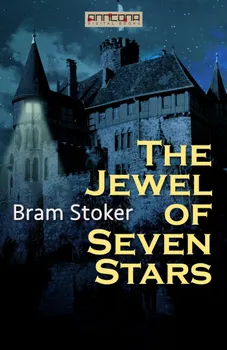
The Jewel of Seven Stars

The Jewel of Seven Stars is a horror novel by Bram Stoker first published in 1903.

The story is a first-person narrative of a young man pulled into an archaeologist's plot to revive Queen Tera, an ancient Egyptian mummy.

The Jewel of Seven Stars is part of a subgenre of Gothic fiction known as Gothic horror. First featured in Horace Walpole's The Castle of Otranto, Gothic horror combines elements of the Gothic and Romantic genres to create a pleasurably terrifying experience. Frankenstein, The Strange Case of Dr. Jekyll and Mr. Hyde, and Stoker’s Dracula are all considered landmarks of Gothic horror fiction.

The Jewel of Seven Stars was Bram Stoker's eighth novel. This novel, along with The Lair of The White Worm, is one of his most famous after Dracula. The story has been adapted to film several times.

The Jewel of Seven Stars was first published in the UK in 1903 and in the US in 1904. This is the 1912 edition that was published in an abridged version in the UK in 1912 by William Rider & Son, London. The publishers felt that the original ending of the book was too disturbing and asked Stoker to rewrite it. As a result, Chapter XVI "Powers - Old and New" was removed and the book was given a happier ending. "Powers - Old and New" was published as an excerpt under the name "The Bridal of Death" and in 1990 it appeared in the short story collection Midnight Tales, Peter Owen Publishers, London.

Although the abridged version was never published in the US, it was reprinted several times in the UK. The original version of this novel was not available in the UK until it was republished in 1996.

Abraham "Bram" Stoker (1847-1912) was an Irish author. Dracula was Bram Stoker's fifth and by far his most famous novel. Other novels include The Snake's Pass (1890), The Jewel of Seven Stars (1903), The Lady of the Shroud (1909) and The Lair of the White Worm (1911).


Om denne bog

The Jewel of Seven Stars is a horror novel by Bram Stoker first published in 1903.

The story is a first-person narrative of a young man pulled into an archaeologist's plot to revive Queen Tera, an ancient Egyptian mummy.

The Jewel of Seven Stars is part of a subgenre of Gothic fiction known as Gothic horror. First featured in Horace Walpole's The Castle of Otranto, Gothic horror combines elements of the Gothic and Romantic genres to create a pleasurably terrifying experience. Frankenstein, The Strange Case of Dr. Jekyll and Mr. Hyde, and Stoker’s Dracula are all considered landmarks of Gothic horror fiction.

The Jewel of Seven Stars was Bram Stoker's eighth novel. This novel, along with The Lair of The White Worm, is one of his most famous after Dracula. The story has been adapted to film several times.

The Jewel of Seven Stars was first published in the UK in 1903 and in the US in 1904. This is the 1912 edition that was published in an abridged version in the UK in 1912 by William Rider & Son, London. The publishers felt that the original ending of the book was too disturbing and asked Stoker to rewrite it. As a result, Chapter XVI "Powers - Old and New" was removed and the book was given a happier ending. "Powers - Old and New" was published as an excerpt under the name "The Bridal of Death" and in 1990 it appeared in the short story collection Midnight Tales, Peter Owen Publishers, London.

Although the abridged version was never published in the US, it was reprinted several times in the UK. The original version of this novel was not available in the UK until it was republished in 1996.

Abraham "Bram" Stoker (1847-1912) was an Irish author. Dracula was Bram Stoker's fifth and by far his most famous novel. Other novels include The Snake's Pass (1890), The Jewel of Seven Stars (1903), The Lady of the Shroud (1909) and The Lair of the White Worm (1911).
Kom i gang med denne bog i dag for 0 kr.

  • Få fuld adgang til alle bøger i appen i prøveperioden
  • Ingen forpligtelser, opsiges når som helst
Prøv gratis nu
Mere end 52.000 mennesker har givet Nextory fem stjerner i App Store og Google Play.

  1. 4.3

    Dracula

    Bram Stoker

  2. 4.3

    Dracula

    Bram Stoker

  3. 4.3

    Dracula

    Bram Stoker

  4. 5.0

    50 Masterpieces you have to read before you die vol: 2 : Timeless Classics to Enrich Your Mind and Soul

    Louisa, Jane Austen, Joseph Conrad, D. H. Lawrence, George Eliot, Leo Tolstoy, James Joyce, Charles Dickens, Bram Stoker, Oscar Wilde, Honoré de Balzac, Edgar Rice Burroughs, Anne Brontë, Charlotte Brontë, Emily Brontë, Lewis Carroll, Willa Cather, Miguel de Cervantes, E. E. Cummings, Fyodor Dostoyevsky, Daniel Defoe, Arthur Conan Doyle, Alexandre Dumas, Gustave Flaubert, Henry James, Victor Hugo, HB Classics

  5. The Book of Shadows II

    Bram Stoker, Hugh Walpole, Robert W. Chambers, H.G. Wells, W. Jacobs, Arthur Machen, Mary Eleanor Wilkins Freeman, Mary Webb, John Buchan, Wilhelm Hauff

  6. 3.9

    Dracula Audiobook

    Bram Stoker

  7. The Mythology and History of Witchcraft

    Bram Stoker, Charles Mackay, William Godwin, Walter Scott, Charles Wentworth Upham, Jules Michelet, John Ashton, Howard Williams, Increase Mather, Cotton Mather, Allen Putnam, George Moir, Frederick George Lee, James Thacher, M. V. B. Perley, Wilhelm Meinhold, John M. Taylor, E. Lynn Linton, William P. Upham, W. H. Davenport Adams, M. Schele de Vere, John G. Campbell, John Maxwell Wood, Samuel Roberts Wells

  8. 4.3

    Dommerens hus

    Bram Stoker

  9. 2.7

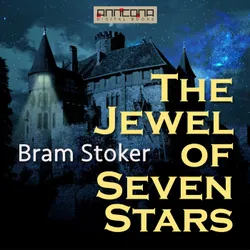
    The Jewel of Seven Stars

    Bram Stoker

  10. 3.9

    Dracula

    Bram Stoker

  11. 3.0

    50 Masterpieces you have to read before you die vol: 1 (2020 Edition) : Included: Little Women, The Richest Man in Babylon Emma, The Call Of The Wild ....

    Louisa May Alcott, Dante Alighieri, Marcus Aurelius, Jane Austen, L. Frank Baum, Charlotte Brontë, Emily Brontë, Anne Brontë, Miguel de Cervantes, Agatha Christie, George S. Clason, Arthur Conan Doyle, Joseph Conrad, Charles Dickens, Fyodor Dostoyevsky, Alexandre Dumas, George Eliot, G.K. Chesterton, G.K. Chesterton, Zane Grey, Nathaniel Hawthorne, Napoleon Hill, Homer, Victor Hugo, Frances Hodgson Burnett, Washington Irving, Henry James, Franz Kafka, Rudyard Kipling, Jack London, Leo Tolstoy, H.P. Lovecraft, Lucy Maud Montgomery, Joseph Murphy, Robert Louis Stevenson, Edgar Allan Poe, Marcel Proust, Publius, Mary Shelley, Bram Stoker, Mark Twain, Sun Tzu, Lew Wallace, Wallace D. Wattles, H.G. Wells