2.0(2)

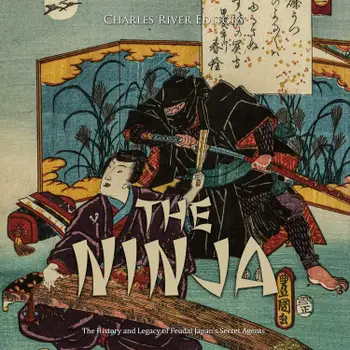
The Ninja: The History and Legacy of Feudal Japan’s Secret Agents

To most people in the West, particularly the youth, the mere mention of Japan immediately evokes various images. A delectable rainbow of sushi, hand-rolled temaki, and platters of crispy, golden-brown tempura. An idyllic, crystal-clear lake flanked by trees covered with delicate, cotton-candy-pink sakura blossoms. A montage of unique, hand-drawn cartoons that are a masterful mix of delightfully exaggerated proportions, features, and colors, and elements of arresting realism, collectively known as “anime.”

Then, of course, there's the ninja, a willowy, graceful figure decked out in black from head to toe, his glinting eyes peering out from the window of his balaclava. He flits from rooftop to rooftop in stunning somersaults and slinks into the shadows, watching his unsuspecting marks from afar and calculating their every move. Then, as quickly as he came, he strikes, hurling throwing stars, twirling his nunchucks, and hacking away with his trusty sword, exterminating his targets with dizzying, lightning-quick speed and superhuman precision. At least, this is how those unfamiliar with the ancient art of ninjutsu, or shinobi-jutsu, see them.

Ninjas are, without a doubt, one of the most timeless and far-reaching cultural staples ever to emerge from Japan. They have become a global phenomenon, and there are countless depictions of ninjas in comic books, films, TV shows, video games, toys, and other forms of popular culture around the world, not to mention their continued relevance as a “conventional” go-to Halloween costume. Kids across the world are intimately familiar with Teenage Mutant Ninja Turtles, Snake Eyes from the G.I. Joe franchise, Scorpion from Mortal Kombat, and Black Noir from The Boys. Ninjas have also been featured in a slew of other international movies and TV shows.

Om denne bog

To most people in the West, particularly the youth, the mere mention of Japan immediately evokes various images. A delectable rainbow of sushi, hand-rolled temaki, and platters of crispy, golden-brown tempura. An idyllic, crystal-clear lake flanked by trees covered with delicate, cotton-candy-pink sakura blossoms. A montage of unique, hand-drawn cartoons that are a masterful mix of delightfully exaggerated proportions, features, and colors, and elements of arresting realism, collectively known as “anime.”

Then, of course, there's the ninja, a willowy, graceful figure decked out in black from head to toe, his glinting eyes peering out from the window of his balaclava. He flits from rooftop to rooftop in stunning somersaults and slinks into the shadows, watching his unsuspecting marks from afar and calculating their every move. Then, as quickly as he came, he strikes, hurling throwing stars, twirling his nunchucks, and hacking away with his trusty sword, exterminating his targets with dizzying, lightning-quick speed and superhuman precision. At least, this is how those unfamiliar with the ancient art of ninjutsu, or shinobi-jutsu, see them.

Ninjas are, without a doubt, one of the most timeless and far-reaching cultural staples ever to emerge from Japan. They have become a global phenomenon, and there are countless depictions of ninjas in comic books, films, TV shows, video games, toys, and other forms of popular culture around the world, not to mention their continued relevance as a “conventional” go-to Halloween costume. Kids across the world are intimately familiar with Teenage Mutant Ninja Turtles, Snake Eyes from the G.I. Joe franchise, Scorpion from Mortal Kombat, and Black Noir from The Boys. Ninjas have also been featured in a slew of other international movies and TV shows.

Kom i gang med denne bog i dag for 0 kr.

  • Få fuld adgang til alle bøger i appen i prøveperioden
  • Ingen forpligtelser, opsiges når som helst
Prøv gratis nu
Mere end 52.000 mennesker har givet Nextory fem stjerner i App Store og Google Play.

  1. The Disappearance of the Surcouf: The Mysterious Sinking of the Allies’ Largest Submarine during World War II

    Charles River Editors

  2. Medieval Exorcisms: The History and Legacy of the Beliefs in Demonic Possession during the Middle Ages

    Charles River Editors

  3. Napoleon’s Worst Defeats: The History and Legacy of the Battles that Stalled France’s Expansion and Forced the Emperor’s Abdication

    Charles River Editors

  4. Ancient Rome’s Most Important Civil Wars: The History of the Conflicts that Destroyed the Roman Republic and Split the Roman Empire

    Charles River Editors

  5. The Worst Nuclear Meltdowns of the Cold War: The History of the Biggest Nuclear Disasters in the United States and Soviet Union

    Charles River Editors

  6. 5.0

    The Rise and Fall of the Third Reich: The History and Legacy of Nazi Germany under Adolf Hitler

    Charles River Editors

  7. American Monsters: The History of America’s Most Persistent Urban Tales about Strange Birds, Serpents and Wolfmen

    Charles River Editors

  8. The French Invasion of Russia and the Battle of Leipzig: The History and Legacy of the Defeats that Forced Napoleon into Exile at Elba

    Charles River Editors

  9. 4.2

    Gnosticism: The History and Legacy of the Mysterious Ancient Religion

    Charles River Editors

  10. 4.0

    The Battle of Kapetron: The History and Legacy of the First Major Battle Between the Byzantine Empire and Seljuk Turks

    Charles River Editors

  11. The Fighting in Flanders Fields: The History of the Major Battles across the Region during World War I

    Charles River Editors

  12. The Grande Armée and Wellington’s Scum: The History and Legacy of the French and British Armies during the Napoleonic Wars

    Charles River Editors