4.5(2)

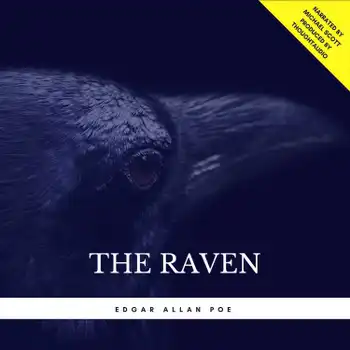
The Raven

The Raven" is a narrative poem by American writer Edgar Allan Poe. First published in January 1845, the poem is often noted for its musicality, stylized language, and supernatural atmosphere. It tells of a talking raven's mysterious visit to a distraught lover, tracing the man's slow fall into madness. The lover, often identified as being a student, is lamenting the loss of his love, Lenore. Sitting on a bust of Pallas, the raven seems to further instigate his distress with its constant repetition of the word "Nevermore". The poem makes use of folk, mythological, religious, and classical references.

Poe claimed to have written the poem logically and methodically, intending to create a poem that would appeal to both critical and popular tastes, as he explained in his 1846 follow-up essay, "The Philosophy of Composition". The poem was inspired in part by a talking raven in the novel Barnaby Rudge: A Tale of the Riots of 'Eighty by Charles Dickens. Poe borrows the complex rhythm and meter of Elizabeth Barrett's poem "Lady Geraldine's Courtship", and makes use of internal rhyme as well as alliteration throughout.

"The Raven" was first attributed to Poe in print in the New York Evening Mirror on January 29, 1845. Its publication made Poe popular in his lifetime, although it did not bring him much financial success. The poem was soon reprinted, parodied, and illustrated. Critical opinion is divided as to the poem's literary status, but it nevertheless remains one of the most famous poems ever written.

Om denne bog

The Raven" is a narrative poem by American writer Edgar Allan Poe. First published in January 1845, the poem is often noted for its musicality, stylized language, and supernatural atmosphere. It tells of a talking raven's mysterious visit to a distraught lover, tracing the man's slow fall into madness. The lover, often identified as being a student, is lamenting the loss of his love, Lenore. Sitting on a bust of Pallas, the raven seems to further instigate his distress with its constant repetition of the word "Nevermore". The poem makes use of folk, mythological, religious, and classical references.

Poe claimed to have written the poem logically and methodically, intending to create a poem that would appeal to both critical and popular tastes, as he explained in his 1846 follow-up essay, "The Philosophy of Composition". The poem was inspired in part by a talking raven in the novel Barnaby Rudge: A Tale of the Riots of 'Eighty by Charles Dickens. Poe borrows the complex rhythm and meter of Elizabeth Barrett's poem "Lady Geraldine's Courtship", and makes use of internal rhyme as well as alliteration throughout.

"The Raven" was first attributed to Poe in print in the New York Evening Mirror on January 29, 1845. Its publication made Poe popular in his lifetime, although it did not bring him much financial success. The poem was soon reprinted, parodied, and illustrated. Critical opinion is divided as to the poem's literary status, but it nevertheless remains one of the most famous poems ever written.
Kom i gang med denne bog i dag for 0 kr.

  • Få fuld adgang til alle bøger i appen i prøveperioden
  • Ingen forpligtelser, opsiges når som helst
Prøv gratis nu
Mere end 52.000 mennesker har givet Nextory fem stjerner i App Store og Google Play.

  1. Ny
    #7

    The Murders in the Rue Morgue

    Edgar Allan Poe

  2. Lost Sci-Fi Books 341 thru 360 : Golden Age Adventures by Philip K. Dick, Ray Bradbury, Harry Harrison, Harlan Ellison & More

    Michael Shaara, Robert Sheckley, J. F. Bone, Charles E. Fritch, Harlan Ellison, Jack London, Harry Harrison, Frank Lillie Pollock, Ray Bradbury, Harl Vincent, Philip K Dick, Dorothy Quick, Dick Purcell, E. M. Hull, Robert Silverberg, Mel Hunter, Gerda Rhoads, Don Mark Lemon, Edgar Allan Poe

  3. A Tale of the Ragged Mountains

    Edgar Allan Poe

  4. Lost Sci-Fi Books 361 thru 380 : 20 Timeless Tales of Science Fiction, Horror, Fantasy, and Mystery

    Thorp McClusky, Ron Cocking, Alan E. Nourse, H.P. Lovecraft, Don Mark Lemon, Frank Belknap Long, Harlan Ellison, Jack London, Frank R. Stockton, Edgar Allan Poe, Lester del Rey, Nelson S. Bond, Mack Reynolds, Katherine MacLean, Fritz Leiber, Robert Sheckley, Robert Moore Williams, Alfred Coppel, Arthur C. Clarke

  5. 4.0

    Selected Works of Edgar Allan Poe

    Edgar Allan Poe

  6. Selected Works of Edgar Allan Poe

    Edgar Allan Poe

  7. Strange Worlds of Weird Tales : 18 Lost Science Fiction, Fantasy & Horror Stories from the Legendary Magazine

    H.P. Lovecraft, Edgar Allan Poe, Robert E. Howard, Frank Belknap Long, August Derleth, Dorothy Quick, Hugh B. Cave, Kenneth Sterling, Paul Ernst, Carl Jacobi, George T. Spillman, Edmond Hamilton, Henry Kuttner, Carl W. Ganzlin, Edwin Baird, H. Bedford-Jones

  8. Mordene i Rue Morgue. Auguste Dupins kriminalsager

    Edgar Allan Poe

  9. The Edgar Allen Poe Collection : The Master of Macabre

    Edgar Allan Poe

  10. The Jolly Roger Tales : Blackbeard, Captain Blood, Facing the Flag, Treasure Island, The Gold-Bug, Captain Singleton…

    Jules Verne, Charles Dickens, Robert Louis Stevenson, James Fenimore Cooper, Edgar Allan Poe, William Hope Hodgson, Howard Pyle, Jack London, Arthur Conan Doyle, Richard Le Gallienne, Daniel Defoe, Alexandre Dumas, Charles Ellms, Frederick Marryat, Harold MacGrath, Joseph Lewis French, Harry Collingwood, Stanley Lane-Poole, Charles Boardman Hawes, L. Frank Baum, J.M. Barrie, R.M Ballantyne, G. A Henty, J. D. Kelley, J. Allan Dunn, Robert E. Howard, F. Scott Fitzgerald, Sir Walter Scott, Ralph D. Paine, Captain Charles Johnson, W. H. Kingston, Currey E. Hamilton, John Esquemeling

  11. 5.0

    The Power of Darkness : The Legend of Sleepy Hollow, Sweeney Todd, Frankenstein, Dracula, The Haunted House, Dead Souls…

    Wilhelm Hauff, Charles Dickens, Mark Twain, Harriet Beecher Stowe, Adelbert von Chamisso, Oscar Wilde, Robert Louis Stevenson, Edgar Allan Poe, William Hope Hodgson, Joseph Sheridan Fanu, John Buchan, Louis Tracy, Bram Stoker, Anatole France, Charlotte Brontë, Emily Brontë, Jack London, Henry James, Théophile Gautier, Arthur Conan Doyle, Richard Le Gallienne, Jane Austen, Ralph Adams Cram, Thomas De Quincey, John Meade Falkner, Guy De Maupassant, Thomas Hardy, William Archer, Daniel Defoe, John Kendrick Bangs, Cleveland Moffett, Brander Matthews, Marie Belloc Lowndes, Horace Walpole, Rudyard Kipling, Lafcadio Hearn, Hugh Walpole, Ambrose Bierce, Frederick Marryat, Ellis Parker Butler, Washington Irving, Leonid Andreyev, David Lindsay, Nathaniel Hawthorne, Grant Allen, Arthur Machen, Wilkie Collins, William Makepeace Thackeray, Thomas Peckett Prest, James Malcolm Rymer, Fergus Hume, Edward Bellamy, Walter Hubbell, Charlotte Perkins Gilman, Leopold Kompert, Richard Marsh, Florence Marryat, Catherine Crowe, John William Polidori, Vincent O'Sullivan, H.G. Wells, Robert W. Chambers, W. W. Jacobs, M.P. Shiel, E F Benson, Jerome K Jerome, M. R. James, E. T. Hoffmann, Stanley G. Weinbaum, George W. Reynolds, H.P. Lovecraft, Robert E. Howard, Edith Nesbit, Sabine Baring-Gould, William Thomas Beckford, Francis Marion Crawford, Lucy Maud Montgomery, Mary Elizabeth Braddon, Mary Louisa Molesworth, Mary E. Freeman, Nikolai Gogol, Mary Shelley, Elizabeth Gaskell, Edward Bulwer-Lytton, Frank R. Stockton, A. T. Quiller-Couch, Ann Radcliffe, Louisa M. Alcott, Amelia B. Edwards, Leonard Kip, Matthew Gregory Lewis, Fitz-James O’Brien, Katherine Rickford, Bithia Mary Croker, Catherine L. Pirkis, Émile Erckmann, Alexandre Chatrian, Pedro De Alarçon, H. H. (Saki), Pliny the Younger, Helena Blavatsky, Villiers de Adam, William F. Harvey, Fiona Macleod, William T. Stead, Gambier Bolton, Andrew Jackson Davis, Nizida, Walter F. Prince, Chester Bailey Fernando

  12. Deadly Sails - Complete Collection : History of Pirates, Trues Stories about the Most Notorious Pirates & Most Famous Pirate Novels

    Jules Verne, Charles Dickens, Robert Louis Stevenson, James Fenimore Cooper, Edgar Allan Poe, William Hope Hodgson, Charles Kingsley, Howard Pyle, Jack London, Arthur Conan Doyle, Walter Scott, Alexandre Dumas, Frederick Marryat, Washington Irving, Harold MacGrath, Joseph Lewis French, William Clark Russell, Harry Collingwood, Max Pemberton, Charles Boardman Hawes, L. Frank Baum, J.M. Barrie, R.M Ballantyne, G. A Henty, J. Allan Dunn, Robert E. Howard, F. Scott Fitzgerald, W. H. Kingston, Charles Johnson, Maturin Murray Ballou