The Uses of Diversity : A book of essays

G.K. Chesterton's 'The Uses of Diversity' is a conscientious exploration into the myriad perspectives and philosophies of British society spanning the transition from the 19th to the 20th century. This compilation of personal essays embodies Chesterton's distinctive narrative voice, marked by his characteristic wit and a trenchant, analytical eye for cultural critique. The work is an exemplification of English personal prose, deeply rooted in its timely context yet transcending its era to offer perennial reflections on human nature and societal norms. The prose meanders through an array of subjects, from the mundane to the metaphysical, encapsulating a microcosm of the age's intellectual spirit.

In discussing the author, Gilbert Keith Chesterton stands as a paragon of literary versatility and sharp intellect. His keen observations were shaped by his unique stance as both a participant in and critic of British literary circles and social strata. 'The Uses of Diversity' draws from Chesterton's rich life experiences and his profound engagement with the philosophical dialogues of his time. His pervasive influence as a critic, theologian, and philosopher grants him a timeless relevance, which this book captures in its personal yet universal approach to life's complexities.

'The Uses of Diversity' is highly recommended for readers who admire literary craftsmanship that both mirrors and dissects the nuances of its age. Chesterton beckons readers into a thoughtful dance of ideology and critique, making this work an essential piece for both enthusiasts of Chesterton's oeuvre and those delving into the socio-cultural underpinnings of early 20th-century Britain. It's a work that promises to enlighten, challenge, and gratify the contemplative mind.

Om denne bog

G.K. Chesterton's 'The Uses of Diversity' is a conscientious exploration into the myriad perspectives and philosophies of British society spanning the transition from the 19th to the 20th century. This compilation of personal essays embodies Chesterton's distinctive narrative voice, marked by his characteristic wit and a trenchant, analytical eye for cultural critique. The work is an exemplification of English personal prose, deeply rooted in its timely context yet transcending its era to offer perennial reflections on human nature and societal norms. The prose meanders through an array of subjects, from the mundane to the metaphysical, encapsulating a microcosm of the age's intellectual spirit.

In discussing the author, Gilbert Keith Chesterton stands as a paragon of literary versatility and sharp intellect. His keen observations were shaped by his unique stance as both a participant in and critic of British literary circles and social strata. 'The Uses of Diversity' draws from Chesterton's rich life experiences and his profound engagement with the philosophical dialogues of his time. His pervasive influence as a critic, theologian, and philosopher grants him a timeless relevance, which this book captures in its personal yet universal approach to life's complexities.

'The Uses of Diversity' is highly recommended for readers who admire literary craftsmanship that both mirrors and dissects the nuances of its age. Chesterton beckons readers into a thoughtful dance of ideology and critique, making this work an essential piece for both enthusiasts of Chesterton's oeuvre and those delving into the socio-cultural underpinnings of early 20th-century Britain. It's a work that promises to enlighten, challenge, and gratify the contemplative mind.
Kom i gang med denne bog i dag for 0 kr.

  • Få fuld adgang til alle bøger i appen i prøveperioden
  • Ingen forpligtelser, opsiges når som helst
Prøv gratis nu
Mere end 52.000 mennesker har givet Nextory fem stjerner i App Store og Google Play.

  1. 4.0
    #1

    Den vantro Fader Brown

    G.K. Chesterton

  2. 5.0
    #2

    Fader Browns hemmelighed

    G.K. Chesterton

  3. Klubben för udda yrken

    G.K. Chesterton

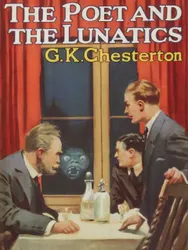
  4. The Poet and the Lunatics : Episodes in the Life of Gabriel Gale

    G.K. Chesterton

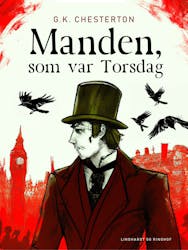
  5. Manden, som var Torsdag

    G.K. Chesterton

  6. 3.0

    50 Masterpieces you have to read before you die vol: 1 (2020 Edition) : Included: Little Women, The Richest Man in Babylon Emma, The Call Of The Wild ....

    Louisa May Alcott, Dante Alighieri, Marcus Aurelius, Jane Austen, L. Frank Baum, Charlotte Brontë, Emily Brontë, Anne Brontë, Miguel de Cervantes, Agatha Christie, George S. Clason, Arthur Conan Doyle, Joseph Conrad, Charles Dickens, Fyodor Dostoyevsky, Alexandre Dumas, George Eliot, G.K. Chesterton, G.K. Chesterton, Zane Grey, Nathaniel Hawthorne, Napoleon Hill, Homer, Victor Hugo, Frances Hodgson Burnett, Washington Irving, Henry James, Franz Kafka, Rudyard Kipling, Jack London, Leo Tolstoy, H.P. Lovecraft, Lucy Maud Montgomery, Joseph Murphy, Robert Louis Stevenson, Edgar Allan Poe, Marcel Proust, Publius, Mary Shelley, Bram Stoker, Mark Twain, Sun Tzu, Lew Wallace, Wallace D. Wattles, H.G. Wells

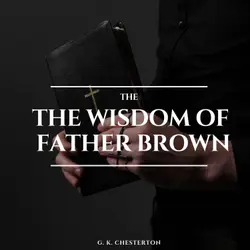
  7. The Wisdom of Father Brown

    G.K. Chesterton

  8. The Club of Queer Trades

    G.K. Chesterton

  9. 5.0

    50 Mystery & Investigation Masterpieces (Active TOC) (ABCD Classics) vol: 2

    Mark Twain, Agatha Christie, Arthur Conan Doyle, Edgar Allan Poe, Dorothy Leigh Sayers, G.K. Chesterton, Charles Dickens, Jules Verne, Wilkie Collins, Joseph Smith Fletcher, R Austin Freeman, Maurice Leblanc, Sax Rohmer, ABCD Classics

  10. 4.5
    #3

    Fader Brown gør skandale

    G.K. Chesterton

  11. 4.5
    #4

    Den kloge Fader Brown

    G.K. Chesterton

  12. Ny

    100 Clásicos de la Literatura Universal

    Francis Scott Fitzgerald, Mary Shelley, Lyman Frank Baum, Louisa May Alcott, Dante Alighieri, Jane Austen, Ambrose Bierce, Emily Brontë, Edgar Rice Burroughs, Lewis Carroll, Wilkie Collins, René Descartes, Charles Dickens, Emily Dickinson, Alexandre Dumas, Gustave Flaubert, Benito Pérez Galdós, Johann Wolfgang von Goethe, Thomas Hardy, E T A Hoffmann, Washington Irving, Henry James, James Joyce, Franz Kafka, Gaston Leroux, Federico García Lorca, H.P. Lovecraft, Publio Virgilio Marón, Lucy Maud Montgomery, John William Polidori, Marco Polo, Antoine de Saint-Exupéry, Emilio Salgari, Walter Scott, Mark Twain, Jules Verne, Julio Verne, H.G. Wells, Edith Wharton, Mary Wollstonecraft, Stefan Zweig, Sun Tzu, Bram Stoker, - Aristoteles, George Bernard Shaw, Henryk Sienkiewicz, Concepción Arenal, Charlotte Brontë, Miguel de Cervantes, G.K. Chesterton, Daniel Defoe, Fyodor Mikhailovich Dostoyevsky, Arthur Conan Doyle, Sigmund Freud, H. Rider Haggard, Homero, Immanuel Kant, Rudyard Kipling, Molière, Friedrich Nietzsche, Fernando de Rojas, Sófocles, William Makepeace Thackeray, León Tolstói, Voltaire, Ramón María del Valle-Inclán, Oscar Wilde, Virginia Woolf