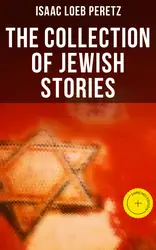
Sobre este libro

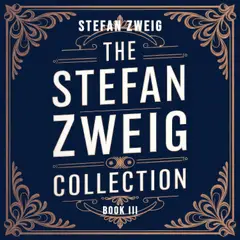
Stefan Zweig wrote these four legends primarily in the 1930s as Europe descended toward fascism. Turning from contemporary psychological novellas to legendary material, he sought timeless themes that transcended specific historical horror.

"The Dissimilar Doubles" — Twin sisters diverge: one pursuing sensual pleasure, the other austere devotion. A moral parable that complicates easy judgments about flesh and spirit.

"The Buried Candelabrum" — A maimed Jew journeys to fifth-century Constantinople seeking the Temple menorah. Written as antisemitism intensified, it explores displacement and whether exile can ever be overcome.

"Rachel Against God" — The biblical matriarch rises from her grave to confront God over her descendants' suffering. An audacious premise drawn from the Jewish tradition of arguing with the divine.

"The Eyes of the Eternal Brother" — An Indian legend of a warrior-judge who renounces violence after killing his brother, only to discover he cannot escape his violent karma.

Zweig's cosmopolitan range is extraordinary — moving from Jewish tradition to Christian legend to Indian mythology with elegant prose and psychological insight. Yet the universalizing impulse that enables this range also creates tension: extracting "universal themes" can flatten what makes specific traditions distinctive.

These legends represent Zweig's experimental engagement with ancient forms during Europe's darkest decade — a writer seeking to preserve humanistic values through mythic storytelling while the civilization that enabled such cosmopolitanism was being destroyed. They work best as literary meditations, demonstrating how a master stylist navigated between timeless myth and contemporary catastrophe. Essential reading for understanding both Zweig's range and his response to the 1930s.

Empieza este libro hoy por 0 €

  • Disfruta de acceso completo a todos los libros de la app durante el periodo de prueba
  • Sin compromiso, cancela cuando quieras
Pruébalo gratis ahora
Más de 52 000 clientes han dado a Nextory 5 estrellas en la App Store y Google Play.

Libros similares

Más de Stefan Zweig

  1. 4.2

    Carta de una desconocida

    Stefan Zweig

  2. 4.4

    Ardiente secreto

    Stefan Zweig

  3. 4.3

    Viaje al pasado

    Stefan Zweig

  4. 4.3

    Momentos estelares de la humanidad

    Stefan Zweig

  5. 4.1

    Veinticuatro horas en la vida de una mujer

    Stefan Zweig

  6. 4.2

    Novela de ajedrez

    Stefan Zweig

  7. 4.8

    Fouché : El genio tenebroso

    Stefan Zweig

  8. 4.2

    Carta de una desconocida

    Stefan Zweig

  9. 4.7

    Novela de ajedrez

    Stefan Zweig

  10. 100 Clásicos de la Literatura Universal

    Francis Scott Fitzgerald, Mary Shelley, Lyman Frank Baum, Louisa May Alcott, Dante Alighieri, Jane Austen, Ambrose Bierce, Emily Brontë, Edgar Rice Burroughs, Lewis Carroll, Wilkie Collins, René Descartes, Charles Dickens, Emily Dickinson, Alexandre Dumas, Gustave Flaubert, Benito Pérez Galdós, Johann Wolfgang von Goethe, Thomas Hardy, E T A Hoffmann, Washington Irving, Henry James, James Joyce, Franz Kafka, Gaston Leroux, Federico García Lorca, H.P. Lovecraft, Publio Virgilio Marón, Lucy Maud Montgomery, John William Polidori, Marco Polo, Antoine de Saint-Exupéry, Emilio Salgari, Walter Scott, Mark Twain, Jules Verne, Julio Verne, H.G. Wells, Edith Wharton, Mary Wollstonecraft, Stefan Zweig, Sun Tzu, Bram Stoker, - Aristoteles, George Bernard Shaw, Henryk Sienkiewicz, Concepción Arenal, Charlotte Brontë, Miguel de Cervantes, G.K. Chesterton, Daniel Defoe, Fyodor Mikhailovich Dostoyevsky, Arthur Conan Doyle, Sigmund Freud, H. Rider Haggard, Homero, Immanuel Kant, Rudyard Kipling, Molière, Friedrich Nietzsche, Fernando de Rojas, Sófocles, William Makepeace Thackeray, León Tolstói, Voltaire, Ramón María del Valle-Inclán, Oscar Wilde, Virginia Woolf

  11. 4.5

    El mundo de ayer

    Stefan Zweig

  12. 5.0

    Novela de ajedrez

    Stefan Zweig