A Tale of a Tub

In "A Tale of a Tub," Jonathan Swift employs a satirical and allegorical narrative to critique religious and cultural dogmas of early 18th-century England. The book tells the stories of three brothers, representing various religious sects, who each inherit a tub that symbolizes their faiths. This richly layered work, employing a distinctive blend of linguistic clarity and complex metaphors, navigates themes of folly, corruption, and the inherent absurdity within organized religion. Swift's vivid imagery and biting irony serve not only to entertain but also to provoke thought about the philosophical vacuity underpinning his contemporary society. Jonathan Swift, an influential figure of the Enlightenment and a master of satire, was acutely aware of the social and political turmoil of his time. His experiences as a clergyman and a political pamphleteer shaped his perspective on the hypocrisy of religious institutions and their impact on human behavior. This background informs "A Tale of a Tub," as Swift deftly critiques not just the practices of religion but also the broader implications of unexamined beliefs and the nature of humanity. Readers seeking to delve into the intricacies of religious criticism and satire will find "A Tale of a Tub" an essential text. Swift invites us into a world where the absurdities of faith and doctrine are laid bare, offering wit and wisdom that resonate even in today's discourse on belief and identity. This work remains a cornerstone in the study of literary satire, encouraging readers to reflect on the nature of adherence and the folly that often accompanies it.

Om den här boken

In "A Tale of a Tub," Jonathan Swift employs a satirical and allegorical narrative to critique religious and cultural dogmas of early 18th-century England. The book tells the stories of three brothers, representing various religious sects, who each inherit a tub that symbolizes their faiths. This richly layered work, employing a distinctive blend of linguistic clarity and complex metaphors, navigates themes of folly, corruption, and the inherent absurdity within organized religion. Swift's vivid imagery and biting irony serve not only to entertain but also to provoke thought about the philosophical vacuity underpinning his contemporary society. Jonathan Swift, an influential figure of the Enlightenment and a master of satire, was acutely aware of the social and political turmoil of his time. His experiences as a clergyman and a political pamphleteer shaped his perspective on the hypocrisy of religious institutions and their impact on human behavior. This background informs "A Tale of a Tub," as Swift deftly critiques not just the practices of religion but also the broader implications of unexamined beliefs and the nature of humanity. Readers seeking to delve into the intricacies of religious criticism and satire will find "A Tale of a Tub" an essential text. Swift invites us into a world where the absurdities of faith and doctrine are laid bare, offering wit and wisdom that resonate even in today's discourse on belief and identity. This work remains a cornerstone in the study of literary satire, encouraging readers to reflect on the nature of adherence and the folly that often accompanies it.
Kom igång med den här boken idag för 0 kr

  • Få full tillgång till alla böcker i appen under provperioden
  • Ingen bindningstid, avsluta när du vill
Prova gratis nu
Mer än 52 000 personer har gett Nextory 5 stjärnor i App Store och på Google Play.

  1. 4.3

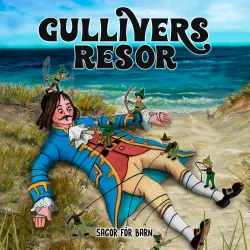
    Gullivers resor

    Jonathan Swift

  2. 4.3

    Gullivers resor

    Jonathan Swift

  3. 4.3

    Gullivers resor

    Jonathan Swift

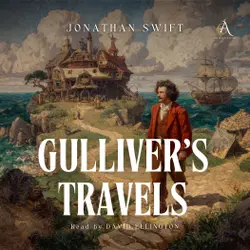
  4. Gulliver's Travels - Audiobook

    Jonathan Swift, Classic Audiobooks

  5. 3.5
    #4

    Gullivers resor

    Jonathan Swift

  6. 50 Masterpieces you have to read before you die

    Frances Hodgson Burnett, Homer, Charles Dickens, Lyman Frank Baum, Nathaniel Hawthorne, Thomas Hardy, Robert Louis Stevenson, Henry Haggard, Wilkie Collins, H.G. Wells, Sir Walter Scott, Lucy Maud Montgomery, Louisa May Alcott, Henry Fielding, Mary Shelley, Arthur Conan Doyle, Leo Tolstoy, Euripides, Fyodor Dostoevsky, Alexander Pushkin, James Fenimore Cooper, Daniel Defoe, Joseph Conrad, Jonathan Swift, William Shakespeare, Oscar Wilde, John Bunyan, Charles Darwin, Alfred Tennyson, Bram Stoker, James Joyce, Dante Alighieri, Howard Pyle, Jane Austen, Emily Bronte, Giovanni Boccaccio, Rudyard Kipling

  7. #1

    Gulliver - I småfolkets rike

    Jonathan Swift

  8. #4

    Gulliver - I hästarnas värld

    Jonathan Swift

  9. #3

    Gulliver - På den flygande ön

    Jonathan Swift

  10. #2

    Gulliver - I jättarnas land

    Jonathan Swift

  11. 50 Clásicos que debes leer antes de morir

    Dante Alighieri, Aristóteles, Jane Austen, Charles Baudelaire, Giovanni Boccaccio, Anne Brontë, C. Collodi, James Fenimore Cooper, Fedor Mikhaïlovitch Dostoïevski, Arthur Conan Doyle, Alexandre Dumas, José de Espronceda, Gustave Flaubert, Sigmund Freud, Benito Pérez Galdós, Kahlil Gibran, Johann Wolfgang Goethe, Johann Wolfgang von Goethe, Victor Hugo, Thomas Hardy, Nathaniel Hawthorne, Vicente Blasco Ibáñez, Washington Irving, James Joyce, Mariano José de Larra, Jack London, Federico García Lorca, H.P. Lovecraft, Antonio Machado, Gustav Meyrink, John Stuart Mill, Amado Nervo, Friedrich Nietzsche, Solomon Northup, Alexander Sergeyevich Pushkin, Francisco de Quevedo, Walter Scott, William Shakespeare, Robert Louis Stevenson, Harriet Beecher Stowe, Jonathan Swift, Mark Twain, Miguel De Unamuno, Ramón María del Valle-Inclán, Julio Verne, Virginia Woolf

  12. The Ultimate Classics Collection – Volume Three: 10 Novels and Stories from Daniel Defoe, Henry David Thoreau, John Milton, Homer, Machiavelli, & More

    Daniel Defoe, Homer, Jonathan Swift, The Brothers Grimm, Niccolo Machiavelli, Henry David Thoreau, John Milton, Aesop