5.0(1)

Metamorphosis

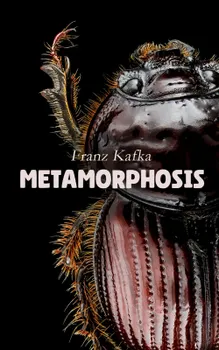
The Metamorphosis by Franz Kafka is one of the most haunting and thought-provoking works of 20th-century literature. The story begins with a shocking and surreal event: Gregor Samsa, a hardworking traveling salesman who supports his family, wakes up one morning to find himself transformed into a gigantic insect. From this extraordinary premise, Kafka builds a deeply human and unsettling tale about alienation, guilt, and the struggle for identity.

As Gregor's physical transformation isolates him from the world, his family's attitudes slowly shift. His sister Grete, at first tender and caring, becomes increasingly resentful and distant. His parents, once dependent on his earnings, now view him with fear and shame. Trapped in his small room, Gregor reflects on his past life of sacrifice and duty, realizing that he has lived more as a tool of others' expectations than as an individual with his own desires. The story becomes a powerful metaphor for the loneliness of the modern human condition — the way people can feel trapped by work, family, or society itself.

The novella carries strong autobiographical echoes of Kafka's own life. Like Gregor, Kafka felt burdened by responsibility, misunderstood by his family, and suffocated by a rigid social order. His sense of alienation from both the world and himself is vividly expressed through Gregor's grotesque transformation. Yet beneath the absurdity lies a profound emotional truth — one that resonates with anyone who has felt unseen or unloved for who they truly are.

The Metamorphosis is not just a story about one man's nightmare; it is a mirror of the modern psyche. Its influence reaches far beyond its era, shaping existential and psychological literature for generations. Kafka's strange, tragic, and deeply human tale continues to challenge and move readers around the world. This translation has been assisted by artificial intelligence.
Om den här boken

The Metamorphosis by Franz Kafka is one of the most haunting and thought-provoking works of 20th-century literature. The story begins with a shocking and surreal event: Gregor Samsa, a hardworking traveling salesman who supports his family, wakes up one morning to find himself transformed into a gigantic insect. From this extraordinary premise, Kafka builds a deeply human and unsettling tale about alienation, guilt, and the struggle for identity.

As Gregor's physical transformation isolates him from the world, his family's attitudes slowly shift. His sister Grete, at first tender and caring, becomes increasingly resentful and distant. His parents, once dependent on his earnings, now view him with fear and shame. Trapped in his small room, Gregor reflects on his past life of sacrifice and duty, realizing that he has lived more as a tool of others' expectations than as an individual with his own desires. The story becomes a powerful metaphor for the loneliness of the modern human condition — the way people can feel trapped by work, family, or society itself.

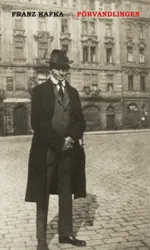
The novella carries strong autobiographical echoes of Kafka's own life. Like Gregor, Kafka felt burdened by responsibility, misunderstood by his family, and suffocated by a rigid social order. His sense of alienation from both the world and himself is vividly expressed through Gregor's grotesque transformation. Yet beneath the absurdity lies a profound emotional truth — one that resonates with anyone who has felt unseen or unloved for who they truly are.

The Metamorphosis is not just a story about one man's nightmare; it is a mirror of the modern psyche. Its influence reaches far beyond its era, shaping existential and psychological literature for generations. Kafka's strange, tragic, and deeply human tale continues to challenge and move readers around the world. This translation has been assisted by artificial intelligence.
Kom igång med den här boken idag för 0 kr

  • Få full tillgång till alla böcker i appen under provperioden
  • Ingen bindningstid, avsluta när du vill
Prova gratis nu
Mer än 52 000 personer har gett Nextory 5 stjärnor i App Store och på Google Play.

  1. 3.5

    Förvandlingen

    Franz Kafka

  2. 3.1

    Förvandlingen

    Franz Kafka

  3. 3.0

    50 Masterpieces you have to read before you die vol: 1 (2020 Edition) : Included: Little Women, The Richest Man in Babylon Emma, The Call Of The Wild ....

    Louisa May Alcott, Dante Alighieri, Marcus Aurelius, Jane Austen, L. Frank Baum, Charlotte Brontë, Emily Brontë, Anne Brontë, Miguel de Cervantes, Agatha Christie, George S. Clason, Arthur Conan Doyle, Joseph Conrad, Charles Dickens, Fyodor Dostoyevsky, Alexandre Dumas, George Eliot, G.K. Chesterton, G.K. Chesterton, Zane Grey, Nathaniel Hawthorne, Napoleon Hill, Homer, Victor Hugo, Frances Hodgson Burnett, Washington Irving, Henry James, Franz Kafka, Rudyard Kipling, Jack London, Leo Tolstoy, H.P. Lovecraft, Lucy Maud Montgomery, Joseph Murphy, Robert Louis Stevenson, Edgar Allan Poe, Marcel Proust, Publius, Mary Shelley, Bram Stoker, Mark Twain, Sun Tzu, Lew Wallace, Wallace D. Wattles, H.G. Wells

  4. 3.1

    Förvandlingen

    Franz Kafka

  5. 3.1

    Processen

    Franz Kafka

  6. 5.0

    Metamorphosis

    Franz Kafka

  7. 3.8

    The Metamorphosis

    Franz Kafka

  8. 3.9

    The Trial

    Franz Kafka

  9. 5.0

    Slottet

    Franz Kafka

  10. 1.0

    World's Greatest Horror Stories

    E. M. Delafield, Mark Twain, Edgar Allan Poe, M. R. James, F. Harvey, H.P. Lovecraft, Nathaniel Hawthorne, Franz Kafka, Charles Dickens, William Hope Hodgson, Algernon Blackwood, Charlotte Perkins Gilman, J. Sheridan Le Fanu, Arthur Conan Doyle, Margaret Oliphant, Walter de la Mare, Achmed Abdullah, Eleanor Scott, Harriet Prescott Spofford, E F Benson, Fitz-James O’Brien, E T A Hoffmann

  11. The Trial

    Franz Kafka


Relaterade kategorier