Metropolitan Jews : Politics, Race, and Religion in Postwar Detroit

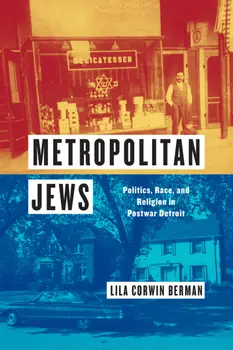
In this provocative and accessible urban history, Lila Corwin Berman considers the role that Detroit's Jews played in the city's well-known narrative of migration and decline. Taking its cue from social critics and historians who have long looked toward Detroit to understand twentieth-century urban transformations, Metropolitan Jews tells the story of Jews leaving the city while retaining a deep connection to it. Berman argues convincingly that though most Jews moved to the suburbs, urban abandonment, disinvestment, and an embrace of conservatism did not invariably accompany their moves. Instead, the Jewish postwar migration was marked by an enduring commitment to a newly fashioned urbanism with a vision of self, community, and society that persisted well beyond city limits.

Complex and subtle, Metropolitan Jews pushes urban scholarship beyond the tenacious black/white, urban/suburban dichotomy. It demands a more nuanced understanding of the process and politics of suburbanization and will reframe how we think about the American urban experiment and modern Jewish history.
Om den här boken

In this provocative and accessible urban history, Lila Corwin Berman considers the role that Detroit's Jews played in the city's well-known narrative of migration and decline. Taking its cue from social critics and historians who have long looked toward Detroit to understand twentieth-century urban transformations, Metropolitan Jews tells the story of Jews leaving the city while retaining a deep connection to it. Berman argues convincingly that though most Jews moved to the suburbs, urban abandonment, disinvestment, and an embrace of conservatism did not invariably accompany their moves. Instead, the Jewish postwar migration was marked by an enduring commitment to a newly fashioned urbanism with a vision of self, community, and society that persisted well beyond city limits.

Complex and subtle, Metropolitan Jews pushes urban scholarship beyond the tenacious black/white, urban/suburban dichotomy. It demands a more nuanced understanding of the process and politics of suburbanization and will reframe how we think about the American urban experiment and modern Jewish history.
Kom igång med den här boken idag för 0 kr

  • Få full tillgång till alla böcker i appen under provperioden
  • Ingen bindningstid, avsluta när du vill
Prova gratis nu
Mer än 52 000 personer har gett Nextory 5 stjärnor i App Store och på Google Play.