Notes from the Underground

Notes from the Underground is a novella by Fyodor Dostoyevsky. Notes is considered by many to be one of the first existentialist novels. It presents itself as an excerpt from the rambling memoirs of a bitter, isolated, unnamed narrator (generally referred to by critics as the Underground Man) who is a retired civil servant living in St. Petersburg. The first part of the story is told in monologue form, or the underground man's diary, and attacks emerging Western philosophy, especially Nikolay Chernyshevsky's What Is to Be Done?. The second part of the book is called "Apropos of the Wet Snow", and describes certain events that, it seems, are destroying and sometimes renewing the underground man, who acts as a first person, unreliable narrator and anti-hero. In the 1860s, Russia was beginning to absorb the ideas and culture of Western Europe at an accelerated pace, nurturing an unstable local climate. There was especially a growth in revolutionary activity accompanying a general restructuring of tsardom where liberal reforms, enacted by an unwieldy autocracy, only induced a greater sense of tension in both politics and civil society. Many of Russia's intellectuals were engaged in a debate with the Westernizers on one hand, and the Slavophiles on the other, concerned with favoring importation of Western reforms or promoting pan-Slavic traditions to address Russia's particular social reality. Even though in 1861, Tsar Alexander emancipated the serfs, Russia was still very much a post-medieval, traditional peasant society.

Om den här boken

Notes from the Underground is a novella by Fyodor Dostoyevsky. Notes is considered by many to be one of the first existentialist novels. It presents itself as an excerpt from the rambling memoirs of a bitter, isolated, unnamed narrator (generally referred to by critics as the Underground Man) who is a retired civil servant living in St. Petersburg. The first part of the story is told in monologue form, or the underground man's diary, and attacks emerging Western philosophy, especially Nikolay Chernyshevsky's What Is to Be Done?. The second part of the book is called "Apropos of the Wet Snow", and describes certain events that, it seems, are destroying and sometimes renewing the underground man, who acts as a first person, unreliable narrator and anti-hero. In the 1860s, Russia was beginning to absorb the ideas and culture of Western Europe at an accelerated pace, nurturing an unstable local climate. There was especially a growth in revolutionary activity accompanying a general restructuring of tsardom where liberal reforms, enacted by an unwieldy autocracy, only induced a greater sense of tension in both politics and civil society. Many of Russia's intellectuals were engaged in a debate with the Westernizers on one hand, and the Slavophiles on the other, concerned with favoring importation of Western reforms or promoting pan-Slavic traditions to address Russia's particular social reality. Even though in 1861, Tsar Alexander emancipated the serfs, Russia was still very much a post-medieval, traditional peasant society.
Kom igång med den här boken idag för 0 kr

  • Få full tillgång till alla böcker i appen under provperioden
  • Ingen bindningstid, avsluta när du vill
Prova gratis nu
Mer än 52 000 personer har gett Nextory 5 stjärnor i App Store och på Google Play.

  1. 4.0

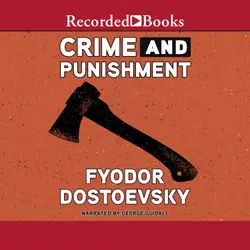
    Crime and Punishment

    Fyodor Dostoyevsky

  2. 5.0

    Crime and Punishment

    Fyodor Dostoyevsky

  3. 3.4

    The Idiot

    Fyodor Dostoyevsky

  4. 50 Masterpieces you need to read

    Louisa May Alcott, Jane Austen, Joseph Conrad, D. H. Lawrence, George Eliot, Leo Tolstoy, James Joyce, Charles Dickens, Bram Stoker, Oscar Wilde, Honoré de Balzac, Edgar Rice Burroughs, Anne Brontë, Charlotte Brontë, Emily Brontë, Lewis Carroll, Willa Cather, Miguel de Cervantes, E. Cummings, Fyodor Dostoyevsky, Daniel Defoe, Arthur Conan Doyle, Alexandre Dumas, Gustave Flaubert, Henry James, Victor Hugo

  5. 10 Masterpieces You Have to Read Before You Die, Vol. 3

    Edgar Allan Poe, William Shakespeare, H.P. Lovecraft, Mary W. Shelley, Osamu Dazai, Jack London, Fyodor Dostoyevsky, Nathaniel Hawthorne, Frances Hodgson Burnett, Robert Louis Stevenson

  6. 3.0

    50 Masterpieces you have to read before you die vol: 1 (2020 Edition) : Included: Little Women, The Richest Man in Babylon Emma, The Call Of The Wild ....

    Louisa May Alcott, Dante Alighieri, Marcus Aurelius, Jane Austen, L. Frank Baum, Charlotte Brontë, Emily Brontë, Anne Brontë, Miguel de Cervantes, Agatha Christie, George S. Clason, Arthur Conan Doyle, Joseph Conrad, Charles Dickens, Fyodor Dostoyevsky, Alexandre Dumas, George Eliot, G.K. Chesterton, G.K. Chesterton, Zane Grey, Nathaniel Hawthorne, Napoleon Hill, Homer, Victor Hugo, Frances Hodgson Burnett, Washington Irving, Henry James, Franz Kafka, Rudyard Kipling, Jack London, Leo Tolstoy, H.P. Lovecraft, Lucy Maud Montgomery, Joseph Murphy, Robert Louis Stevenson, Edgar Allan Poe, Marcel Proust, Publius, Mary Shelley, Bram Stoker, Mark Twain, Sun Tzu, Lew Wallace, Wallace D. Wattles, H.G. Wells

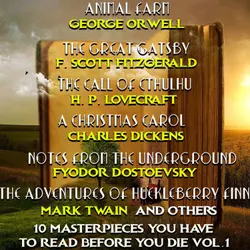
  7. 10 Masterpieces You Have to Read Before You Die, Vol. 1

    Edgar Allan Poe, Herbert George Wells, Mark Twain, Fyodor Dostoyevsky, Charles Dickens, Arthur Conan Doyle, George Orwell, Howard Phillips Lovecraft, Washington Irving, Francis Scott Fitzgerald

  8. 50 Masterpieces you have to read : An Unforgettable Journey into Timeless Literature - eBook Edition

    Louisa May Alcott, Jane Austen, Joseph Conrad, D. H. Lawrence, George Eliot, Leo Tolstoy, James Joyce, Charles Dickens, Bram Stoker, Oscar Wilde, Honoré de Balzac, Edgar Rice Burroughs, Anne Brontë, Charlotte Brontë, Emily Brontë, Lewis Carroll, Willa Cather, Miguel de Cervantes, E. Cummings, Fyodor Dostoyevsky, Daniel Defoe, Arthur Conan Doyle, Alexandre Dumas, Gustave Flaubert, Henry James, Victor Hugo

  9. Crime and Punishment - Audiobook

    Fyodor Dostoyevsky, Classic Audiobooks

  10. The Brothers Karamazov

    Fyodor Dostoyevsky

  11. 4.5

    Dostoevesky Notes From The Underground

    Fyodor Dostoyevsky

  12. The Essential Classics Collection : 1984; Great Expectations; The Brothers Karamazov; Pride and Prejudice; & The War of the Worlds

    George Orwell, Fyodor Dostoyevsky, Charles Dickens, Jane Austen, H.G. Wells