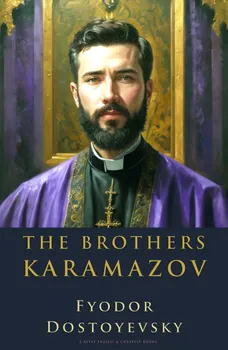
The Brothers Karamazov

The Brothers Karamazov, is the final novel by the Russian author Fyodor Dostoyevsky. Dostoyevsky spent nearly two years writing The Brothers Karamazov, which was published as a serial in The Russian Messenger and completed in November 1880. Dostoyevsky intended it to be the first part in an epic story titled The Life of a Great Sinner, but he died less than four months after its publication.

The Brothers Karamazov is a passionate philosophical novel set in 19th century Russia, that enters deeply into the ethical debates of God, free will, and morality. It is a spiritual drama of moral struggles concerning faith, doubt, and reason, set against a modernizing Russia. Dostoyevsky composed much of the novel in Staraya Russa, which inspired the main setting. Since its publication, it has been acclaimed as one of the supreme achievements in literature.

Although written in the 19th century, The Brothers Karamazov displays a number of modern elements. Dostoyevsky composed the book with a variety of literary techniques. Though privy to many of the thoughts and feelings of the protagonists, the narrator is a self-proclaimed writer; he discusses his own mannerisms and personal perceptions so often in the novel that he becomes a character. Through his descriptions, the narrator's voice merges imperceptibly into the tone of the people he is describing, often extending into the characters' most personal thoughts. There is no voice of authority in the story (see Mikhail Bakhtin's Problems of Dostoyevsky's Poetics for more on the relationship between Dostoyevsky and his characters). In addition to the principal narrator there are several sections narrated by other characters entirely, such as the story of the Grand Inquisitor and Zosima's confessions. This technique enhances the theme of truth, making many aspects of the tale completely subjective.

Dostoyevsky uses individual styles of speech to express the inner personality of each person. For example, the attorney Fetyukovich (based on Vladimir Spasovich) is characterized by malapropisms (e.g. 'robbed' for 'stolen', and at one point declares possible suspects in the murder 'irresponsible' rather than innocent). Several plot digressions provide insight into other apparently minor characters. For example, the narrative in Book Six is almost entirely devoted to Zosima's biography, which contains a confession from a man whom he met many years before. Dostoyevsky does not rely on a single source or a group of major characters to convey the themes of this book, but uses a variety of viewpoints, narratives and characters throughout.

Major characters:

Fyodor Karamazov is the father, a 55-year-old "sponger" and buffoon who sires three sons during his two marriages. He is rumored to have fathered an illegitimate son, Pavel Fyodorovich Smerdyakov, whom he employs as his servant. Fyodor takes no interest in any of his sons, who are, as a result, raised apart from each other and their father. The relationship between Fyodor and his adult sons drives much of the plot in the novel.

Dmitri Fyodorovich Karamazov (a.k.a. Mitya, Mitka, Mitenka, Mitri) is Fyodor Karamazov's eldest son and the only offspring of his first marriage, with Adelaida Ivanovna Miusov. Dmitri is considered to be a sensualist, much like his father, spending large amounts of money on nights filled with champagne, women, and whatever entertainment and stimulation money can buy. Dmitri is brought into contact with his family when he finds himself in need of his inheritance, which he believes is being withheld by his father. He was engaged to be married to Katerina Ivanovna, but breaks that off after falling in love with Grushenka. Dmitri's relationship with his father is the most volatile of the brothers, escalating to violence as he and his father begin fighting over the same woman, Grushenka. While he maintains a good relationship with Ivan, he is closest to his younger brother Alyosha, referring to him as his "cherub".

Om den här boken

The Brothers Karamazov, is the final novel by the Russian author Fyodor Dostoyevsky. Dostoyevsky spent nearly two years writing The Brothers Karamazov, which was published as a serial in The Russian Messenger and completed in November 1880. Dostoyevsky intended it to be the first part in an epic story titled The Life of a Great Sinner, but he died less than four months after its publication.

The Brothers Karamazov is a passionate philosophical novel set in 19th century Russia, that enters deeply into the ethical debates of God, free will, and morality. It is a spiritual drama of moral struggles concerning faith, doubt, and reason, set against a modernizing Russia. Dostoyevsky composed much of the novel in Staraya Russa, which inspired the main setting. Since its publication, it has been acclaimed as one of the supreme achievements in literature.

Although written in the 19th century, The Brothers Karamazov displays a number of modern elements. Dostoyevsky composed the book with a variety of literary techniques. Though privy to many of the thoughts and feelings of the protagonists, the narrator is a self-proclaimed writer; he discusses his own mannerisms and personal perceptions so often in the novel that he becomes a character. Through his descriptions, the narrator's voice merges imperceptibly into the tone of the people he is describing, often extending into the characters' most personal thoughts. There is no voice of authority in the story (see Mikhail Bakhtin's Problems of Dostoyevsky's Poetics for more on the relationship between Dostoyevsky and his characters). In addition to the principal narrator there are several sections narrated by other characters entirely, such as the story of the Grand Inquisitor and Zosima's confessions. This technique enhances the theme of truth, making many aspects of the tale completely subjective.

Dostoyevsky uses individual styles of speech to express the inner personality of each person. For example, the attorney Fetyukovich (based on Vladimir Spasovich) is characterized by malapropisms (e.g. 'robbed' for 'stolen', and at one point declares possible suspects in the murder 'irresponsible' rather than innocent). Several plot digressions provide insight into other apparently minor characters. For example, the narrative in Book Six is almost entirely devoted to Zosima's biography, which contains a confession from a man whom he met many years before. Dostoyevsky does not rely on a single source or a group of major characters to convey the themes of this book, but uses a variety of viewpoints, narratives and characters throughout.

Major characters:

Fyodor Karamazov is the father, a 55-year-old "sponger" and buffoon who sires three sons during his two marriages. He is rumored to have fathered an illegitimate son, Pavel Fyodorovich Smerdyakov, whom he employs as his servant. Fyodor takes no interest in any of his sons, who are, as a result, raised apart from each other and their father. The relationship between Fyodor and his adult sons drives much of the plot in the novel.

Dmitri Fyodorovich Karamazov (a.k.a. Mitya, Mitka, Mitenka, Mitri) is Fyodor Karamazov's eldest son and the only offspring of his first marriage, with Adelaida Ivanovna Miusov. Dmitri is considered to be a sensualist, much like his father, spending large amounts of money on nights filled with champagne, women, and whatever entertainment and stimulation money can buy. Dmitri is brought into contact with his family when he finds himself in need of his inheritance, which he believes is being withheld by his father. He was engaged to be married to Katerina Ivanovna, but breaks that off after falling in love with Grushenka. Dmitri's relationship with his father is the most volatile of the brothers, escalating to violence as he and his father begin fighting over the same woman, Grushenka. While he maintains a good relationship with Ivan, he is closest to his younger brother Alyosha, referring to him as his "cherub".
Kom igång med den här boken idag för 0 kr

  • Få full tillgång till alla böcker i appen under provperioden
  • Ingen bindningstid, avsluta när du vill
Prova gratis nu
Mer än 52 000 personer har gett Nextory 5 stjärnor i App Store och på Google Play.

  1. 4.0

    Crime and Punishment

    Fyodor Dostoyevsky

  2. 3.0

    50 Masterpieces you have to read before you die vol: 1 (2020 Edition) : Included: Little Women, The Richest Man in Babylon Emma, The Call Of The Wild ....

    Louisa May Alcott, Dante Alighieri, Marcus Aurelius, Jane Austen, L. Frank Baum, Charlotte Brontë, Emily Brontë, Anne Brontë, Miguel de Cervantes, Agatha Christie, George S. Clason, Arthur Conan Doyle, Joseph Conrad, Charles Dickens, Fyodor Dostoyevsky, Alexandre Dumas, George Eliot, G.K. Chesterton, G.K. Chesterton, Zane Grey, Nathaniel Hawthorne, Napoleon Hill, Homer, Victor Hugo, Frances Hodgson Burnett, Washington Irving, Henry James, Franz Kafka, Rudyard Kipling, Jack London, Leo Tolstoy, H.P. Lovecraft, Lucy Maud Montgomery, Joseph Murphy, Robert Louis Stevenson, Edgar Allan Poe, Marcel Proust, Publius, Mary Shelley, Bram Stoker, Mark Twain, Sun Tzu, Lew Wallace, Wallace D. Wattles, H.G. Wells

  3. 4.4

    The Brothers Karamazov

    Fyodor Dostoyevsky

  4. 50 Masterpieces you need to read

    Louisa May Alcott, Jane Austen, Joseph Conrad, D. H. Lawrence, George Eliot, Leo Tolstoy, James Joyce, Charles Dickens, Bram Stoker, Oscar Wilde, Honoré de Balzac, Edgar Rice Burroughs, Anne Brontë, Charlotte Brontë, Emily Brontë, Lewis Carroll, Willa Cather, Miguel de Cervantes, E. Cummings, Fyodor Dostoyevsky, Daniel Defoe, Arthur Conan Doyle, Alexandre Dumas, Gustave Flaubert, Henry James, Victor Hugo

  5. 5.0

    Crime and Punishment

    Fyodor Dostoyevsky

  6. 10 Masterpieces You Have to Read Before You Die, Vol. 3

    Edgar Allan Poe, William Shakespeare, H.P. Lovecraft, Mary W. Shelley, Osamu Dazai, Jack London, Fyodor Dostoyevsky, Nathaniel Hawthorne, Frances Hodgson Burnett, Robert Louis Stevenson

  7. The Brothers Karamazov

    Fyodor Dostoyevsky

  8. The Brothers Karamazov

    Fyodor Dostoyevsky

  9. 50 Masterpieces you have to read : An Unforgettable Journey into Timeless Literature - eBook Edition

    Louisa May Alcott, Jane Austen, Joseph Conrad, D. H. Lawrence, George Eliot, Leo Tolstoy, James Joyce, Charles Dickens, Bram Stoker, Oscar Wilde, Honoré de Balzac, Edgar Rice Burroughs, Anne Brontë, Charlotte Brontë, Emily Brontë, Lewis Carroll, Willa Cather, Miguel de Cervantes, E. Cummings, Fyodor Dostoyevsky, Daniel Defoe, Arthur Conan Doyle, Alexandre Dumas, Gustave Flaubert, Henry James, Victor Hugo

  10. 4.5

    Dostoevesky Notes From The Underground

    Fyodor Dostoyevsky

  11. El crimen y el castigo

    Fyodor Dostoyevsky

  12. The Essential Classics Collection : 1984; Great Expectations; The Brothers Karamazov; Pride and Prejudice; & The War of the Worlds

    George Orwell, Fyodor Dostoyevsky, Charles Dickens, Jane Austen, H.G. Wells